Liner cavitation is the failure that surprises owners most, because the engine never overheats and the coolant looks fine right up to the point where coolant starts disappearing. By the time the symptom appears, the liner is usually already perforated, and the damage is often misdiagnosed as a head gasket for weeks.
This guide explains what cavitation actually is, why diesel wet liners are vulnerable, how to tell it apart from a head gasket failure, and what prevents it.
As the piston moves, the liner wall vibrates at high frequency. On the coolant side, that vibration alternately pressurises and depressurises the liquid in contact with the liner. When local pressure drops far enough, the coolant vaporises into tiny bubbles; when pressure recovers a moment later, those bubbles collapse.
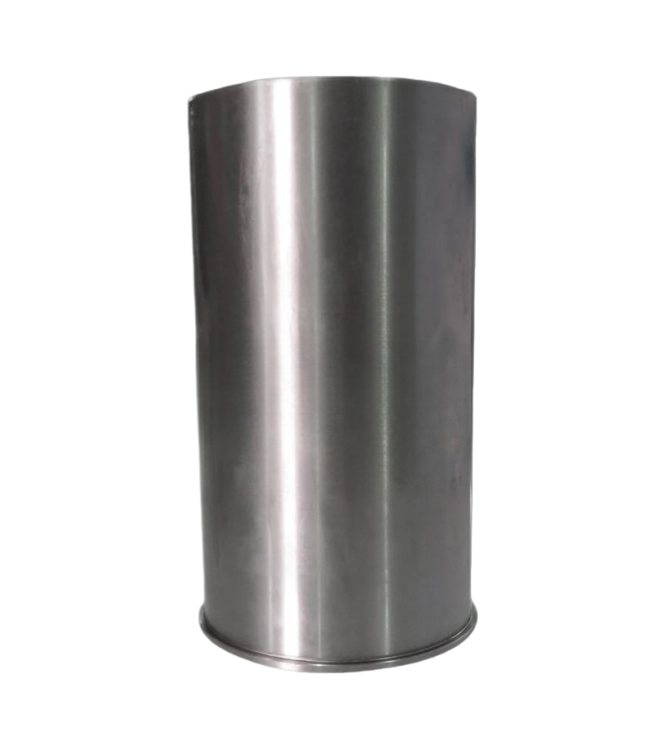
Each collapse produces a small jet of liquid against the liner surface. Repeated millions of times, it erodes the metal — first pitting it, then perforating it. The process is mechanical, not chemical, which is why a liner can look perfectly smooth on the bore side while being holed on the coolant side.
Three factors combine on a diesel that a petrol engine does not have to the same degree:
Cavitation does not produce a clean, obvious symptom. It produces the same symptoms as a head gasket failure, which is why it is misdiagnosed so often.
| Symptom | Cavitation | Head gasket |
| Coolant loss, no external leak | Yes, gradual at first | Yes, often faster |
| Bubbles in radiator | Only after perforation | Yes, continuous |
| White smoke | Once coolant enters the bore | Yes, especially on cold start |
| Coolant in the oil | Late stage | Common |
| Compression test | Usually normal until late | Usually abnormal on two cylinders |
| Location of damage | Coolant side of the liner | Fire ring or water passage |
The most useful distinction: cavitation damage is on the coolant side of the liner and often on the thrust side, while a head gasket failure shows at the fire ring or the water passages in the gasket itself.
Diesel coolants rely on supplemental additives that form a protective film on the liner surface. When the additive package is depleted, the film disappears and the liner is exposed directly to bubble collapse. This is the single most common cause in fleets.
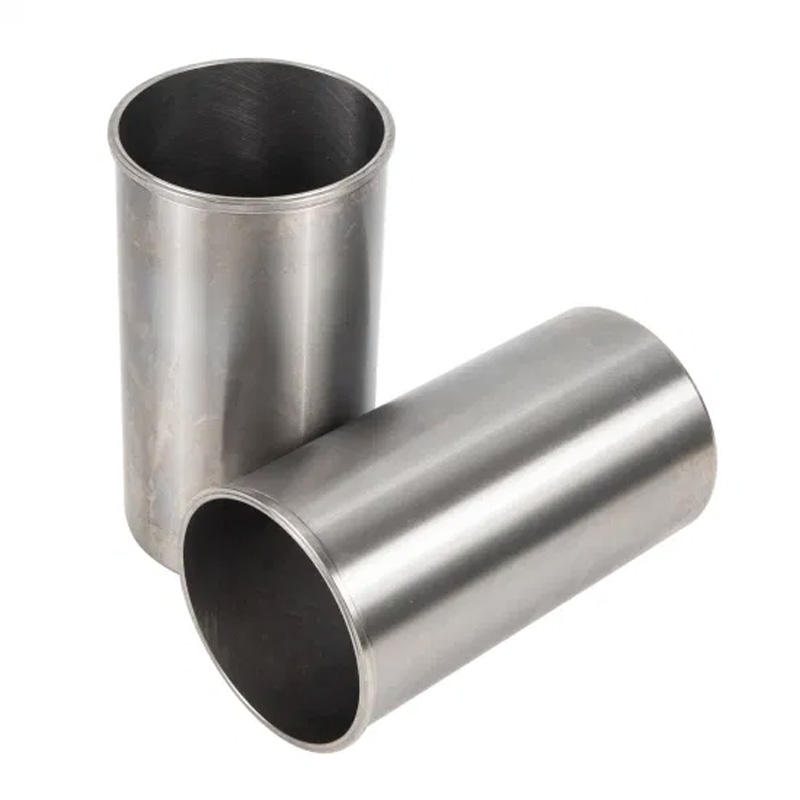
Ordinary automotive coolant without the correct additive package, or coolant that has never been tested, is a slow-motion failure. Test the additive level at service intervals rather than waiting for a symptom.
Air entrained in the coolant lowers local pressure and makes cavitation far more likely. It also causes hot spots. The usual sources are an incomplete bleed after a repair, a leaking hose drawing air, or a failing pressure cap.
A weak pressure cap lowers the boiling point of the coolant and increases bubble formation. Caps are inexpensive and rarely tested; replace them at every major service, not just when something looks wrong.
Sustained high temperature accelerates additive depletion and softens the protective film. A restricted radiator or a tired pump increases both vibration and temperature.
Cavitation damage is on the coolant side, so it cannot be assessed from the bore. A boroscope through the drain or a liner pulled for inspection is the only reliable check. Look for pitting clusters on the thrust side, usually near the top third of the liner.
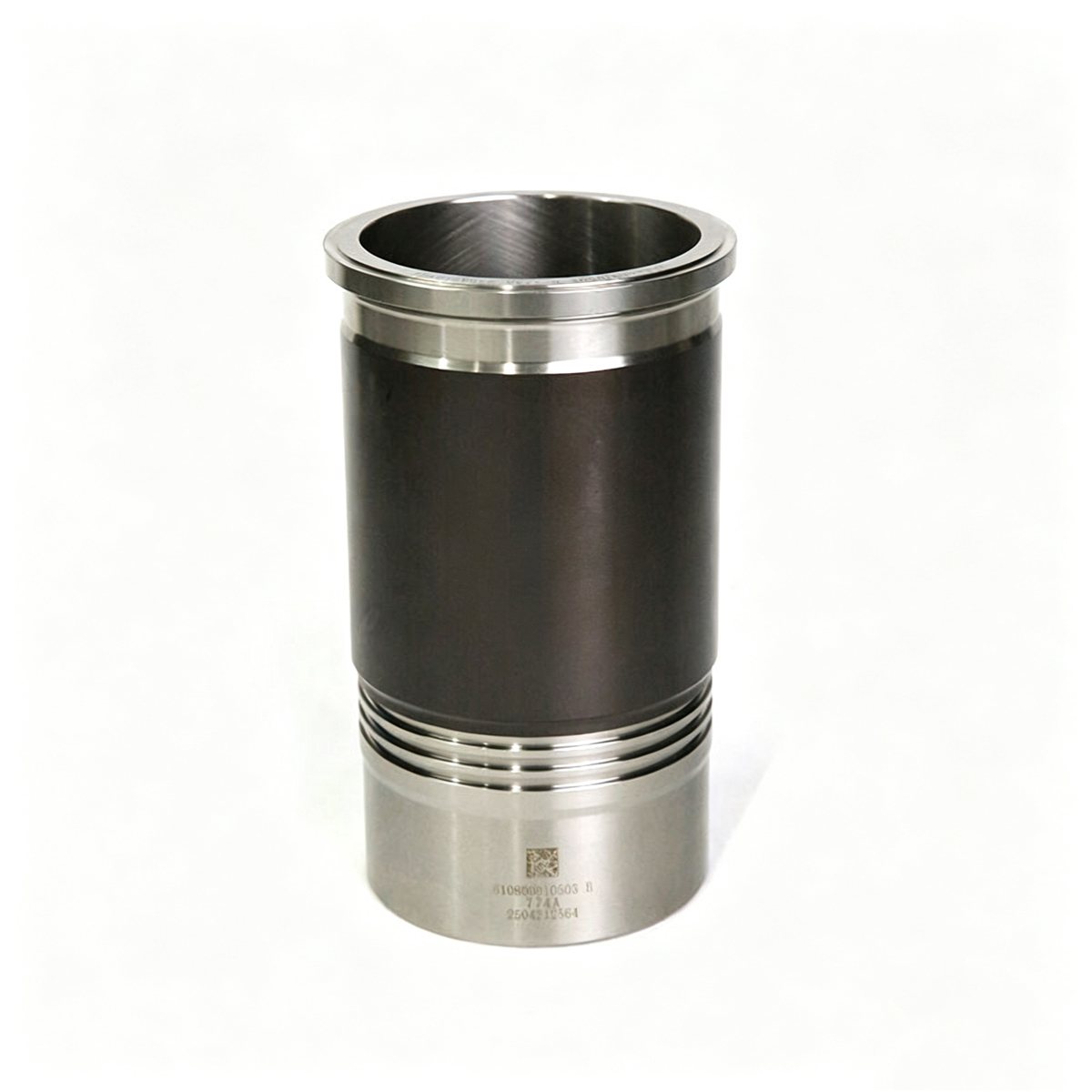
If one liner is pitted, the others are usually on the same path, because they share the same coolant. Replacing a single liner leaves the rest to fail later; on an engine already apart, a full set is the rational choice.
When the liner is replaced, treat the cause as part of the repair. New liners in the same depleted coolant will pit again on the same schedule.
Only in an emergency. Water dilutes the additive package and raises the cavitation risk directly.
Usually not until the liner is perforated and coolant enters the cylinder. A normal compression test does not rule it out.
Pull the liner or use a boroscope. Damage on the coolant side of the liner is cavitation; damage at the fire ring is the gasket.
If the engine is already apart, yes — the remaining liners share the same coolant history and are on the same wear curve.
Our Weichai Power parts range is organised by component type. For liners across the families discussed here, see the WP12 cylinder liner, the WP13 cylinder liner, the WP7 and WP8 cylinder liner and the WP6 cylinder liner pages. For the Cummins B series, see the 6BT cylinder liner 3904166.
If you are unsure whether the problem is a liner or a gasket, send photographs of the bore, the old head gasket and the coolant. The pattern of damage usually identifies the cause before the engine is stripped.

