Low oil pressure is one of the few symptoms that will destroy a diesel engine within minutes, and it is also one of the most over-diagnosed. The pump is blamed in most cases, and replaced, and the pressure is still low afterwards — because the pump was never the cause.
This guide covers what actually produces low pressure, how to test for each cause in the right order, and what to check before fitting a replacement pump.
The oil pump moves a fixed volume of oil per revolution. It does not create pressure on its own: pressure is the resistance that volume meets as it travels through the galleries, bearings and clearances of the engine.
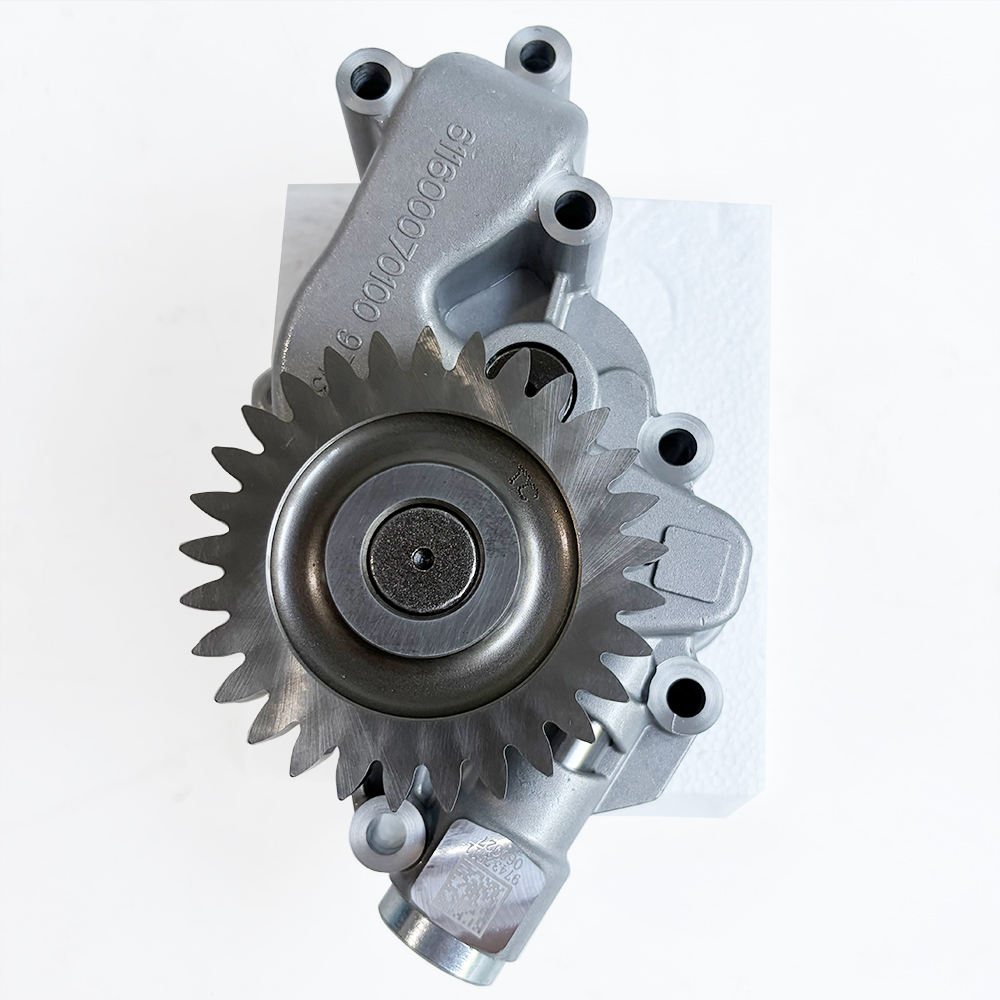
That single fact explains most misdiagnosis. If the clearances are too large, oil escapes faster than the pump can supply it and pressure falls — with a perfectly healthy pump. Replacing the pump changes nothing.
Main, big end and camshaft bearings are the largest controlled leak in the system. As clearances open, pressure drops first at hot idle, when oil is thinnest and pump speed is lowest. A gauge that reads normally when cold and drops badly when hot points here, not at the pump.
The relief valve opens to protect the system at high pressure. A valve held open by debris, or a spring that has lost tension, dumps oil back to the sump continuously. The result is low pressure at all speeds and a pump that looks fine on the bench.
A clogged pick-up strainer, a collapsed hose liner or an air leak on the suction side starves the pump. This is the failure mode that produces a sudden drop rather than a gradual one, and it is often preceded by a recent oil change or a sump repair.
Diesel dilution from a leaking injector, or the wrong grade of oil, thins the oil and lowers pressure at operating temperature. Both are cheap to rule out and frequently overlooked.
Electric senders drift, and dash gauges are not precision instruments. Never condemn a pump on a dash reading alone — confirm with a mechanical gauge screwed into the same port.
| Observation | Points to | Test |
| Normal cold, low hot idle | Worn bearings or thin oil | Mechanical gauge, hot idle, compare to spec |
| Low at all speeds, no noise | Relief valve stuck open | Inspect valve and spring |
| Sudden drop after service | Suction restriction or air leak | Inspect pick-up and suction joints |
| Pressure falls under load | Clearance or pump wear | Gauge while loaded, check oil temperature |
| Oil level rising, smell of fuel | Dilution | Oil analysis |
| Gauge flickers with no other symptom | Sender or wiring | Mechanical gauge at the same port |
Run the tests with the engine at full operating temperature, not cold. A cold engine hides worn bearings because thick oil still seals a wide clearance.
If the pump itself is suspect, three measurements decide it:
Compare each figure with the service limit. A pump that is inside limits but whose relief valve is stuck will test fine on the bench and still fail on the engine.
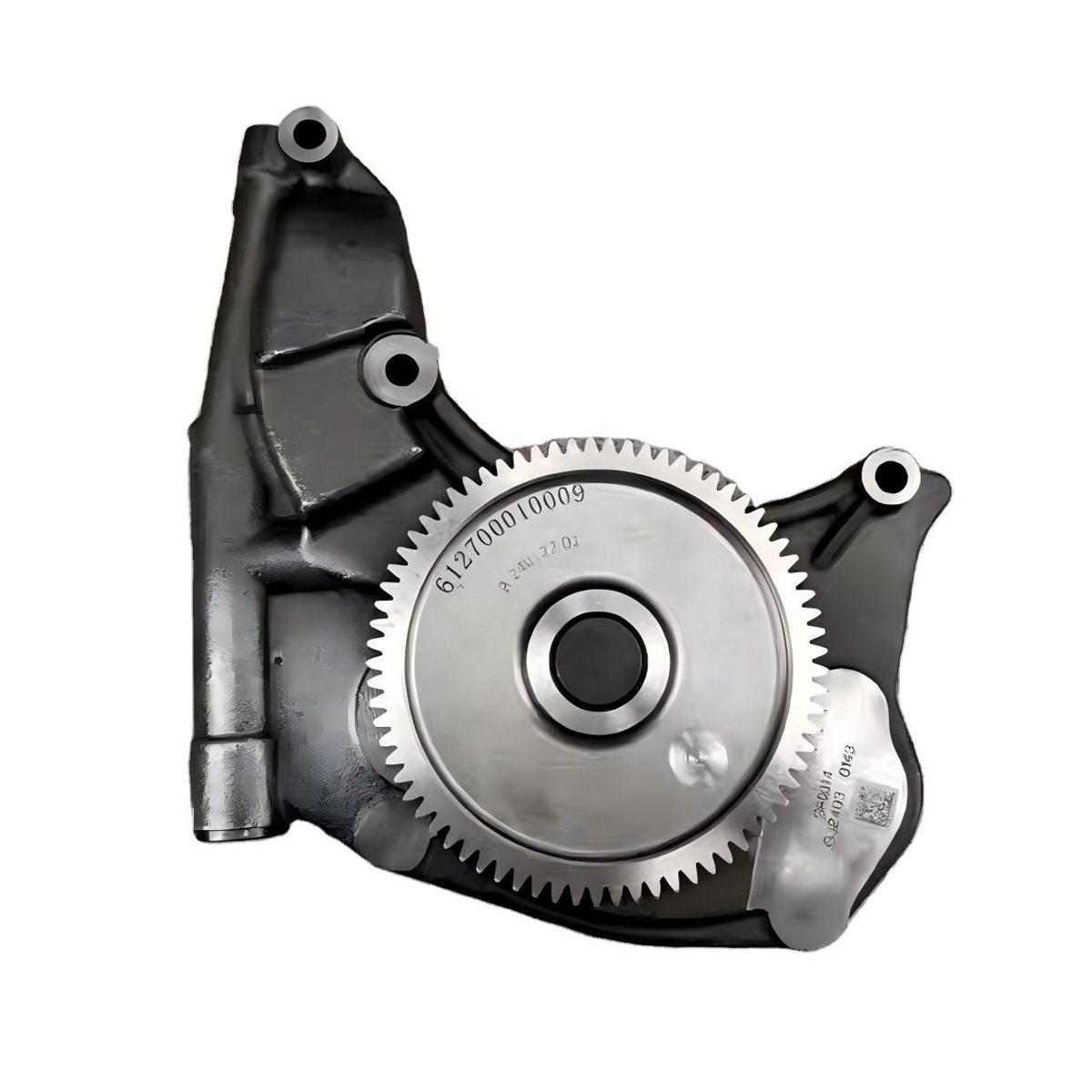
Oil pumps in the Weichai and Baudouin families appear under long lists of part numbers, and adjacent numbers frequently share a housing casting while differing in drive gear, pick-up tube or relief setting.
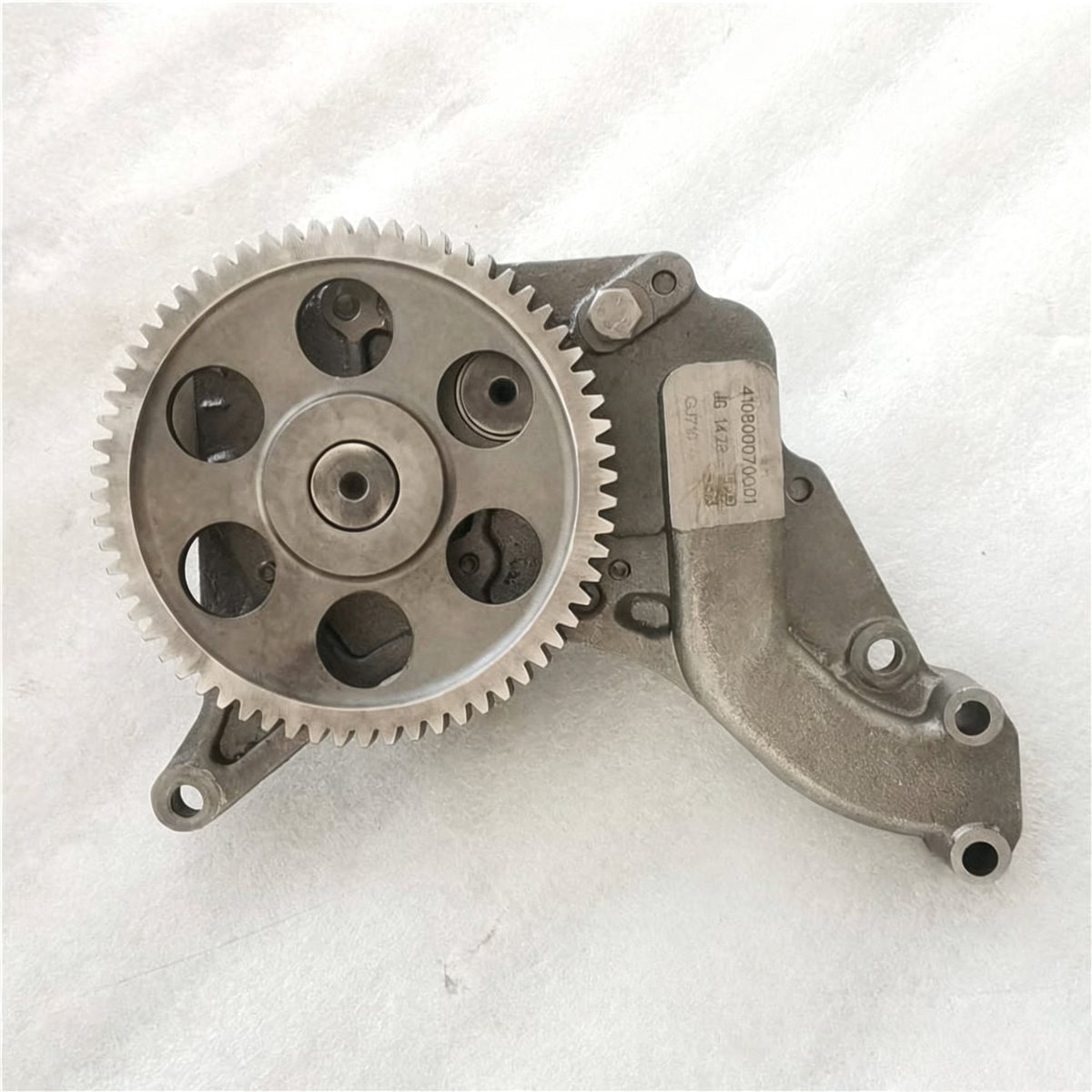
A pump with the wrong drive bolts up and fails to feed correctly, and the bearing damage happens within seconds of the first start. Confirm the old pump number, photograph the drive end, and check whether the front cover has been replaced during an earlier rebuild.
Replace gaskets and O-rings on the suction side with the pump. An old, hardened O-ring at the pick-up joint draws air and produces exactly the symptom the new pump was meant to cure.
Never crank a fresh rebuild hoping pressure will arrive. Fill the pump with clean oil, prime the galleries where the design allows, and disable the fuel system so the engine can be cranked without firing until the gauge shows pressure.
If pressure does not appear within a few seconds of cranking, stop. Continuing to crank a dry engine grinds the bearings while you watch the gauge.
No. Pressure is set by clearance and the relief valve. A stronger pump still leaks through worn bearings and only loads the drive gear harder.
Hot oil is thinner and leaks through clearances faster. This is the classic signature of worn bearings, not a failing pump.
On a high-hour engine, yes, together with the relief valve and the suction seals. On a low-hour engine, measure before replacing.
Screw a mechanical gauge into the same port and compare. A 0.5 bar difference matters at idle.
Our Weichai Power parts range is organised by component type. For oil pumps across the families covered here, see the WP12 oil pump 612600081228, the WP12 oil pump 612600081127, the WP13 oil pump and the WP7 oil pump 610800070242 pages.
If you are chasing a low-pressure complaint, send the hot idle reading from a mechanical gauge together with the engine plate and the oil grade in use. Those three figures usually separate a pump fault from a clearance problem before anything is ordered.

