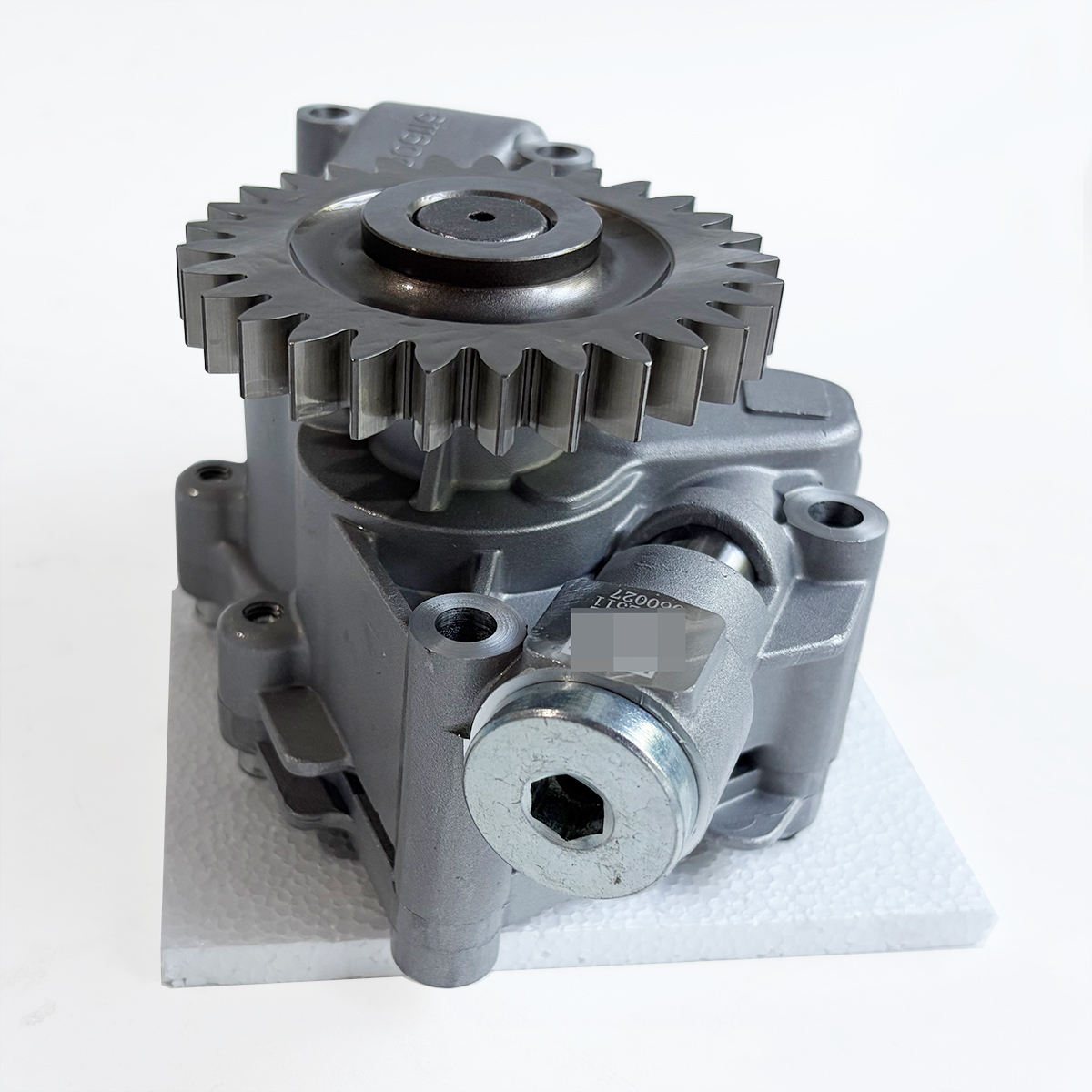
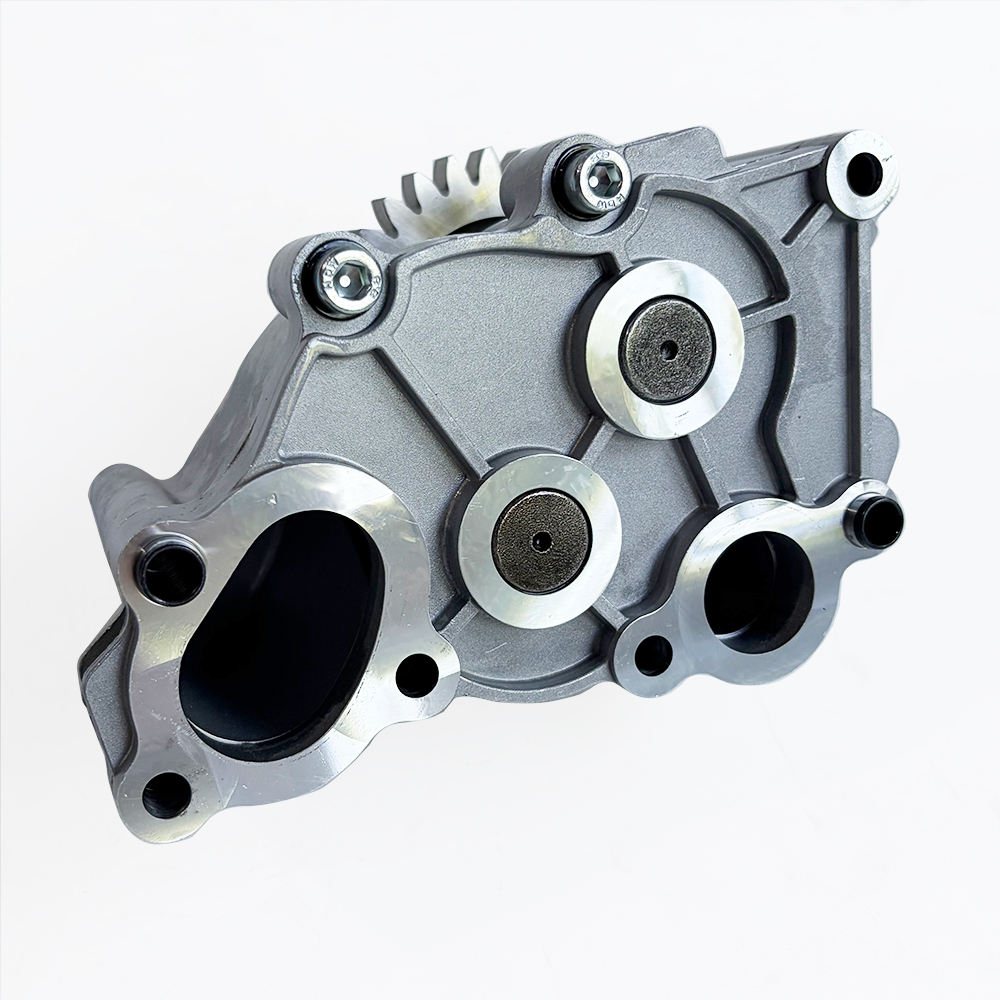
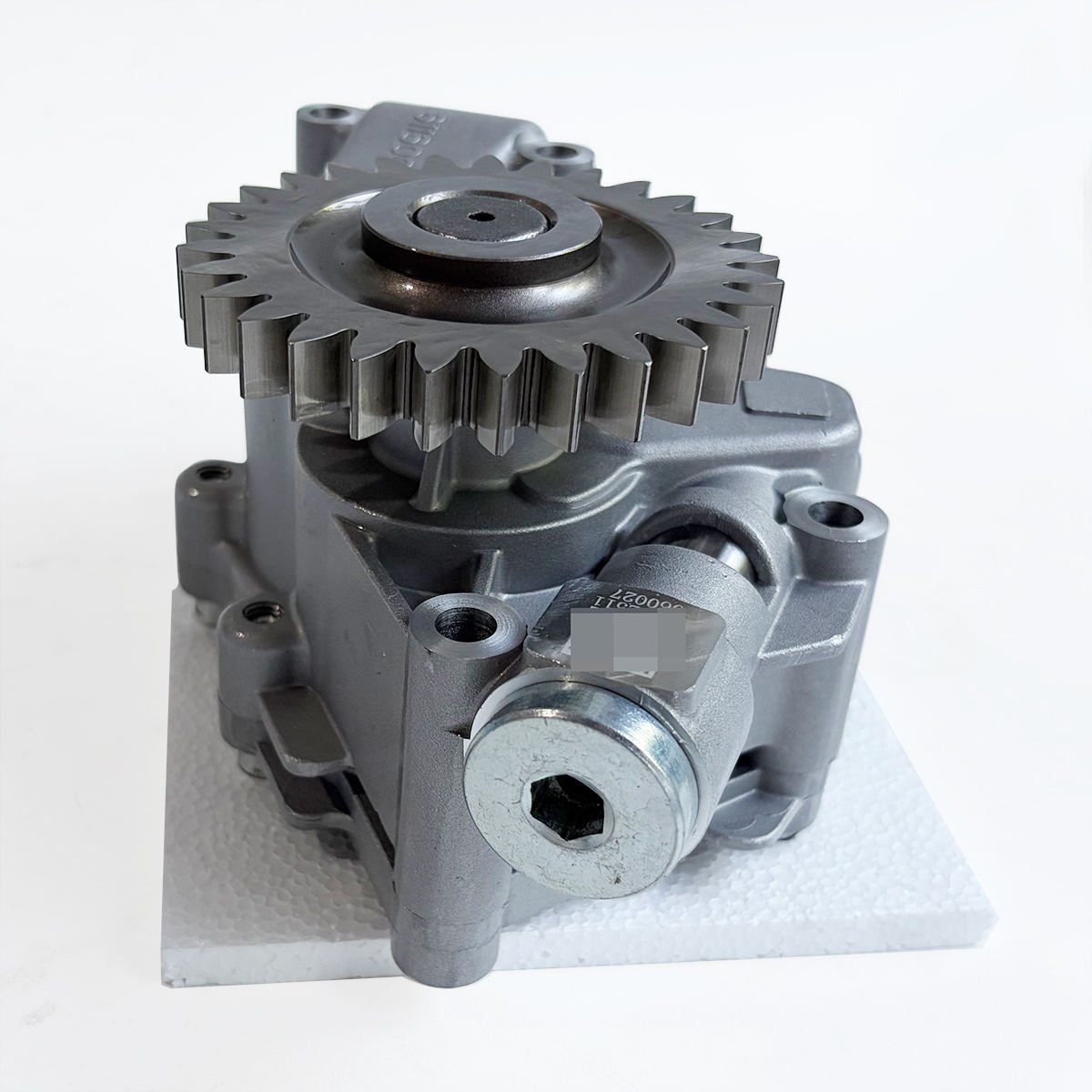
Model: WP12 / WD618
Part Number: 612600081127
Brands: Weichai Power
Engine Model: WP12, WD12, WD618, WP12.430, WP12.460
Engine Type: Diesel
Scope of application: heavy trucks, mining dump trucks, construction machinery, marine and generator engines
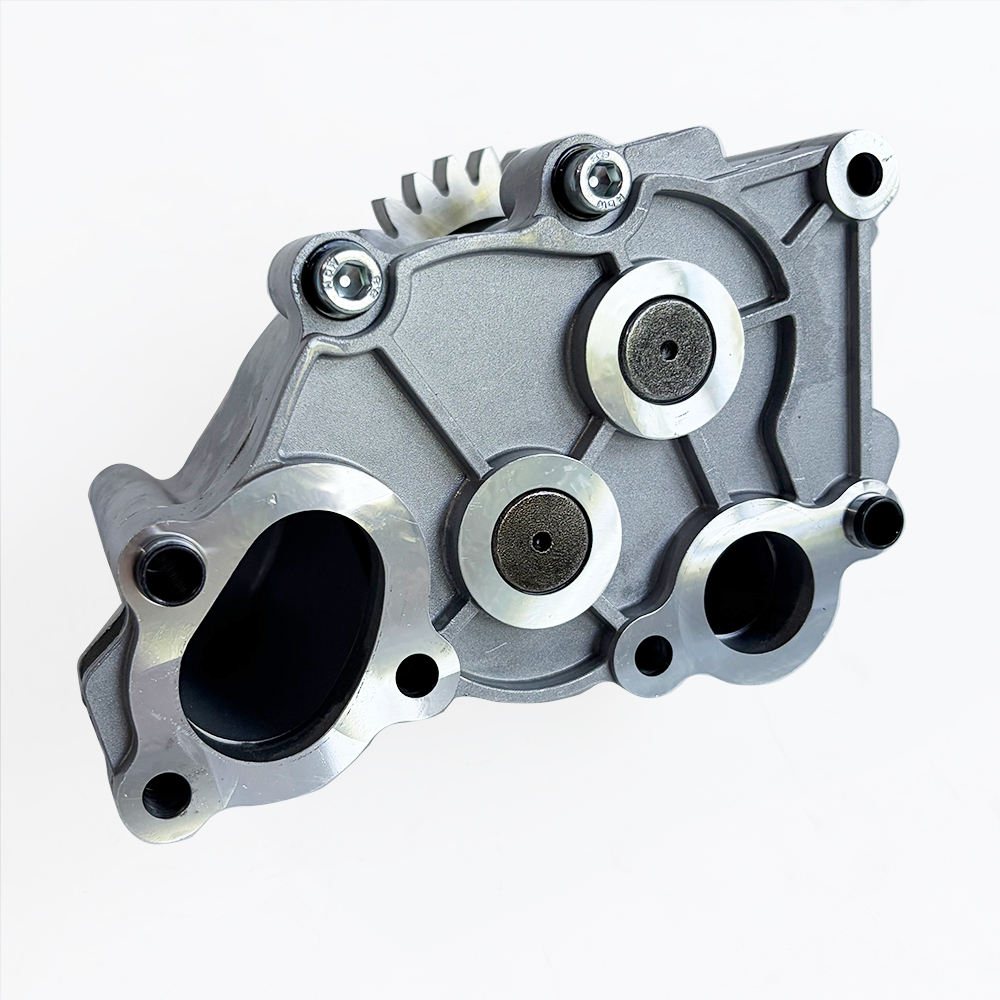
A 12-litre engine has a lot of bearing area to feed and a turbocharger that needs a constant oil supply. Part 612600081127 is the gear-type oil pump for the Weichai WP12 and WD618 family, driven from the front of the engine and fitted with an integrated relief valve. It must deliver volume at idle and hold pressure at rated speed without exceeding the limit set by the relief valve.
Pumps wear slowly and then fail suddenly. The early sign is pressure that falls at hot idle, then oil temperature that climbs, then a knock under load. Replacing the pump during an overhaul is cheap compared with replacing a crankshaft.
The pump fits WP12 and WD12 road engines and WD618 industrial and marine variants, including heavy tractors, mining dump trucks, large loaders and generator sets. Confirm the engine plate and the old pump number before ordering, because industrial and marine versions can use a different pick-up arrangement.
Every pump is run on a test bench rather than only inspected. Flow is measured at rated speed against the original curve, the relief valve is opened and its pressure recorded, gear backlash and end clearance are measured, and the housing and joints are leak tested.
Pumps ship oiled and plugged with the drive gear fitted and keyed as original.
Low oil pressure is the headline symptom, but the details matter. Pressure that is low only when hot points to worn bearings as much as a worn pump. Pressure that recovers instantly with engine speed points to the relief valve or pump clearances.
Confirm with a mechanical gauge at the main gallery first. A blocked strainer imitates a worn pump exactly.
Check oil level and condition, replace the filter, inspect the strainer, then measure pressure with a mechanical gauge. Only after those steps should the relief valve and pump come under suspicion. Recording cold idle, hot idle and rated speed gives a clear diagnosis and avoids buying parts that are not needed.
Match the part number, the engine rating and the drive type. If the engine has been rebuilt with a replacement front cover, check that the pump mounting face and drive gear match. Send a photo of the old pump beside a ruler and we will confirm the casting.
Most premature failures come from contaminated oil. Use the specified grade, change it at the severe-duty interval and never run with a leaking injector that thins the oil with diesel. Keep the cooling system healthy, because sustained overheating thins oil and reduces film strength at the bearings.
For fleets, keep a spare pump with gaskets and O-rings on the shelf. Failure is rare but sudden, and a spare turns a two-week wait into an afternoon repair. Include a pick-up O-ring, since it is easy to lose and impossible to improvise.
Fitting a pump without testing the rest of the lubricating system wastes the part. After assembly, measure pressure at three points: cold idle, hot idle and rated speed. Record the figures and compare with specification. A pump that delivers correct rated pressure but drops sharply at hot idle usually has worn bearings downstream, not a pump fault.
Also check that the filter housing bypass is not stuck open and that the oil cooler is not restricted. Both reduce gallery pressure while leaving the pump itself healthy, and both are cheap to fix once identified.
Yes, the mounting gasket and O-ring are supplied.
Yes. Blocked strainer, stuck relief valve, worn bearings or a faulty sender all mimic a pump failure.
The pump comes with its drive gear fitted and timed as original.
At every major overhaul, or whenever the front cover is removed.
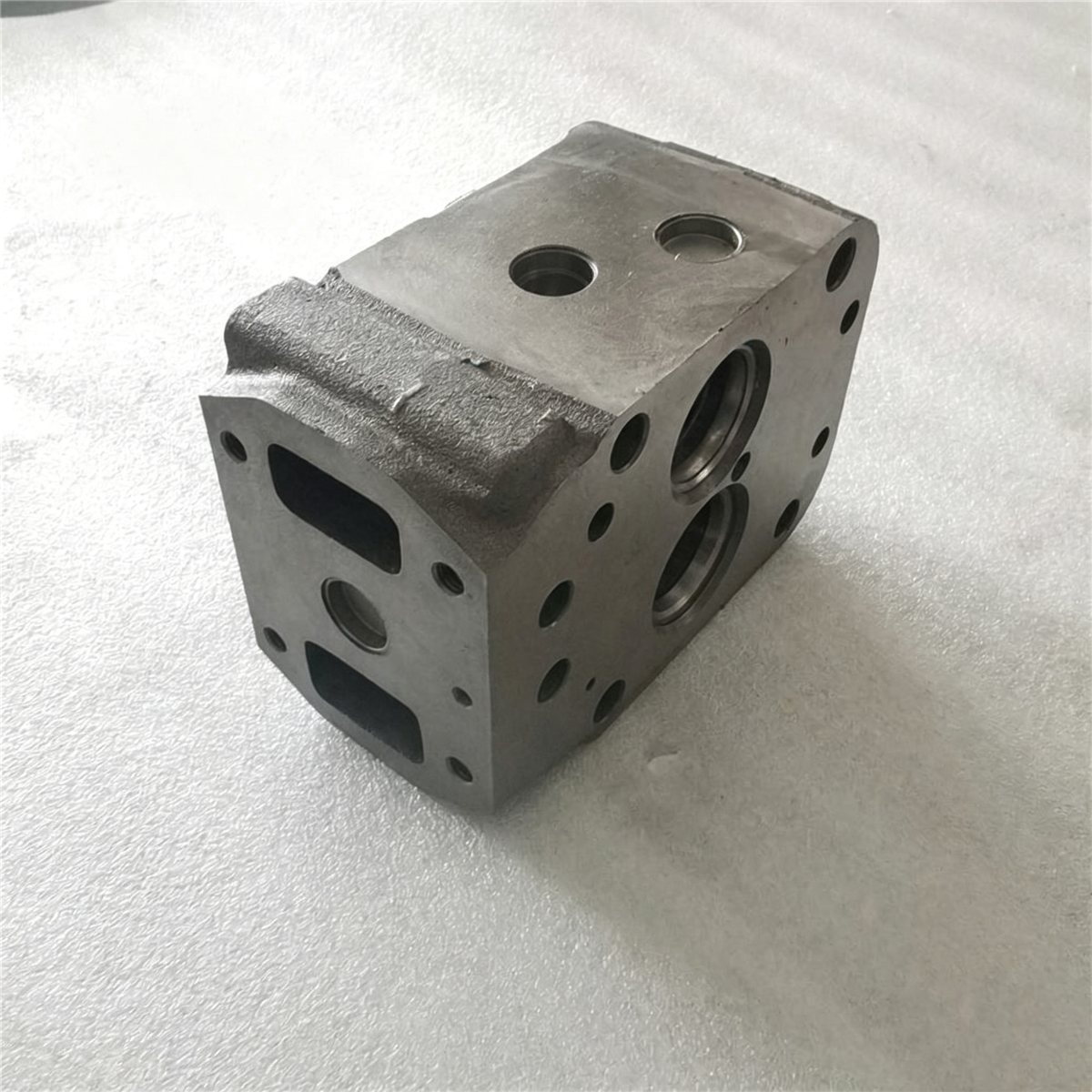
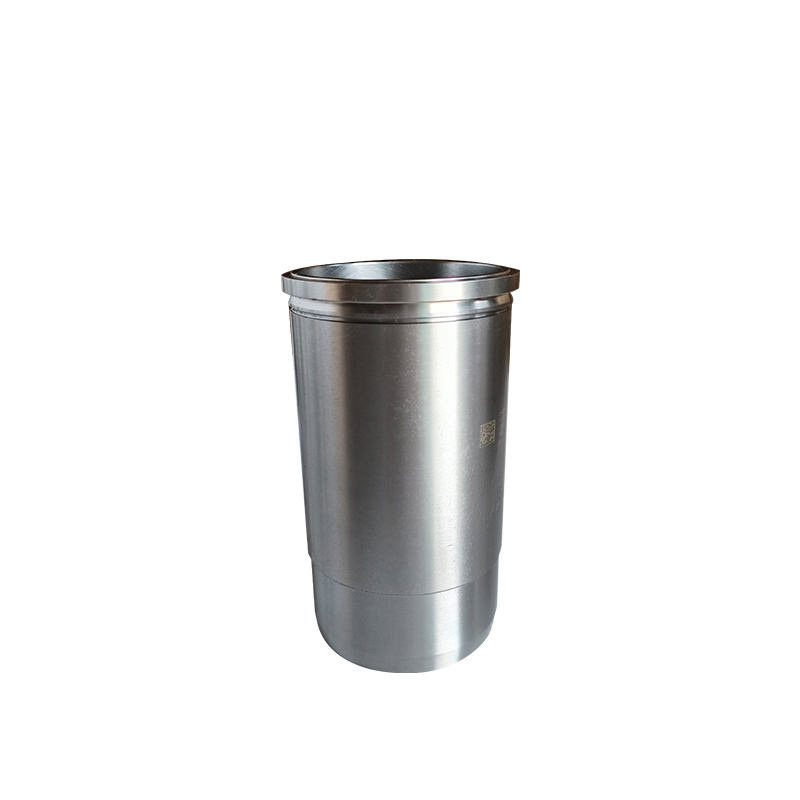
Browse the Weichai pump category, and pair the pump with the WP12 cylinder liner 612630010055 or the WP12 cylinder head 612630040001.
Weichai WP12 Oil Pump (612600081127). Lubrication starts here. The gear set, relief valve and drive must all match the housing, and a mismatch shows up as low pressure from the first start.
Ask whether the relief valve is set for your application. The valve is part of the assembly on these units and its setting is not adjustable in service.
Numbers beginning 6126 belong to the generation shared with the WD618 and early WP12 engines. Parts in this block were revised several times, so the casting or housing is the reliable identifier rather than the number alone. On this engine, confirm the WP12 application against the engine plate before ordering.
Replace the suction-side O-rings and gaskets with the pump. A hardened O-ring at the pick-up joint draws air and reproduces exactly the symptom the new pump was meant to cure.
Ordering note. For fleet customers, a consolidated stock list can be quoted against the engine plates in service, which usually exposes duplicated part numbers across similar units.
Related reading: Oil Pump Diagnosis: Low Pressure, Wear and Replacement
| We Are 30 Years Diesel Engine Parts Supplier | |
| Brand | EPID |
| Warranty | 12 Months |
| Condition | 100%New |
| More Models | Weichai: WP12, WD12, WD618, WP12.430, WP12.460, and other Weichai series. |
| Shipping | By sea / air / express (DHL, FEDEX, TNT, UPS, EMS) |
| Packing | Standard exporting packing or as required |
| Payment Term | L/C, T/T, Western Union, Trade Assurance |
| Delivery Time | 3-7 days (depend on order) |
| Selling Point | 1. On-time Delivery 2. Genuine Quality Assurance 3. Professional Supplier |
Every pump is run on a test bench rather than only inspected. Flow is measured at rated speed against the original curve, the relief valve is opened and its pressure recorded, gear backlash and end clearance are measured, and the housing and joints are leak tested.
Pumps ship oiled and plugged with the drive gear fitted and keyed as original.
Low oil pressure is the headline symptom, but the details matter. Pressure that is low only when hot points to worn bearings as much as a worn pump. Pressure that recovers instantly with engine speed points to the relief valve or pump clearances.
Confirm with a mechanical gauge at the main gallery first. A blocked strainer imitates a worn pump exactly.
Check oil level and condition, replace the filter, inspect the strainer, then measure pressure with a mechanical gauge. Only after those steps should the relief valve and pump come under suspicion. Recording cold idle, hot idle and rated speed gives a clear diagnosis and avoids buying parts that are not needed.
Match the part number, the engine rating and the drive type. If the engine has been rebuilt with a replacement front cover, check that the pump mounting face and drive gear match. Send a photo of the old pump beside a ruler and we will confirm the casting.
Most premature failures come from contaminated oil. Use the specified grade, change it at the severe-duty interval and never run with a leaking injector that thins the oil with diesel. Keep the cooling system healthy, because sustained overheating thins oil and reduces film strength at the bearings.
For fleets, keep a spare pump with gaskets and O-rings on the shelf. Failure is rare but sudden, and a spare turns a two-week wait into an afternoon repair. Include a pick-up O-ring, since it is easy to lose and impossible to improvise.
Fitting a pump without testing the rest of the lubricating system wastes the part. After assembly, measure pressure at three points: cold idle, hot idle and rated speed. Record the figures and compare with specification. A pump that delivers correct rated pressure but drops sharply at hot idle usually has worn bearings downstream, not a pump fault.
Also check that the filter housing bypass is not stuck open and that the oil cooler is not restricted. Both reduce gallery pressure while leaving the pump itself healthy, and both are cheap to fix once identified.
Browse the Weichai pump category, and pair the pump with the WP12 cylinder liner 612630010055 or the WP12 cylinder head 612630040001.
Yes, the mounting gasket and O-ring are supplied.
Yes. Blocked strainer, stuck relief valve, worn bearings or a faulty sender all mimic a pump failure.
The pump comes with its drive gear fitted and timed as original.
At every major overhaul, or whenever the front cover is removed.
EPID supplies diesel engine parts for Weichai, Baudouin, Yuchai, Caterpillar, Sinotruk, FAW Xichai and Cummins engines. Every order is checked against the original part number before packing, and our team can identify a part from a photo of the engine plate. Ask for a quotation with your model and quantity and we will reply within one working day.