Piston rings look like the simplest parts in the engine and are among the easiest to get wrong. A ring set with the right dimensions but the wrong tension will either fail to seal at low speed or wear the bore out within a season, and the symptom in both cases looks identical from the driver’s seat: oil consumption and blow-by.
This guide covers what the three rings actually do, how to measure the gap correctly, why bore condition decides the outcome more than the ring itself, and the checks that prevent a rebuild from burning oil.
A diesel piston normally carries two compression rings and one oil control ring, and each does a different job with a different face treatment.
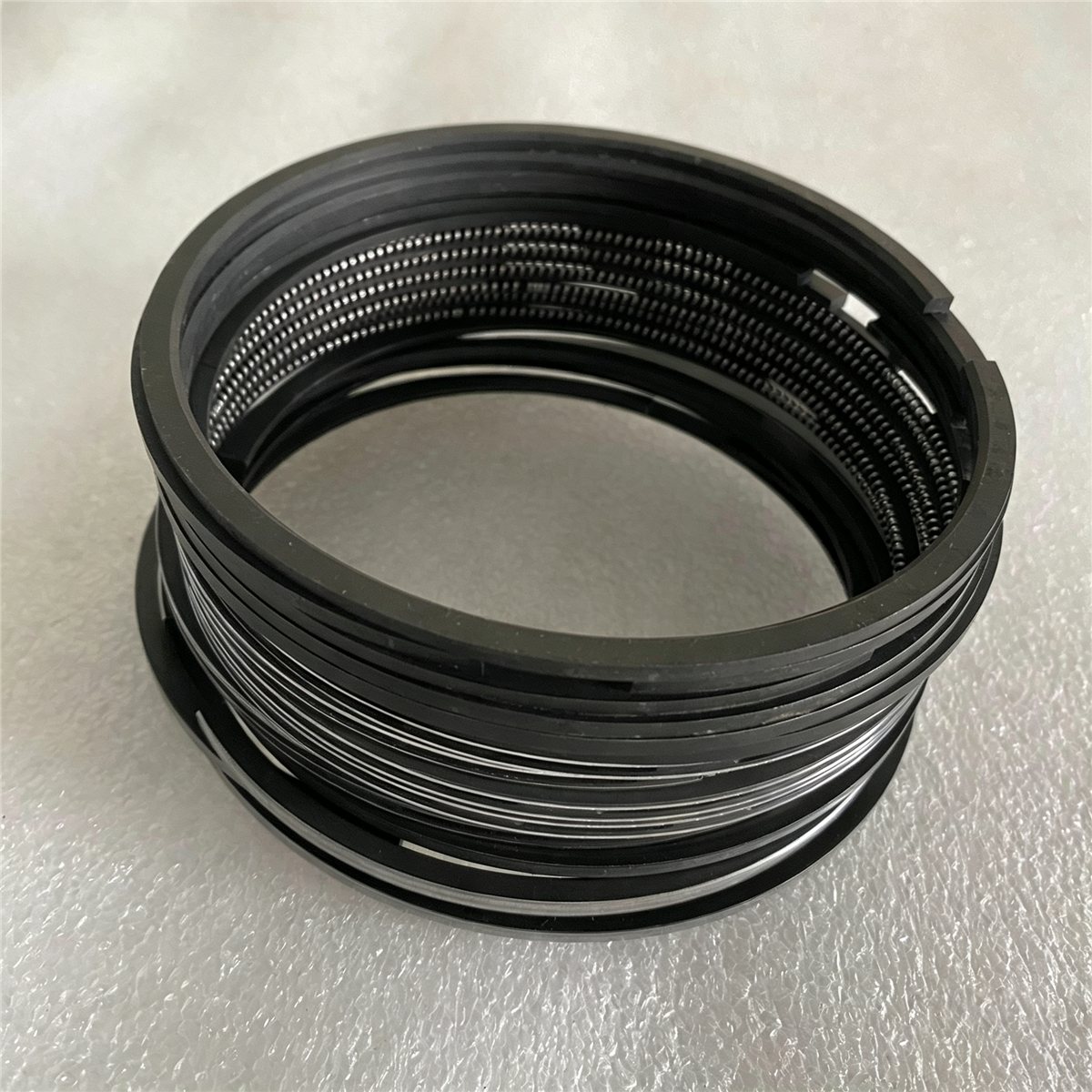
They cannot be swapped between grooves. Fitting a second ring into the top groove produces an engine that starts, runs, and smokes.
The end gap must be measured in the bore the ring will actually run in, with the ring pushed square to a depth near the bottom of ring travel. Three mistakes account for most of the failures:
Push the ring down with the piston crown itself — that squares it automatically and puts it at the right depth.
Radial tension presses the ring against the bore before combustion pressure arrives. A ring with the correct dimensions but the wrong tension either fails to seal at cranking speed or presses too hard and wears the bore.
This is why rings are specified per engine rating rather than by bore diameter alone. Two rings can fit the same groove and behave completely differently.
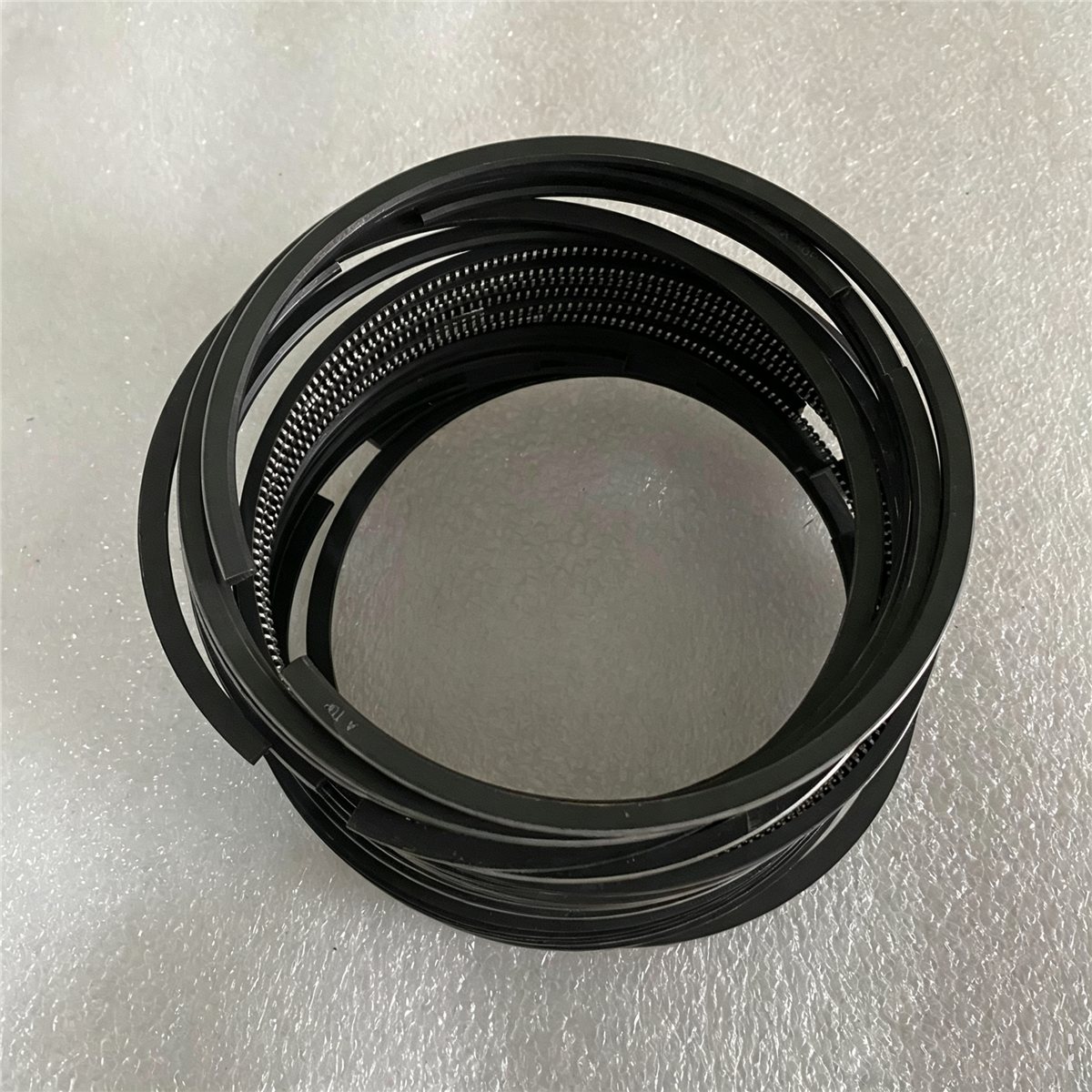
Rings only seal what the bore allows. Before fitting anything, measure the bore at three heights and in two directions, and look for the defects that no ring can compensate for:
If the bore is outside specification, honing removes material without restoring roundness. That is the point where the liner has to be replaced.
A new ring in a worn groove still moves, still hammers the groove face, and still leaks. Measure groove width with the old ring and a feeler gauge. An opened groove lets the ring flutter, and a fluttering ring breaks.
Check the crown for cracks and the skirt for scuffing at the same time. A piston that has been hot can look acceptable and still fail soon after, and the rings are then blamed for it.
| Symptom | Most likely cause | How to confirm |
| Oil consumption rising slowly, no leaks | Oil ring lost tension | Consumption per 1000 km trend |
| Blue smoke at cold start only | Valve guides, not rings | Smoke clears when warm; compression normal |
| Blow-by out of the breather | Compression rings or bore wear | Crankcase pressure test |
| Compression low dry, better with oil added | Rings or bore | Wet and dry compression test |
| Compression low on two adjacent cylinders | Head gasket bridge | Combustion gas test |
| Oil use with clean rings fitted | Glazed bore or wrong gaps | Bore finish inspection |
New rings need cylinder pressure to seat. Run at varying load, increasing gradually over the first hours, and change oil early. Holding full load immediately glazes the bore and leaves the rings unseated — and the engine then uses oil for the rest of its life.
A high-detergent oil can slow bedding-in, so follow the workshop recommendation for the break-in period rather than the normal service oil.
Only if the bore is within specification and still shows a proper cross hatch. A glazed or ridged bore needs more than rings.
Only if the measured gap is outside the specification. Measure first, file second, and re-measure in the bore.
Glazed bores from immediate full load, gaps measured in the wrong bore, or rings fitted upside down. All three are preventable.
One set covers one piston: two compression rings and one oil ring.
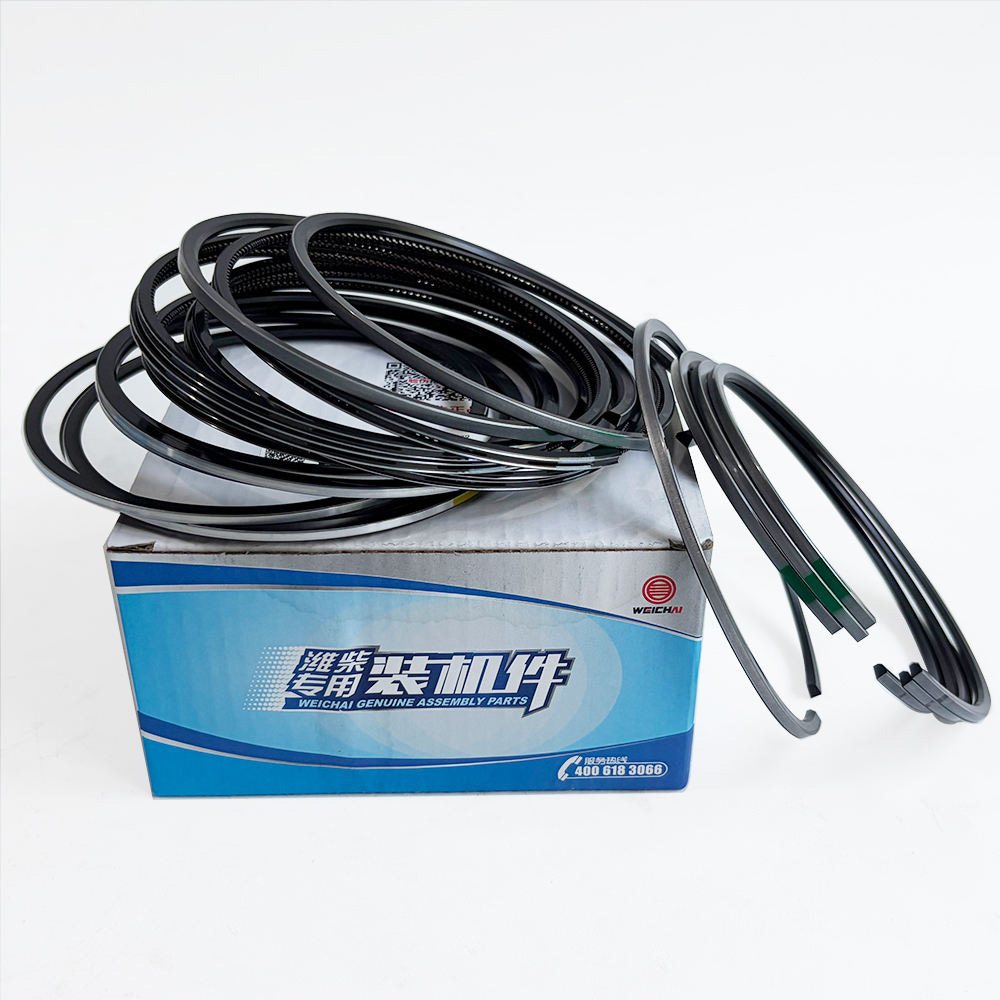
Our Weichai Power parts range is organised by component type, which makes rating variants easier to compare than a model-based catalogue. For ring sets, see the WD615 piston ring set 612600030051, the WD615 piston ring set 612600030053 and the WP7 and WP8 piston ring set 610800030083 pages.
If the piston number is unclear, send photographs of the piston crown and the engine plate. Rings are specified by rating, and the piston identifies which rating the engine actually is.

