Head gasket failure is one of the most misdiagnosed faults on a diesel engine, because the gasket does not fail in one way — it fails in five, and each one produces a different set of symptoms. Replacing the gasket without identifying which failure mode you had is the main reason the same engine comes back with the same complaint a few months later.
This guide separates the failure modes, explains what each one looks like from the driver’s seat and from the workshop, and covers how to choose the right replacement so the new gasket actually seals.
The head gasket sits between the block and the cylinder head and has to seal three separate circuits at once: combustion pressure at the fire ring, coolant around the water passages, and oil returning from the valve train. It also has to conduct heat between two castings that expand at different rates.
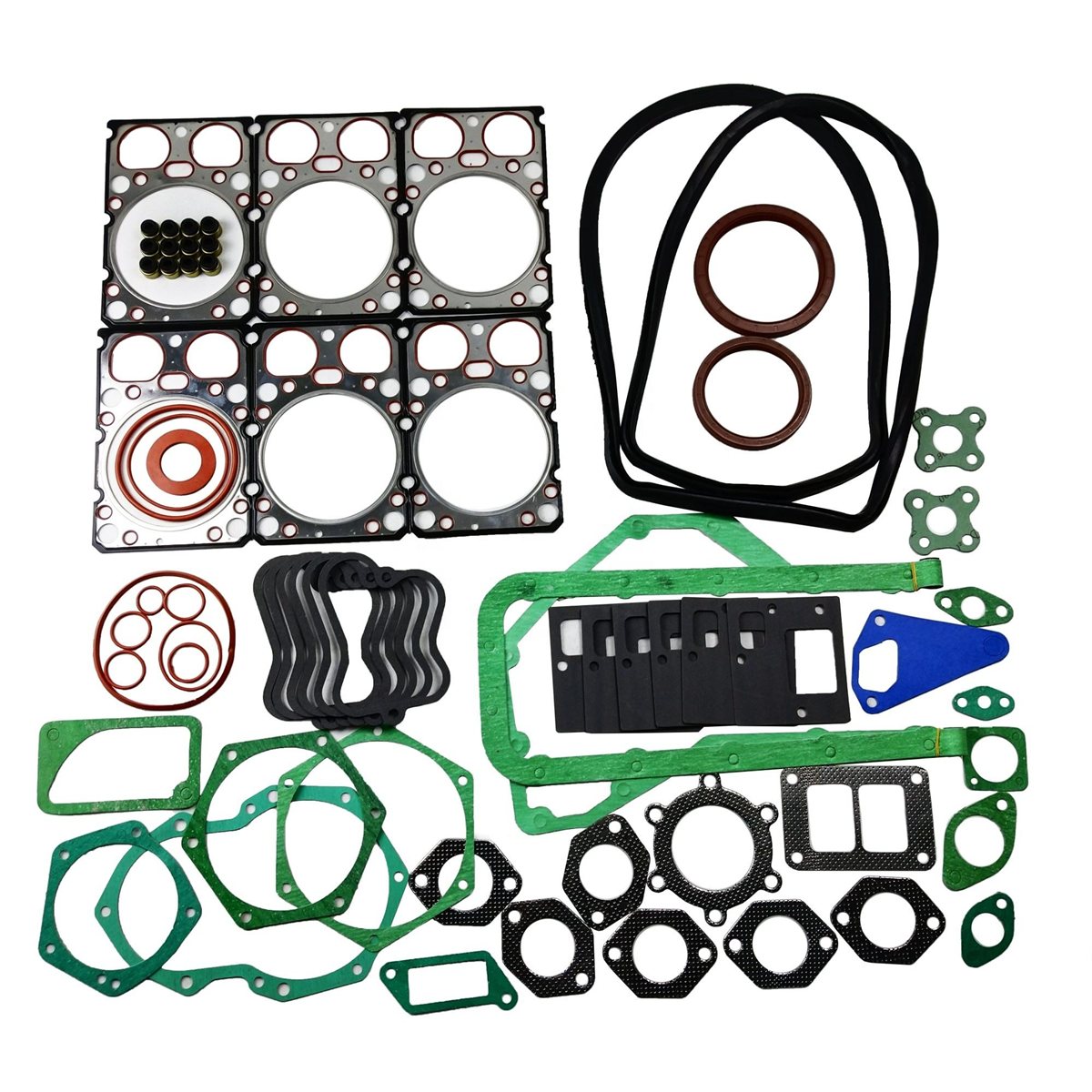
No other gasket in the engine faces that combination. It is why the head gasket fails first, and why a gasket that is only slightly wrong can seem fine at idle and leak badly under load.
The fire ring stops sealing and combustion gas is pushed into the water jacket. The radiator bubbles continuously, coolant is pushed out of the filler, and hoses go hard within minutes of a cold start. This is the most common failure and the easiest to confirm.
Coolant crosses the gasket into the bore, usually overnight when the system is pressurised and the engine is off. The symptom is a misfire or a hydraulic lock on the first start of the day, with white smoke that clears once the coolant is burned off.
The gasket fails on the narrow bridge between two bores. Compression moves from one cylinder into the next, so two cylinders test low and the engine misfires steadily rather than intermittently. A compression test shows the pair clearly.
An oil gallery crosses close to a coolant passage in the gasket. When the seal goes between them, the dipstick shows a milky emulsion or the coolant turns black. Either symptom means the engine should not be run until it is stripped.
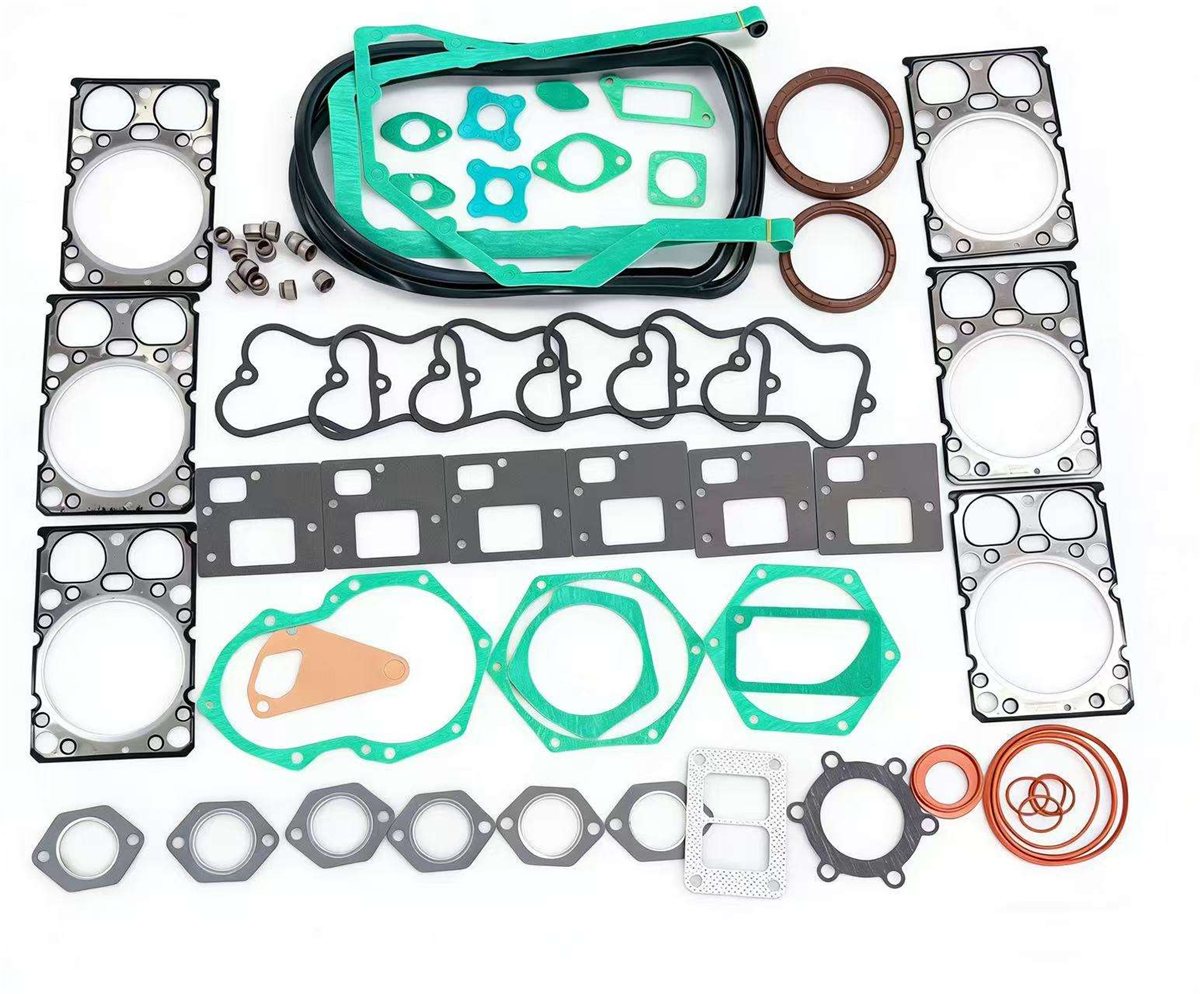
The gasket leaks to the outside of the block, usually at the front or rear. It is the least damaging and the easiest to see: a coolant stain running down the block, with a smell of coolant after a run.
| Symptom | Most likely mode | Confirmation test |
| Bubbles in radiator, hoses hard when cold | Combustion into coolant | Combustion gas test at the radiator |
| Misfire and white smoke on first start | Coolant into cylinder | Pressure test the cooling system overnight |
| Two adjacent cylinders low, steady misfire | Compression bridge leak | Compression test on all cylinders |
| Milky oil or black coolant | Oil and coolant mixing | Visual check plus oil analysis |
| Coolant stain on the block | External leak | Pressure test with the engine cold |
Do not stop at the first symptom. On a used engine it is common to find an external leak and a combustion leak together, because both come from the same underlying cause.
Almost every repeat failure traces back to one of four causes, and all four are measurable before the head goes back on.
Head gaskets are matched to the head casting, and the castings changed across production on every Weichai family. Three features decide compatibility, and all three are visible when the old and new gaskets are laid side by side:
If any of the three differ, stop and check the casting number against the engine plate. A gasket that bolts up but has the wrong fire ring will leak, and the leak will be blamed on the installer.
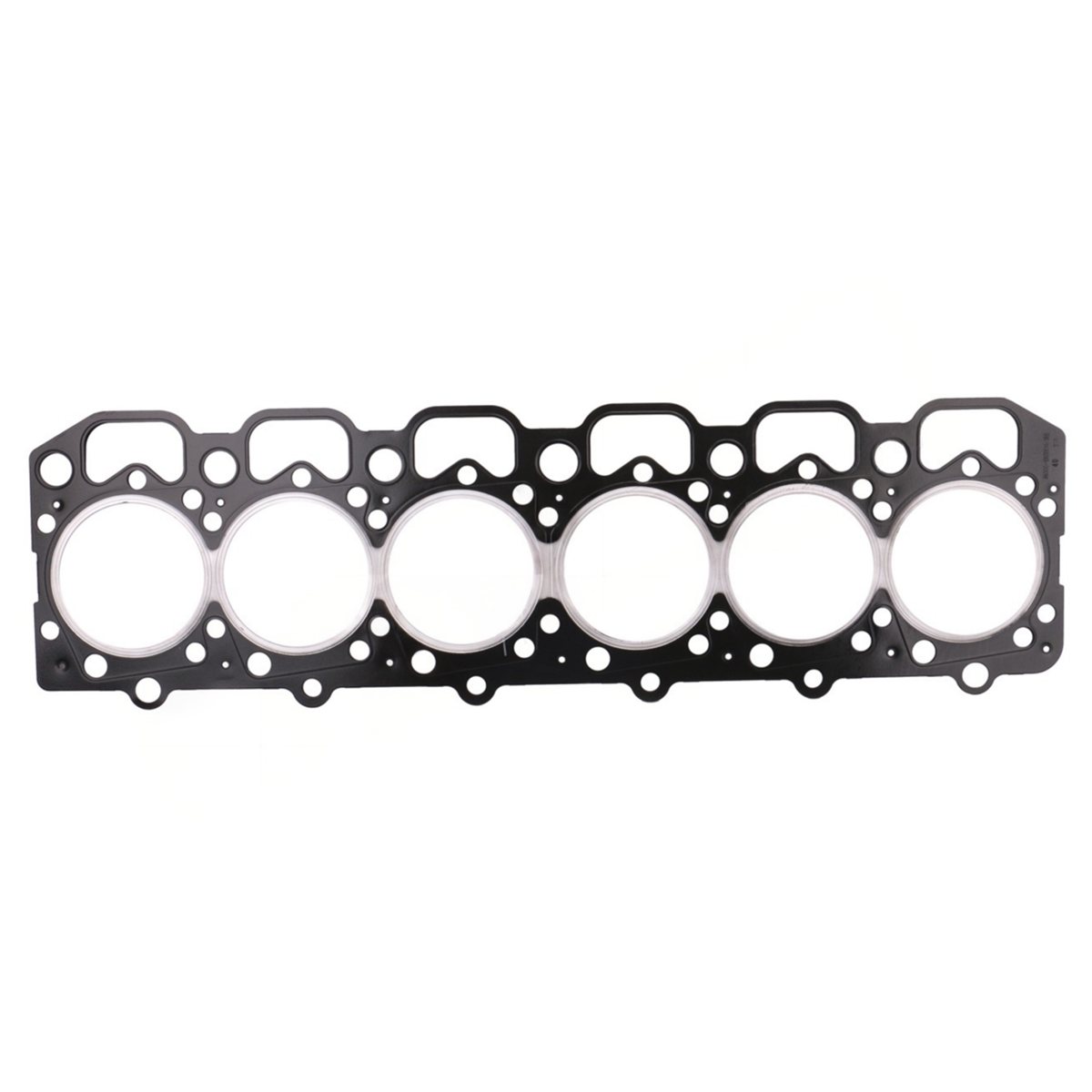
Buying the full gasket set rather than the head gasket alone is usually the better decision on a rebuild: it guarantees that the manifold, injector copper washers and small O-rings are all present and correct for the same casting.
No. Modern composite and MLS gaskets are designed to be installed dry. Sealant prevents the surfaces from seating correctly.
On any engine using torque-to-yield bolts, yes. They are single-use fasteners and reusing them is the most common cause of a repeat leak.
Straight edge and feeler gauge across the deck and the head face, along the length and both diagonals. A machine shop can confirm and skim if material allows.
Usually overheating, a warped head, or liner protrusion that was never correct. Replace the gasket without fixing the cause and it will fail again.
Our Weichai Power parts range is organised by component type, which makes casting variants easier to compare than a model-based catalogue. For full sets that include the head gasket, see the WD615 full gasket kit, the WP12 full gasket kit, the WP7 and WP8 full gasket kit and the WP9 full gasket kit.
If the engine number is unclear, send photographs of the old head gasket and the head casting number. That is normally enough to confirm which generation the engine belongs to before anything ships.

