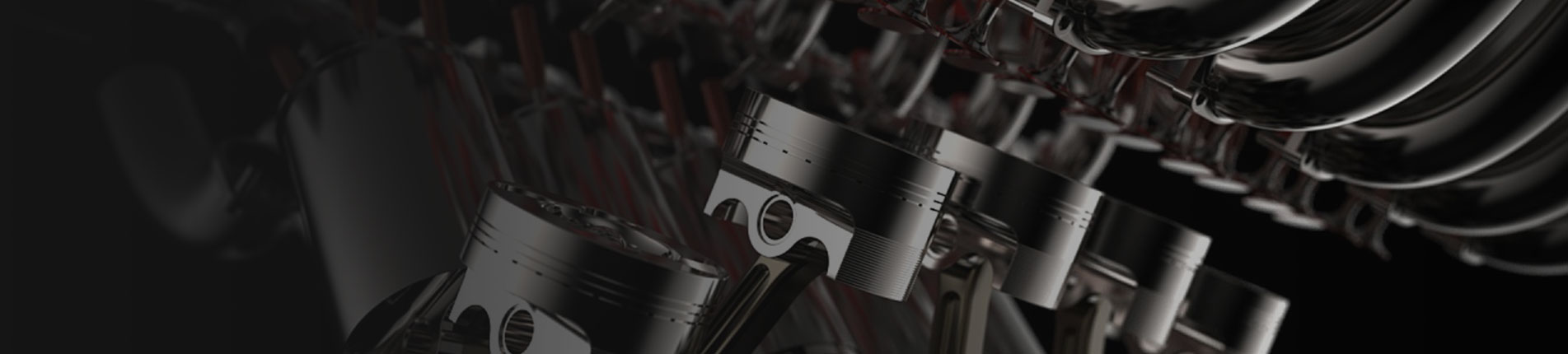
A connecting rod transfers the firing impulse from the piston to the crankshaft, and its big end carries the highest alternating load of any bearing in a diesel engine. Because the rod is a matched assembly rather than a single part, buying the right one depends on the rod number, the piston pin diameter and the weight class of the set.
The table below lists the rod assemblies we hold for the Weichai, Baudouin and Yuchai families. Use the engine plate and the old rod number together — two rods can share a length and big end diameter and still differ in weight class.
| Brand | Engine | Part number | Product page |
| Baudouin | 4M10G | 1004743018 | Baudouin 4M10G Connecting Rod 1004743018 Marine Diesel Parts |
| Weichai | WD615E2 | 61500030009 | Weichai Connecting Rod Kit WD615E2 61500030009 |
| Weichai | WP13 | 612630020017 | Weichai WP13 Connecting Rod 612630020017 Diesel Engine Parts |
| Weichai | WP6 | 12160519 | Weichai WP6 Connecting Rod 12160519 Diesel Engine Parts |
| Weichai | WP7 | 610800030073 | Weichai WP7 WP8 Connecting Rod 610800030073 Diesel Engine Parts |
| Weichai | WP9 | 611600030017 | Weichai WP9 Connecting Rod 611600030017 Diesel Engine Parts |
Three dimensions decide whether a rod will work, and all three are measurable:
Weight class is the fourth factor and the one most often missed. A rod that is 20 grams heavier than the rest of the set produces vibration that is usually misdiagnosed as a crankshaft or damper fault.
Rods on these engines use torque-to-yield bolts. Once tightened they have passed their elastic limit, and reusing them loses clamping load exactly when the cap is under load. A stretched bolt lets the cap fret, the bearing spins and the journal is damaged within a few thousand kilometres.
Order new bolts with the rod, and check the cap mating surface for fretting before assembly. A cap that has already fretted will not hold torque even with new bolts.
No. A bent rod is replaced; straightening a forged rod changes its fatigue life and it will fail again.
No. Big end shells are ordered separately and must match the journal size after any regrind.
Only if weight matching or damage requires it. When replacing fewer than a set, have the new rod weight matched to the others.
Usually oil starvation, incorrect clearance or a stretched bolt that lost clamping load.
Send the old rod number, a photograph of the big end with a ruler alongside, and the engine plate. Those three items identify the variant faster than any catalogue, and they avoid a return on a part that fits but does not match the set.