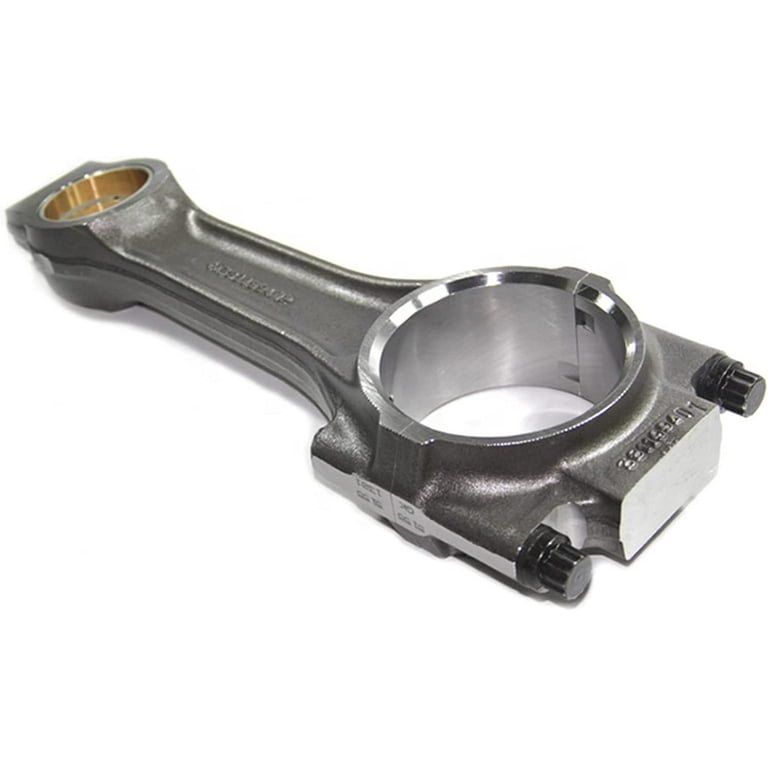
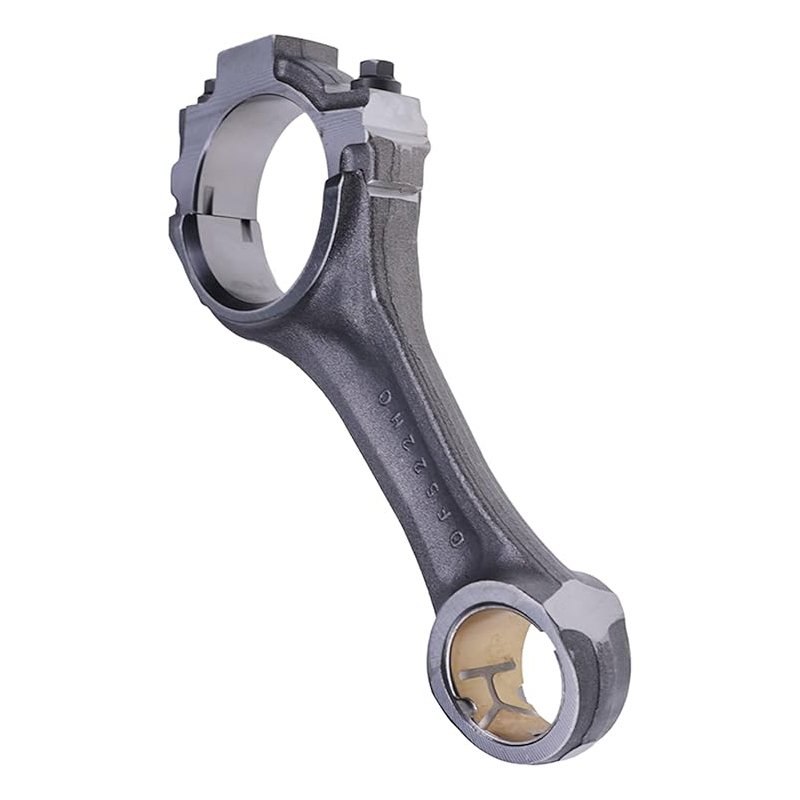
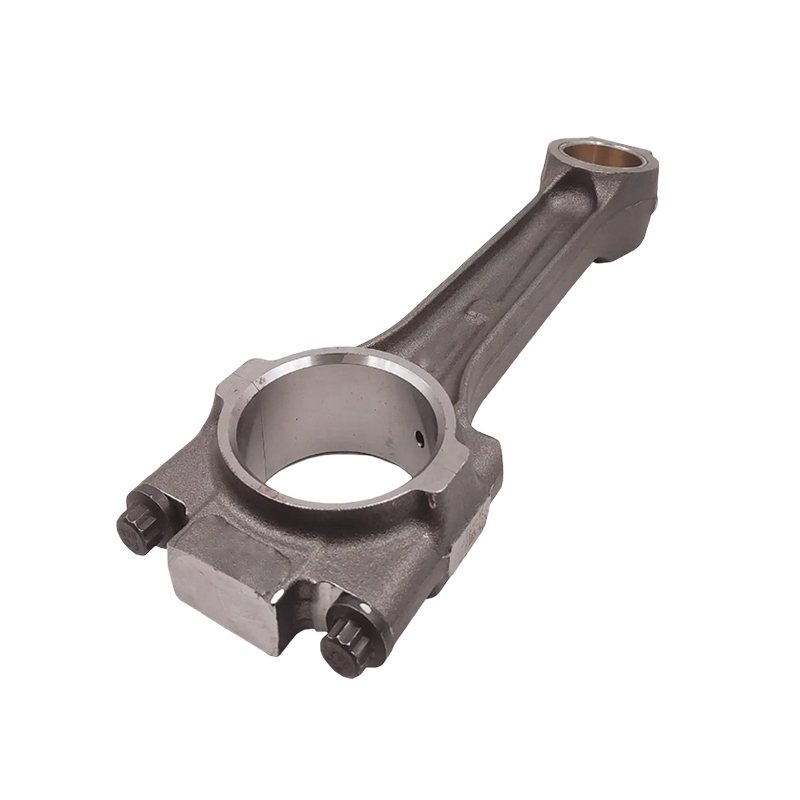
Model: WP7 / WP8
Part Number: 610800030073
Brands: Weichai Power
Engine Model: WP7, WP7H, WP8, WP8H
Engine Type: Diesel
Scope of application: medium and heavy trucks, buses, construction machinery, generator sets
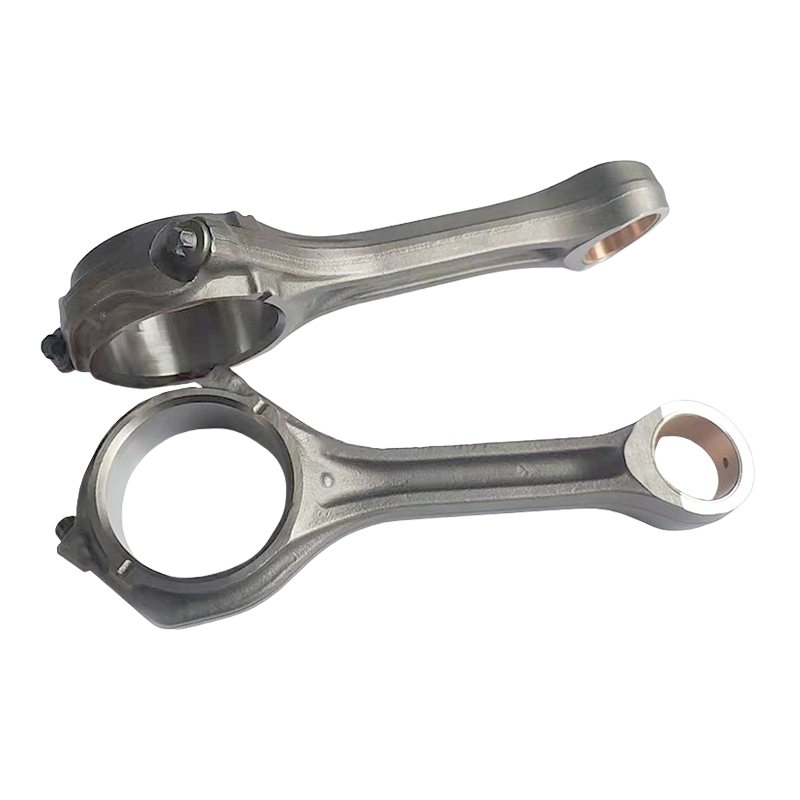
The connecting rod is the link between the piston and the crankshaft. On every revolution it is pulled in tension by the piston's inertia, pushed in compression by combustion pressure and bent sideways as the crank swings. On the Weichai WP7 and WP8, part 610800030073 is the forged steel rod used across the mid-range family, fitted with a small end bush for the piston pin and large end bearing shells for the crank journal.
Because the rod reverses load direction twice per revolution, fatigue failures start at the transition from the shank to the big end. That is why rods are shot peened and why the big end cap must never be mixed between rods: each rod and cap is machined as a matched pair and cannot be swapped.
The rod fits WP7, WP7H, WP8 and WP8H engines in trucks, buses, wheel loaders and generator sets. Confirm the engine plate and the old rod number before ordering: rods from different ratings can share a length but differ in weight and small end diameter, and mixing them unbalances the crankshaft.
Rods are supplied with the small end bush fitted and new rod bolts where applicable. Rod bolts are stretch bolts and must be replaced, not reused.
Once a rod bearing spins, the rod is usually destroyed as well. Continuing to run the engine risks the rod breaking the block.
Match the part number, the engine rating and the piston pin diameter. A rod set from a different rating may be the wrong weight, which shows up as vibration at high speed and early main bearing wear. If the engine has been rebuilt before, check the numbers stamped on the existing rods.
For fleets, keep one rod and one set of shells in stock; rod failures usually appear as a single-cylinder event and can be repaired without replacing the whole set.
Rod life depends on oil pressure and on avoiding detonation. Use the specified oil, change it at the severe-duty interval and never run with a leaking injector that dilutes the oil. Persistent over-fuelling or a failed turbo can cause detonation that hammers the rod bearings, so diagnose excessive smoke or power loss promptly.
The rod bearing is where most rod failures begin. Shells are supplied in standard and undersize grades, and the grade must match the crank journal after any regrind. Always check clearance with plastigauge rather than assuming the shells are correct, because a single undersize journal is easy to miss during assembly.
Rod bolts on this engine are stretch bolts. They are tightened to a torque figure and then to an angle, or measured for stretch with a gauge. Reusing them risks a bolt that has already passed its elastic limit and will fail under load, which usually destroys the block. Fit new bolts every time a rod is opened and keep caps with their original rods.
New rod bolts are supplied where the design uses stretch bolts. They must not be reused.
Yes, if the crankshaft and the other rods are undamaged. Match the weight class of the replacement.
Mount it on a surface plate with a pin in each end and measure the deviation with a dial gauge.
Most often low oil pressure, contaminated oil or detonation. Fix the cause before fitting new parts.
Browse the Weichai piston and components category, and complete the assembly with the WP7 and WP8 piston 610800030035 or the WP7 and WP8 cylinder liner 610800010503.
We offer OEM quality and excellent after-sales service as a complementary option. Engine brands supported include Weichai, Baudouin, Yuchai, Caterpillar, FAW Xichai, Sinotruk, Cummins and other engine parts. Specifically engine overhaul kits, pistons, cylinder liners, crankshafts, camshafts, fuel pumps, water pumps, lube pumps, injectors, and other performance parts.
If you are not sure about the part number that you need, please provide all the information you have, such as the equipment nameplate, engine nameplate or engine number, or real photos.

The connecting rod is the link between the piston and the crankshaft. On every revolution it is pulled in tension by the piston's inertia, pushed in compression by combustion pressure and bent sideways as the crank swings. On the Weichai WP7 and WP8, part 610800030073 is the forged steel rod used across the mid-range family, fitted with a small end bush for the piston pin and large end bearing shells for the crank journal.
Because the rod reverses load direction twice per revolution, fatigue failures start at the transition from the shank to the big end. That is why rods are shot peened and why the big end cap must never be mixed between rods: each rod and cap is machined as a matched pair and cannot be swapped.
The rod fits WP7, WP7H, WP8 and WP8H engines in trucks, buses, wheel loaders and generator sets. Confirm the engine plate and the old rod number before ordering: rods from different ratings can share a length but differ in weight and small end diameter, and mixing them unbalances the crankshaft.
| We Are 30 Years Diesel Engine Parts Supplier | |
| Brand | EPID |
| Warranty | 12 Months |
| Condition | 100%New |
| More Models | Weichai: WP7, WP7H, WP8, WP8H, and other Weichai series. |
| Shipping | By sea / air / express (DHL, FEDEX, TNT, UPS, EMS) |
| Packing | Standard exporting packing or as required |
| Payment Term | L/C, T/T, Western Union, Trade Assurance |
| Delivery Time | 3-7 days (depend on order) |
| Selling Point | 1. On-time Delivery 2. Genuine Quality Assurance 3. Professional Supplier |
Rods are supplied with the small end bush fitted and new rod bolts where applicable. Rod bolts are stretch bolts and must be replaced, not reused.
Once a rod bearing spins, the rod is usually destroyed as well. Continuing to run the engine risks the rod breaking the block.
Match the part number, the engine rating and the piston pin diameter. A rod set from a different rating may be the wrong weight, which shows up as vibration at high speed and early main bearing wear. If the engine has been rebuilt before, check the numbers stamped on the existing rods.
For fleets, keep one rod and one set of shells in stock; rod failures usually appear as a single-cylinder event and can be repaired without replacing the whole set.
Rod life depends on oil pressure and on avoiding detonation. Use the specified oil, change it at the severe-duty interval and never run with a leaking injector that dilutes the oil. Persistent over-fuelling or a failed turbo can cause detonation that hammers the rod bearings, so diagnose excessive smoke or power loss promptly.
The rod bearing is where most rod failures begin. Shells are supplied in standard and undersize grades, and the grade must match the crank journal after any regrind. Always check clearance with plastigauge rather than assuming the shells are correct, because a single undersize journal is easy to miss during assembly.
Rod bolts on this engine are stretch bolts. They are tightened to a torque figure and then to an angle, or measured for stretch with a gauge. Reusing them risks a bolt that has already passed its elastic limit and will fail under load, which usually destroys the block. Fit new bolts every time a rod is opened and keep caps with their original rods.
Browse the Weichai piston and components category, and complete the assembly with the WP7 and WP8 piston 610800030035 or the WP7 and WP8 cylinder liner 610800010503.
New rod bolts are supplied where the design uses stretch bolts. They must not be reused.
Yes, if the crankshaft and the other rods are undamaged. Match the weight class of the replacement.
Mount it on a surface plate with a pin in each end and measure the deviation with a dial gauge.
Most often low oil pressure, contaminated oil or detonation. Fix the cause before fitting new parts.
EPID supplies diesel engine parts for Weichai, Baudouin, Yuchai, Caterpillar, Sinotruk, FAW Xichai and Cummins engines. Every order is checked against the original part number before packing, and our team can identify a part from a photo of the engine plate. Ask for a quotation with your model and quantity and we will reply within one working day.