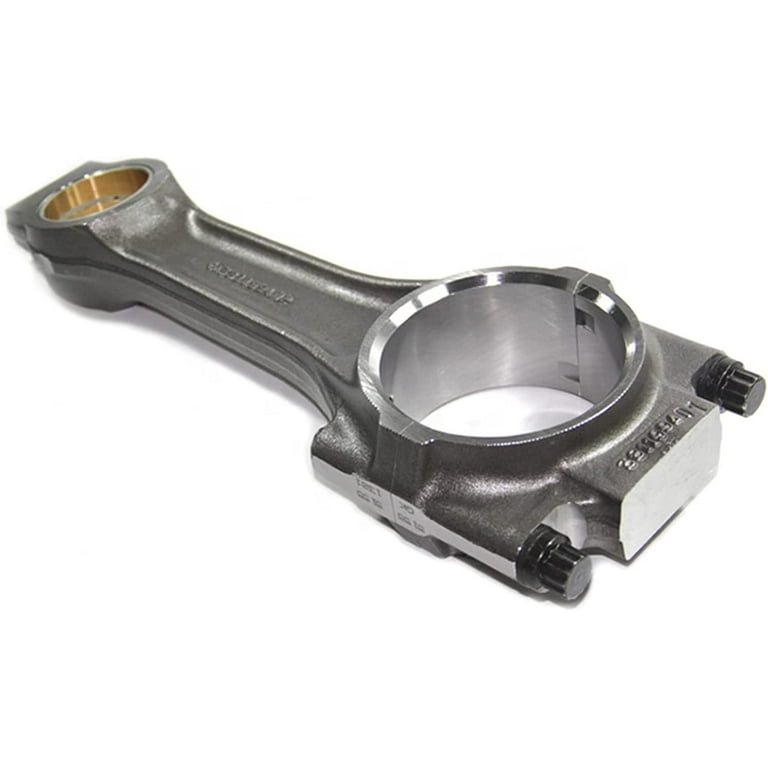

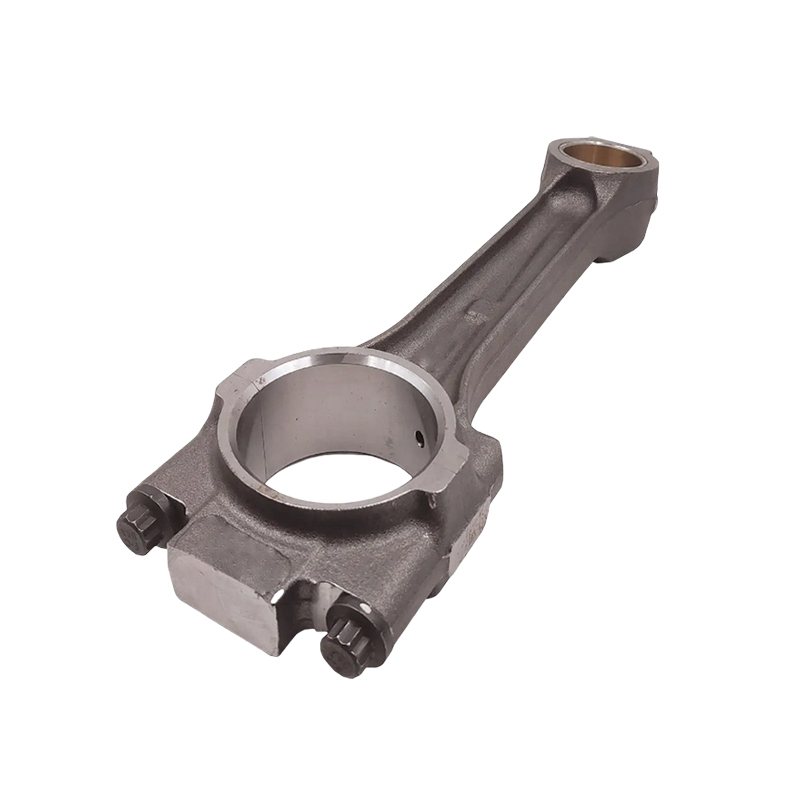
Model: 4M10G110 / 4M10G70 / 4M10G88
Part Number: 1004743018
Brands: Baudouin
Engine Model: 4M10G70, 4M10G88, 4M10G110
Engine Type: Marine and industrial diesel
Scope of application: marine propulsion, marine auxiliary, generator sets, industrial power units
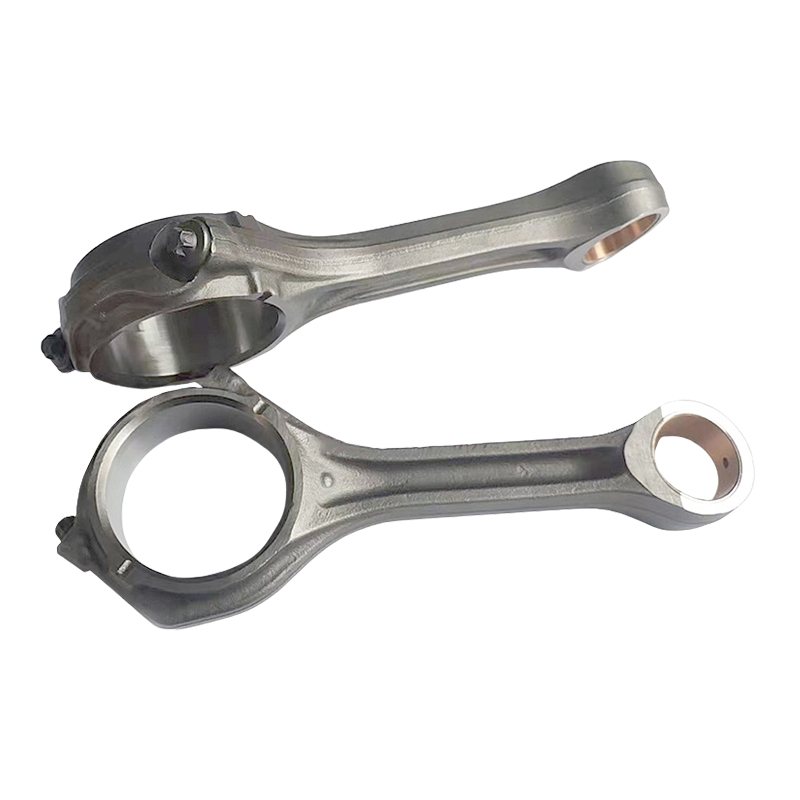
The connecting rod reverses load twice per revolution. It is pulled in tension by piston inertia, pushed in compression by combustion and bent sideways as the crank swings. Part 1004743018 is the forged rod shared by the Baudouin 4M10G70, 4M10G88 and 4M10G110 engines, fitted with a small end bush for the piston pin and bearing shells at the big end.
Marine duty adds a twist. These engines run at steady load for hours, so the rod sees millions of cycles without the load variation that a truck experiences. Fatigue is therefore the dominant failure mode, which is why rods are shot peened and why the cap must stay with its original rod.
Because all three 4M10G ratings share the same rod, operators running mixed engines can keep a single spare. Confirm the engine plate and the old rod number before ordering, and check that the piston pin diameter matches, since some later production batches changed pin sizing.
Rods ship with the bush fitted and new rod bolts where the design uses stretch bolts.
In an engine room the knock is often masked by other noise, so oil analysis and pressure records catch the problem earlier than the ear does.
Match the part number, the engine rating and the piston pin diameter. A rod from a different rating may be the wrong weight, which shows up as vibration transmitted through the propeller shaft. Check the numbers stamped on the existing rods if the engine has been rebuilt before.
The rod bearing is where most failures begin. Shells come in standard and undersize grades and the grade must match the journal after any regrind. Always check clearance with plastigauge rather than assuming. Rod bolts are stretch bolts and must be replaced every time a rod is opened.
Rod alignment is measured with a fixture or a surface plate and pins. Bend shows as a height difference between pins, twist as an angular difference. A rod that is out by only a little still fits, but it loads the piston against the bore and wears the bearing on one side.
Detonation hammers the piston and rod on every cycle, squeezing the oil film out of the big end bearing until the shell fatigues. Marine engines that have run with a faulty injector or over-pitched propeller often show rod bearing damage with no obvious wear elsewhere.
Rods are packed in a rigid carton with the big end protected and caps wired to their rods so they cannot be mixed in transit. If the shipment includes pistons, tell us so the rods can share the carton and freight.
Rod life depends on oil pressure and on avoiding detonation. Use the specified oil, change it at the hours-based interval for marine duty and never run with a leaking injector that dilutes the oil. Diagnose smoke or power loss promptly rather than waiting for the next service.
On a four-cylinder engine the rods and pistons are the largest reciprocating masses, and any imbalance shows up as vibration through the engine mounts and the propeller shaft. That is why rods are weight matched within a set and why replacing a single rod requires matching its weight class.
If vibration appears after a rebuild, check rod weights and piston weights before blaming the damper or the propeller. An out-of-balance assembly will shake the whole installation and can damage mounts and couplings within months.
Yes, the same rod covers 4M10G70, 4M10G88 and 4M10G110.
New rod bolts are supplied where the design uses stretch bolts.
Yes, if the crank and other rods are undamaged. Match the weight class.
Mount on a surface plate with pins in both ends and measure with a dial gauge.
Browse the Baudouin piston and components category, and pair the rod with the 4M10G crankshaft 1004743021 or the 4M10G piston range.
Baudouin Connecting Rod (1004743018). Load path from piston to crankshaft runs through this rod. The small end bush and the big end bore are both wear surfaces, and both are measured rather than judged by eye.
Confirm the rod is weight matched to the set if you are replacing fewer than six. Mismatched rods produce vibration that is often traced to the crankshaft instead.
Numbers beginning 1004 are numeric-series numbers used on later WP7 and WP8 production, where mounting detail changed without a change of nominal type.
Use new rod bolts. A stretched bolt loses clamping load and the cap frets under load, which destroys the bearing and then the journal in quick succession.
Ordering note. Lead time depends on whether the item is in stock or has to be produced; the position is confirmed before the order is accepted rather than after payment.
Related reading: Piston Ring Selection: Gap, Tension and Bore Condition
| We Are 30 Years Diesel Engine Parts Supplier | |
| Brand | EPID |
| Warranty | 12 Months |
| Condition | 100%New |
| More Models | Weichai: 4M10G70, 4M10G88, 4M10G110, and other Weichai series. |
| Shipping | By sea / air / express (DHL, FEDEX, TNT, UPS, EMS) |
| Packing | Standard exporting packing or as required |
| Payment Term | L/C, T/T, Western Union, Trade Assurance |
| Delivery Time | 3-7 days (depend on order) |
| Selling Point | 1. On-time Delivery 2. Genuine Quality Assurance 3. Professional Supplier |
Rods ship with the bush fitted and new rod bolts where the design uses stretch bolts.
In an engine room the knock is often masked by other noise, so oil analysis and pressure records catch the problem earlier than the ear does.
Match the part number, the engine rating and the piston pin diameter. A rod from a different rating may be the wrong weight, which shows up as vibration transmitted through the propeller shaft. Check the numbers stamped on the existing rods if the engine has been rebuilt before.
The rod bearing is where most failures begin. Shells come in standard and undersize grades and the grade must match the journal after any regrind. Always check clearance with plastigauge rather than assuming. Rod bolts are stretch bolts and must be replaced every time a rod is opened.
Rod alignment is measured with a fixture or a surface plate and pins. Bend shows as a height difference between pins, twist as an angular difference. A rod that is out by only a little still fits, but it loads the piston against the bore and wears the bearing on one side.
Detonation hammers the piston and rod on every cycle, squeezing the oil film out of the big end bearing until the shell fatigues. Marine engines that have run with a faulty injector or over-pitched propeller often show rod bearing damage with no obvious wear elsewhere.
Rods are packed in a rigid carton with the big end protected and caps wired to their rods so they cannot be mixed in transit. If the shipment includes pistons, tell us so the rods can share the carton and freight.
Rod life depends on oil pressure and on avoiding detonation. Use the specified oil, change it at the hours-based interval for marine duty and never run with a leaking injector that dilutes the oil. Diagnose smoke or power loss promptly rather than waiting for the next service.
On a four-cylinder engine the rods and pistons are the largest reciprocating masses, and any imbalance shows up as vibration through the engine mounts and the propeller shaft. That is why rods are weight matched within a set and why replacing a single rod requires matching its weight class.
If vibration appears after a rebuild, check rod weights and piston weights before blaming the damper or the propeller. An out-of-balance assembly will shake the whole installation and can damage mounts and couplings within months.
Browse the Baudouin piston and components category, and pair the rod with the 4M10G crankshaft 1004743021 or the 4M10G piston range.
Yes, the same rod covers 4M10G70, 4M10G88 and 4M10G110.
New rod bolts are supplied where the design uses stretch bolts.
Yes, if the crank and other rods are undamaged. Match the weight class.
Mount on a surface plate with pins in both ends and measure with a dial gauge.
EPID supplies diesel engine parts for Weichai, Baudouin, Yuchai, Caterpillar, Sinotruk, FAW Xichai and Cummins engines. Every order is checked against the original part number before packing, and our team can identify a part from a photo of the engine plate. Ask for a quotation with your model and quantity and we will reply within one working day.