The Weichai WP13 is the engine that pushed Chinese heavy haulage into the 500 hp class, and it is now one of the most rebuilt engines in mining and long-haul fleets. Rebuilding one is expensive, and the difference between a rebuild that lasts and one that fails within a season is almost always decided before the first part is bolted on — by whether the pistons, liners and gaskets actually match the rating.
This guide covers what varies inside the WP13 family, which components are shared with the WP12, and the measurements that decide fitment. It is aimed at the buyer who has an engine in front of them and a parts list to confirm.
The WP13 is a 12.5-litre class inline six, used in heavy haulage trucks, mining dump trucks, construction machinery and stationary power. It is normally badged by output — WP13.480, WP13.500, WP13.550 and similar — and those badges matter more than the displacement when it comes to parts, because the rating is what determines the piston, the injectors and the turbo match.
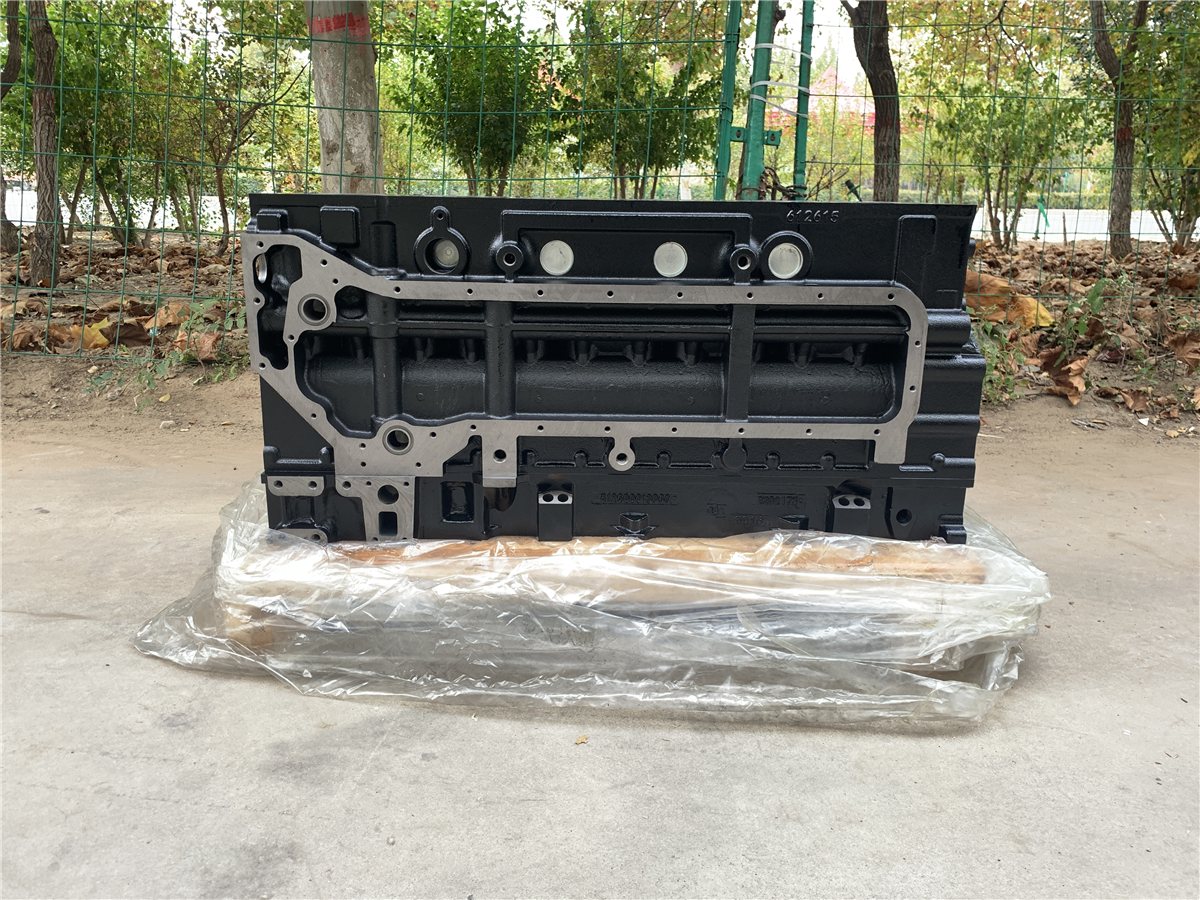
The engine shares its general architecture with the WP12 but is not a scaled copy. Blocks, crankshafts and heads are distinct parts, and the bolts that hold them are not interchangeable. Anyone who has rebuilt a WP12 should still treat the WP13 as a separate engine.
WP13 cylinder blocks appear under more than one casting number, including 612700010001 and 1003217584. The differences are usually in the front cover pattern, the engine mount pads or the accessory faces rather than in bore spacing or deck height.
That distinction is easy to miss and expensive to discover late: a block from the wrong revision accepts the crankshaft and the liners and then refuses the brackets and the front cover you already own. Confirm the casting number and photograph the mount pads before ordering.
When a block arrives, re-measure the deck for flatness and have the main bore alignment checked. Shipping can move a block on its skid, and the figures you measure on arrival become the reference the whole rebuild is built around.
Several overhaul kit numbers exist for the WP13, including 1002347071, 1008692116 and 1008692189. They are not marketing variants of the same contents — the piston and ring specification differs between them, following the compression ratio and injector set of a particular rating.
A kit from the wrong rating assembles perfectly and then produces smoke, poor economy or a hard cold start, and nobody traces it back to the kit. The reliable check is physical: compare the old piston crown with the new one, and compare the old head gasket with the new one for fire ring position and thickness.
Kits cover the wearing parts — pistons, rings, liners and the gasket set. Bearings and stretch bolts are ordered separately because they depend on the crankshaft size and on the condition of the block, so plan them in the same order rather than discovering the gap mid-rebuild.
The WP13 uses wet liners and relies on the same two measurements as every other wet-liner engine: bore roundness and protrusion above the deck.
Protrusion is the height the liner stands proud of the block face, and it is what allows the fire ring to crush onto the liner top and seal combustion pressure. Measure it on every cylinder with a dial gauge and write the numbers down. Too low and gas escapes into the coolant; uneven across cylinders and the head is clamped against different heights, so the gasket is loaded unevenly and fails at the weakest point.
Pistons must match the rating. The crown bowl shapes how fuel and air mix, so a piston from a neighbouring rating fits the bore and changes combustion. Rings must suit the piston groove, and the end gap must be measured in the bore the ring will actually run in.
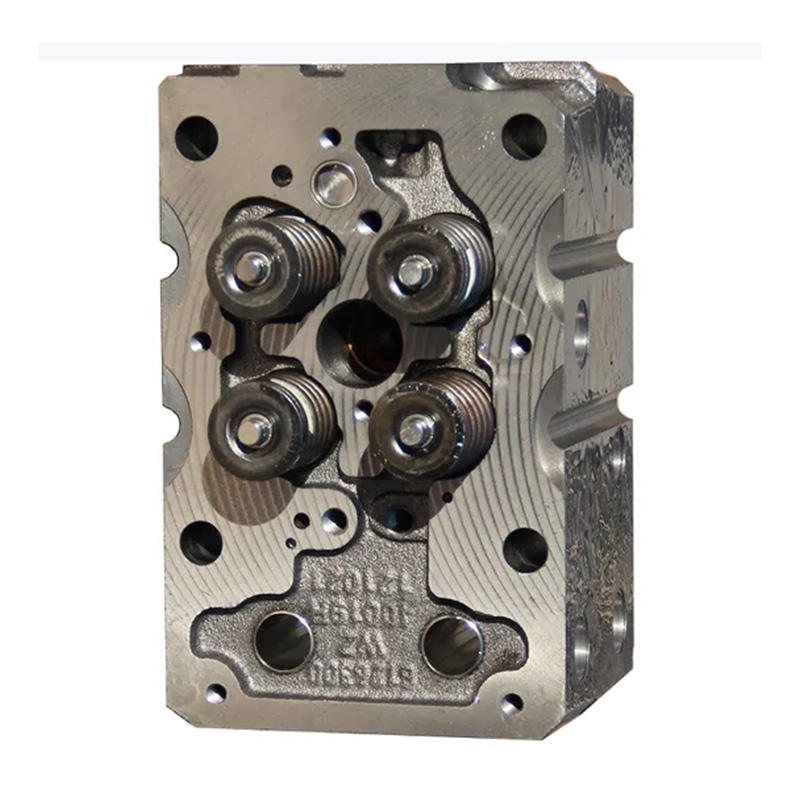
WP13 heads were revised over the production life, and more than one head number is in circulation — 612700040030 and 1000721713 among them. Injector bore depth, port shape and coolant outlet position differ between revisions, and none of that is visible once the head is torqued down.
Compare the old head gasket with the new one before the engine is stripped: fire ring position, coolant hole pattern and thickness. If any of the three differ, stop and check the casting number against the engine plate.
Head bolts are torque-to-yield and single use. Reusing them reduces clamping load exactly where the gasket needs it most, under full load at working temperature.
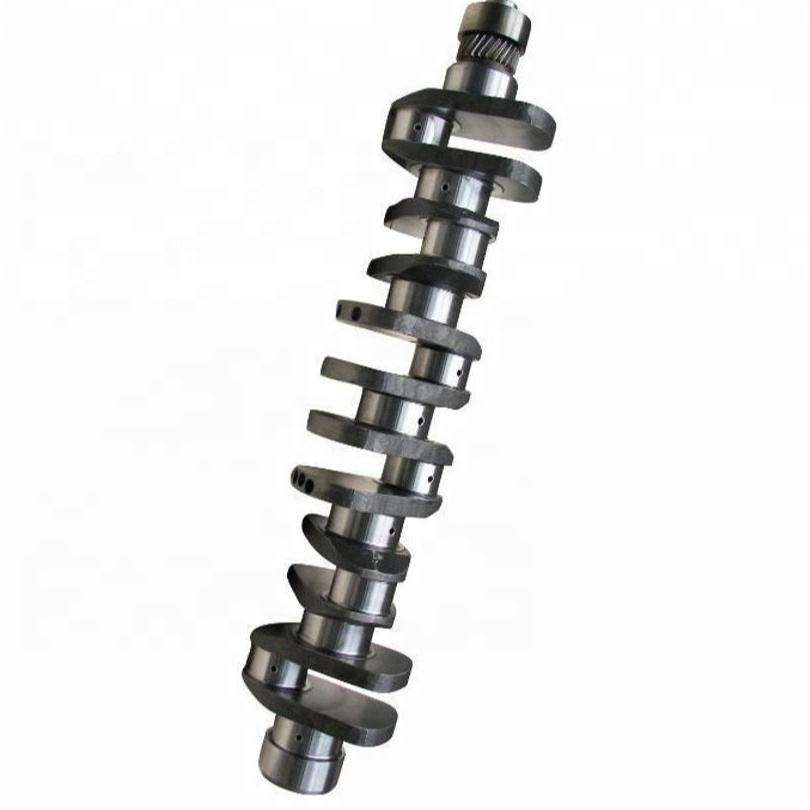
WP13 crankshafts also appear under multiple numbers, such as 612700020003 and 1003217585, and the differences are usually at the front and rear ends rather than at the journals: damper fixing, flywheel flange, pilot bore.
Two shafts can measure identically at every journal and still not be interchangeable. Photograph both ends of the old shaft with a ruler alongside before ordering.
Journal ovality is what kills bearings. Measure it at several positions along each journal, not at one point, and check the fillet radii — fatigue cracks start at the transition from journal to web, and a shaft reground without restoring the radius will crack there. Replace the damper with the shaft.
WP13 oil pumps sit in a long numeric sequence, and adjacent numbers frequently share a housing casting while differing in drive gear, pick-up tube or relief valve setting. A pump with the wrong drive bolts up and fails to feed correctly, and the bearing damage happens within seconds of the first start.
The camshaft should be fitted with new lifters, new bearings and a thrust plate. Used lifters carry a wear pattern matched to the old lobes and will scuff a new shaft within minutes of running.
| Part | Measure / record | Why it decides fitment |
| Cylinder block | Casting number, front cover pattern, mount pads | Revisions change accessory mounting |
| Overhaul kit | Old piston crown, old head gasket, engine plate | Kit follows the rating, not the model |
| Liner | Bore at three heights, two directions, flange thickness | Roundness and protrusion decide sealing |
| Piston | Bowl profile, groove width, skirt diameter | Bowl is matched to the rating |
| Cylinder head | Casting number, injector bore depth | Revision changes combustion and injector seating |
| Crankshaft | Journal diameter and ovality, damper fixing, flange | Ends differ even when journals match |
| Oil pump | Drive gear, pick-up, relief setting | Wrong drive means no oil pressure |
Some fasteners and consumables may be, but blocks, crankshafts and heads are distinct. Treat them as different engines.
Compare the old piston crown and the head casting, or send photographs of both with the engine plate.
Only if the deck is flat and the bores are inside specification. Both are measurable before assembly.
Usually glazed bores from immediate full load, ring gaps measured in the wrong bore, or rings fitted upside down. The break-in procedure matters as much as the parts.
Our Weichai Power parts range is organised by component type, which makes variants easier to compare than a model-based catalogue. For the parts discussed here, see the WP13 cylinder block 612700010001, the WP13 cylinder head 612700040030, the WP13 cylinder liner 612700010010, the WP13 crankshaft 612700020003 and the WP13 oil pump 612700010007 pages.
If the numbers on your engine are unreadable, send photographs of the component from two angles with a ruler alongside, plus a clear photo of the engine plate. That is normally enough to confirm the variant before anything ships.

