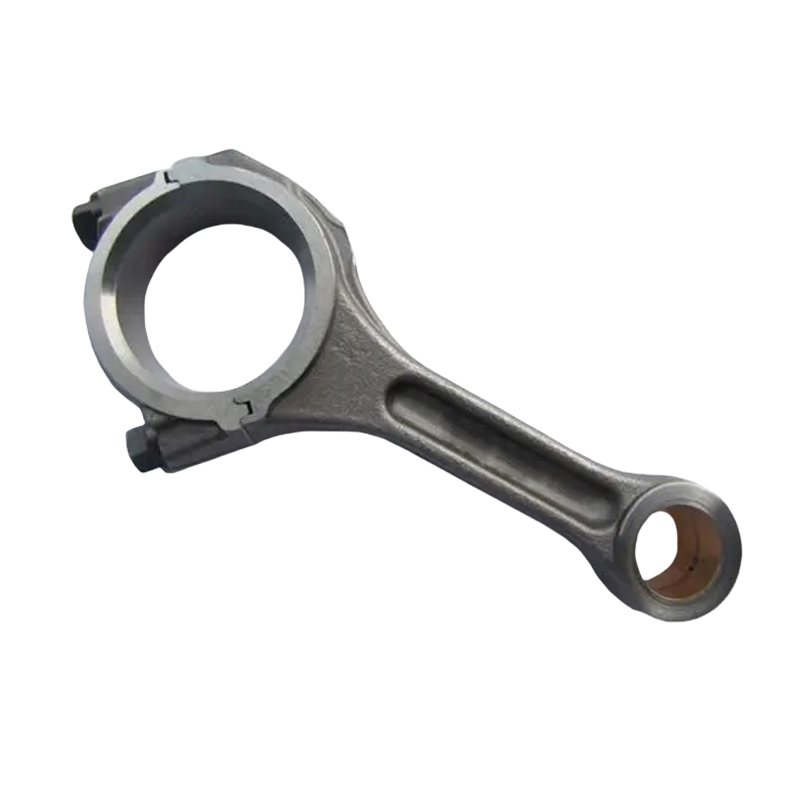
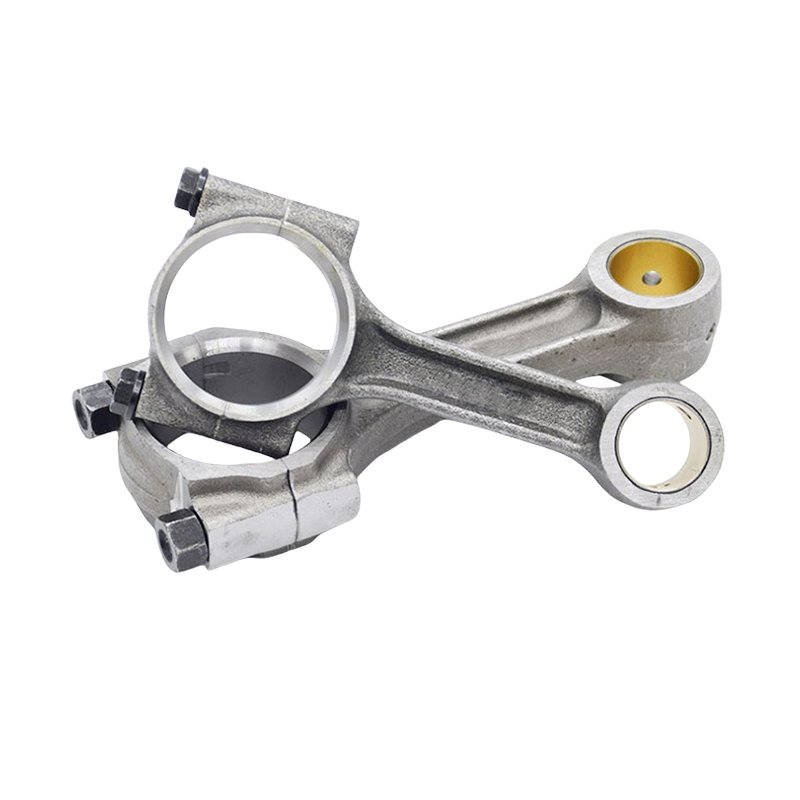
Model: WP13
Part Number: 1000701437
Brands: Weichai Power
Engine Model: WP13, WP13.480, WP13.500, WP13.550, WP13.580
Engine Type: Diesel
Scope of application: heavy haulage trucks, mining dump trucks, construction machinery, generator sets
The WP13 has been supplied with more than one connecting rod number, and part 1000701437 is one of them, distinct from 612630020017. The differences are usually in weight class or in the small end bush diameter, tied to a production revision of the piston and pin.
That matters because rods are weight matched within a set. Fitting one rod from a different weight class produces vibration at speed and loads the main bearings unevenly, and the fault is hard to trace once the engine is assembled. Always check the number on the existing rod if the engine has been rebuilt before.
The connecting rod reverses load twice per revolution. It is pulled in tension by piston inertia, pushed in compression by combustion and bent sideways as the crank swings. On a 13-litre engine those loads are large, and the rod is one of the parts where a fatigue failure can destroy the block.
Because the load reverses, cracks begin at the transition from the shank to the big end. That is why rods are shot peened and why the cap must stay with its original rod: each pair is machined together and cannot be swapped without losing bore alignment.
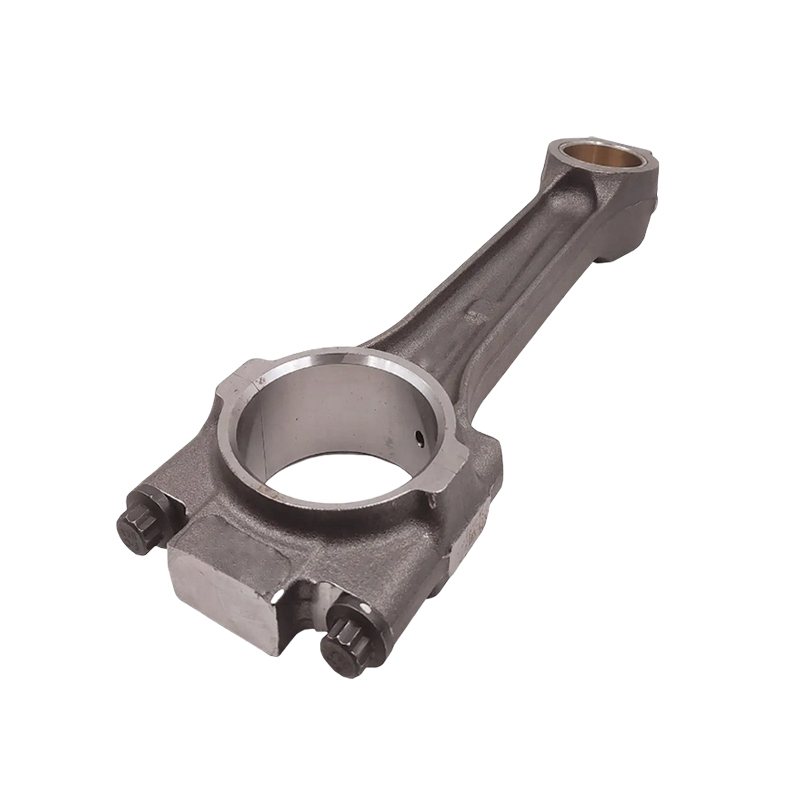
Rods are forged from alloy steel with controlled grain flow, shot peened and then machined. The big end bore and small end bush are finished to specification, and rods are weight matched within a set so the engine stays balanced at rated speed.
A rod problem usually announces itself as noise. A deep knock that increases with load and speeds up with rpm is the classic sign of a worn big end bearing, and by that stage the rod is usually already damaged.
Check every rod for bend and twist before assembly, and verify the big end bore with new shells fitted and torqued. A rod that is out by only a little still fits, but it loads the piston against the bore and wears the bearing on one side.
Match the part number, the engine rating and the piston pin diameter. A rod from a different rating may be the wrong weight, which shows up as vibration and early main bearing wear. Compare the old rod with the new one at the small end before assembly.
The rod bearing is where most failures begin. Shells come in standard and undersize grades and the grade must match the journal after any regrind. Rod bolts are stretch bolts and must be replaced every time a rod is opened, because a reused bolt has already passed its elastic limit.
Detonation hammers the piston and rod on every cycle, squeezing the oil film out of the big end bearing until the shell fatigues. Engines that have run with a faulty injector, low fuel pressure or excessive boost often show rod bearing damage with no obvious wear elsewhere.
Rods are packed in a rigid carton with the big end protected and caps wired to their rods so they cannot be mixed in transit. If the shipment includes pistons, tell us so they can travel together and share freight.
Compare the small end bush and the old rod number, or send us photos.
New rod bolts are supplied where the design uses stretch bolts.
Yes, if the crank and other rods are undamaged. Match the weight class.
Mount on a surface plate with pins in both ends and measure with a dial gauge.
Browse the Weichai piston and components category, and pair the rod with the WP13 connecting rod 612630020017 or the WP13 crankshaft 612700020003.
Weichai WP13 Connecting Rod (1000701437). This rod converts linear piston motion into rotation and carries the load through the big end shell. Weight matching and bolt condition decide how smoothly that happens.
Note the rod bolt type and length. Bolts are torque-to-yield on these engines and must be new on every rebuild, so order them with the rod.
Numbers beginning 1000 come from the newer numeric series used for assemblies and later-production parts. This series replaced several earlier numbers, so a cross-reference check is worthwhile. On this engine, confirm the WP13 application against the engine plate before ordering.
Use new rod bolts. A stretched bolt loses clamping load and the cap frets under load, which destroys the bearing and then the journal in quick succession.
Ordering note. If the old number has been superseded, the replacement number is quoted alongside the original so the purchasing file stays consistent.
Related reading: Piston Ring Selection: Gap, Tension and Bore Condition
| We Are 30 Years Diesel Engine Parts Supplier | |
| Brand | EPID |
| Warranty | 12 Months |
| Condition | 100%New |
| More Models | Weichai: WP13, WP13.480, WP13.500, WP13.550, WP13.580, and other Weichai series. |
| Shipping | By sea / air / express (DHL, FEDEX, TNT, UPS, EMS) |
| Packing | Standard exporting packing or as required |
| Payment Term | L/C, T/T, Western Union, Trade Assurance |
| Delivery Time | 3-7 days (depend on order) |
| Selling Point | 1. On-time Delivery 2. Genuine Quality Assurance 3. Professional Supplier |
Rods are forged from alloy steel with controlled grain flow, shot peened and then machined. The big end bore and small end bush are finished to specification, and rods are weight matched within a set so the engine stays balanced at rated speed.
A rod problem usually announces itself as noise. A deep knock that increases with load and speeds up with rpm is the classic sign of a worn big end bearing, and by that stage the rod is usually already damaged.
Check every rod for bend and twist before assembly, and verify the big end bore with new shells fitted and torqued. A rod that is out by only a little still fits, but it loads the piston against the bore and wears the bearing on one side.
Match the part number, the engine rating and the piston pin diameter. A rod from a different rating may be the wrong weight, which shows up as vibration and early main bearing wear. Compare the old rod with the new one at the small end before assembly.
The rod bearing is where most failures begin. Shells come in standard and undersize grades and the grade must match the journal after any regrind. Rod bolts are stretch bolts and must be replaced every time a rod is opened, because a reused bolt has already passed its elastic limit.
Detonation hammers the piston and rod on every cycle, squeezing the oil film out of the big end bearing until the shell fatigues. Engines that have run with a faulty injector, low fuel pressure or excessive boost often show rod bearing damage with no obvious wear elsewhere.
Rods are packed in a rigid carton with the big end protected and caps wired to their rods so they cannot be mixed in transit. If the shipment includes pistons, tell us so they can travel together and share freight.
Browse the Weichai piston and components category, and pair the rod with the WP13 connecting rod 612630020017 or the WP13 crankshaft 612700020003.
Compare the small end bush and the old rod number, or send us photos.
New rod bolts are supplied where the design uses stretch bolts.
Yes, if the crank and other rods are undamaged. Match the weight class.
Mount on a surface plate with pins in both ends and measure with a dial gauge.
EPID supplies diesel engine parts for Weichai, Baudouin, Yuchai, Caterpillar, Sinotruk, FAW Xichai and Cummins engines. Every order is checked against the original part number before packing, and our team can identify a part from a photo of the engine plate. Ask for a quotation with your model and quantity and we will reply within one working day.