The Weichai WP12 is the 11.6-litre six-cylinder diesel that carried Chinese heavy haulage into its modern generation. It is still one of the most common engines in mining dump trucks, construction equipment and stationary power installations across Africa, Central Asia and Latin America. That also makes it one of the most searched engine families for replacement parts.
Most buyers looking for WP12 parts arrive with one of three problems. They need a part and the number on the old one is unreadable. They ordered something that bolted on but did not work. Or they want to know what wears first so they can plan a rebuild instead of discovering it at the roadside. This guide covers all three, using the part numbers and measurements that actually decide fitment.
The WP12 is an 11.6-litre inline six with a 126 mm bore and a 155 mm stroke. It appears in heavy trucks, mining haul trucks, wheel loaders, excavators and generator sets, and it is normally badged by output rather than by displacement — WP12.430, WP12.460 and similar designations all describe the same basic architecture.
That is the first thing to understand before ordering anything: the block and crank are shared across ratings, but the pistons, injectors and turbo match are not. A piston from a different rating will fit the bore and still be wrong, because the bowl profile controls how fuel and air mix. The result is smoke, poor economy or a hard cold start — and nobody traces it back to the piston.
WP12 components appear under three number prefixes, and this confuses buyers constantly:
The same physical part can appear under more than one number depending on the production period, and two parts with adjacent numbers can be completely different. When the old number is unreadable, do not guess — measure. The measurement list further down tells you what to take.
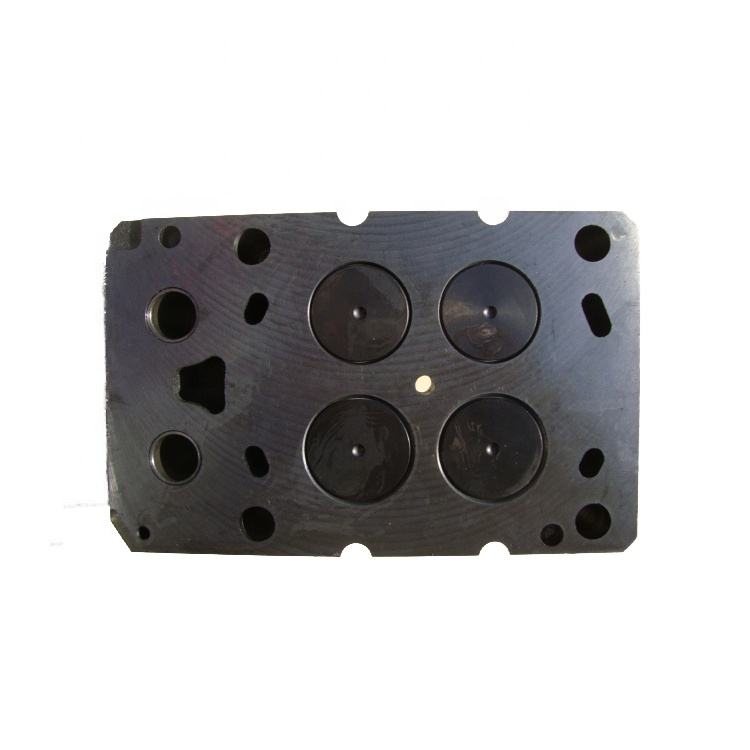
WP12 head castings were revised several times. Injector bore depth, port shape and coolant outlet position all changed, and those changes are invisible once the head is bolted down. A head from a neighbouring revision will run, and then produce white smoke, a coolant leak at the rear, or a misfire that no diagnostic tool explains.
The practical check is the old head gasket. Lay it beside the new one and compare the fire ring position, the coolant hole pattern and the thickness. If any of the three differ, stop and check the casting number against the engine plate.
When the head goes back on, the bolts are single-use. They are torque-to-yield fasteners, and reusing them reduces clamping load exactly where the gasket needs it most — at high load, when the engine is working hardest.
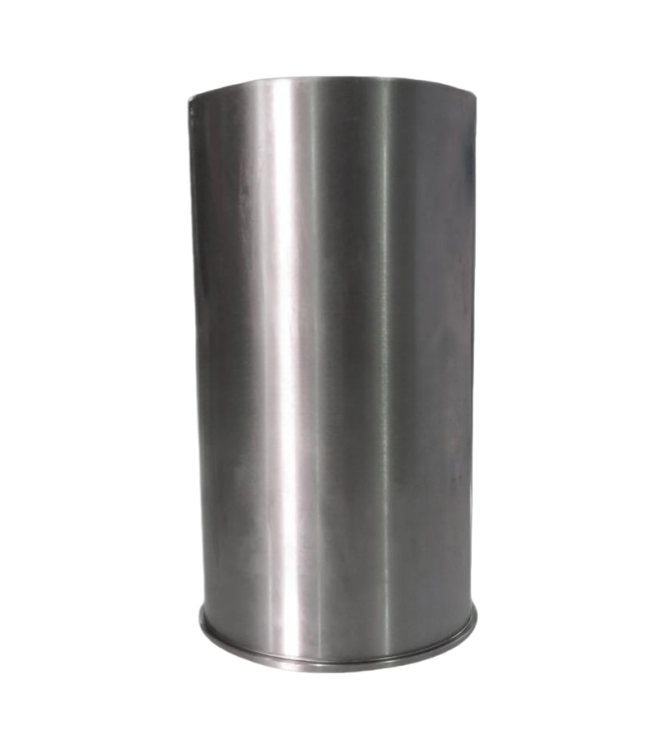
The WP12 uses wet liners. Two measurements decide whether a rebuild will seal: bore roundness and liner protrusion.
Protrusion is the small height the liner stands above the deck. It is what allows the fire ring to crush onto the liner top and seal combustion pressure. Measure it with a dial gauge on every cylinder and record the figures. Protrusion that is too low lets gas into the coolant; protrusion that varies across the block clamps the gasket unevenly. Neither can be corrected by over-torquing the head.
Pistons should be ordered with the liner and ring set as a matched group. A liner honed for one ring type may not suit another brand, and mixing parts is the most common cause of oil consumption after a rebuild that measured correctly everywhere else.
WP12 coolant pumps share a broadly similar pumping element but differ in pulley diameter, pulley offset and inlet angle. Those three dimensions decide whether the belt runs true and whether the hose reaches without strain. A pump with the correct body casting and the wrong pulley will destroy belt alignment within hours and then fail the bearing.
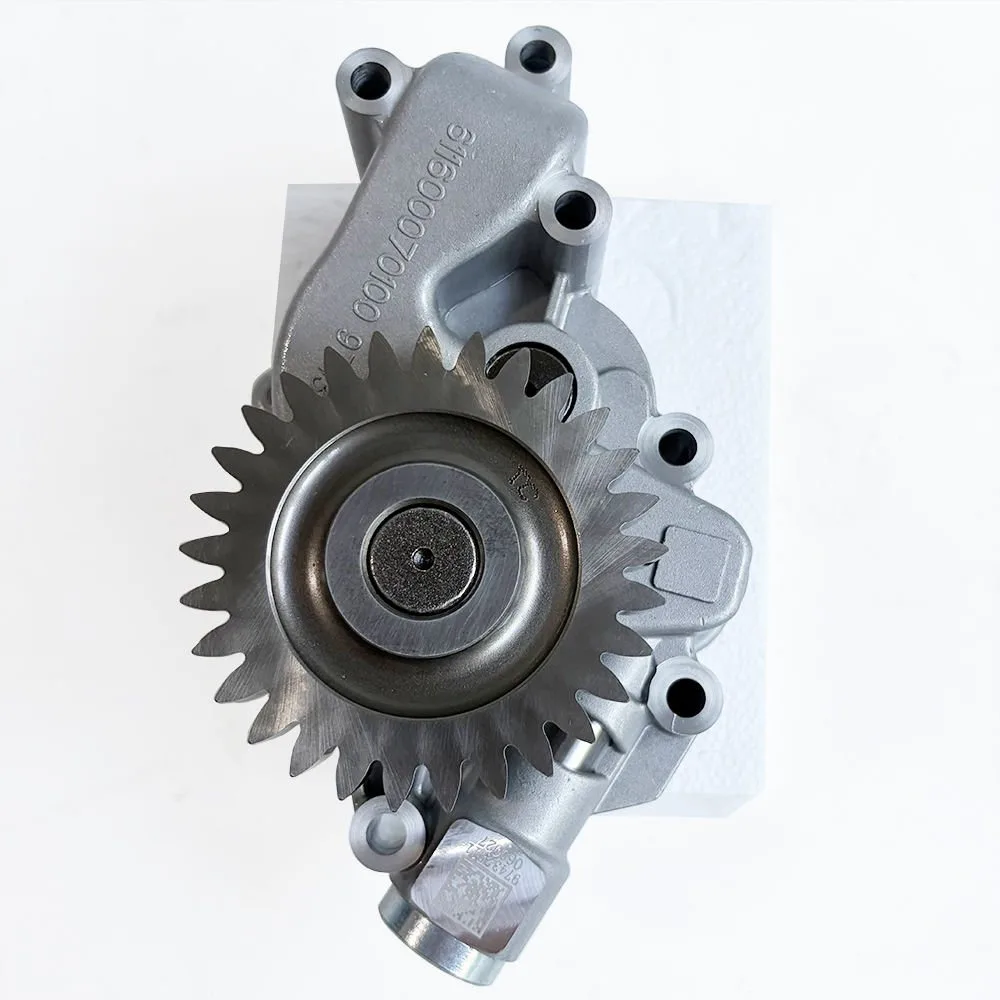
Oil pumps follow the same logic on the drive side: drive gear, pick-up tube and relief valve setting vary between production batches. Before ordering either pump, measure the pulley diameter and the distance from the mounting face to the pulley centreline, and photograph the drive end.
A WP12 crankshaft can measure the correct nominal journal diameter and still be oval by a few hundredths. In that condition the oil film collapses twice per revolution, the bearing shell fatigues, and the knock appears only after the journal is already damaged. Measure ovality at several positions along each journal, not at one point.
Check the fillet radius as well. Fatigue cracks start at the transition from journal to web, and a shaft that has been reground without restoring the radius will crack there even when every other dimension is correct. Replace the torsional damper with the shaft — a perished damper sends the same oscillation into the new crankshaft.
| Component | What to measure | Why it decides fitment |
| Cylinder head | Casting number, injector bore depth | Revision changes combustion and injector seating |
| Head gasket | Fire ring position, hole pattern, thickness | Must match the head casting |
| Liner | Bore at three heights, two directions, flange thickness | Roundness and protrusion decide sealing |
| Piston | Bowl profile, groove width, skirt diameter | Bowl is matched to the rating |
| Ring set | Groove width, end gap in the actual bore | Tension and thickness are rating-specific |
| Water pump | Pulley diameter and offset | Controls belt alignment |
| Oil pump | Drive gear, pick-up, relief setting | Controls whether it feeds correctly |
| Crankshaft | Journal diameter and ovality, fillet radius | Decides bearing life |
They share a lineage and many part numbers overlap, but they are not interchangeable across the board. Treat the engine plate as authoritative.
Sometimes, particularly on the 6127-prefix components, but the rating-specific parts — pistons, rings, gaskets — are not interchangeable without checking the casting and the compression ratio.
Measure instead. For a head, take the casting number. For a pump, take the pulley diameter and offset. For a liner, take the bore and flange thickness. Those figures identify the part faster than any catalogue.
If one liner has worn out, the other five have usually worn similarly. Replacing one produces uneven compression and the second rebuild follows within a year.
If you already know the part number, the fastest route is to match it against our Weichai Power parts range, which is organised by component type rather than by model. For specific components, the WP12 cylinder head, the WP12 cylinder liner and the WP12 oil pump pages list the measurements that decide fitment.
If the number is unreadable, send photographs of the old part from two angles with a ruler alongside, plus the engine plate. That is usually enough to identify the variant before anything ships.

