The Weichai WP10 sits in an awkward but very common position: it shares a great deal with the older WD615 and with the larger WD618, it was built in many ratings, and the part numbers on the components changed more than once. The result is that buyers searching for WP10 parts regularly receive something that bolts on correctly and then behaves differently from the part it replaced.
This guide explains what actually varies inside the WP10 family, which components are safely shared, and how to confirm a part before it ships. It is written around the measurements that settle the question, not around model names.
The WP10 is a ten-litre class inline six used in heavy trucks, buses, construction machinery and generator sets. It is closely related to the WD615, which is why so many part numbers overlap, and it shares certain components with the WD618 and WP12 lineage as well.
That overlap is the source of most ordering mistakes. A part that fits a WD615 will often fit a WP10 — but not always, because the two engines were produced in parallel through several revisions, and the same nominal position on the engine can carry a different casting, a different pulley or a different injector bore depending on the year and the rating.
It helps to split WP10 components into three groups.
The practical rule: mechanical parts can often be confirmed by measurement, while combustion-related parts must be confirmed by number and casting.
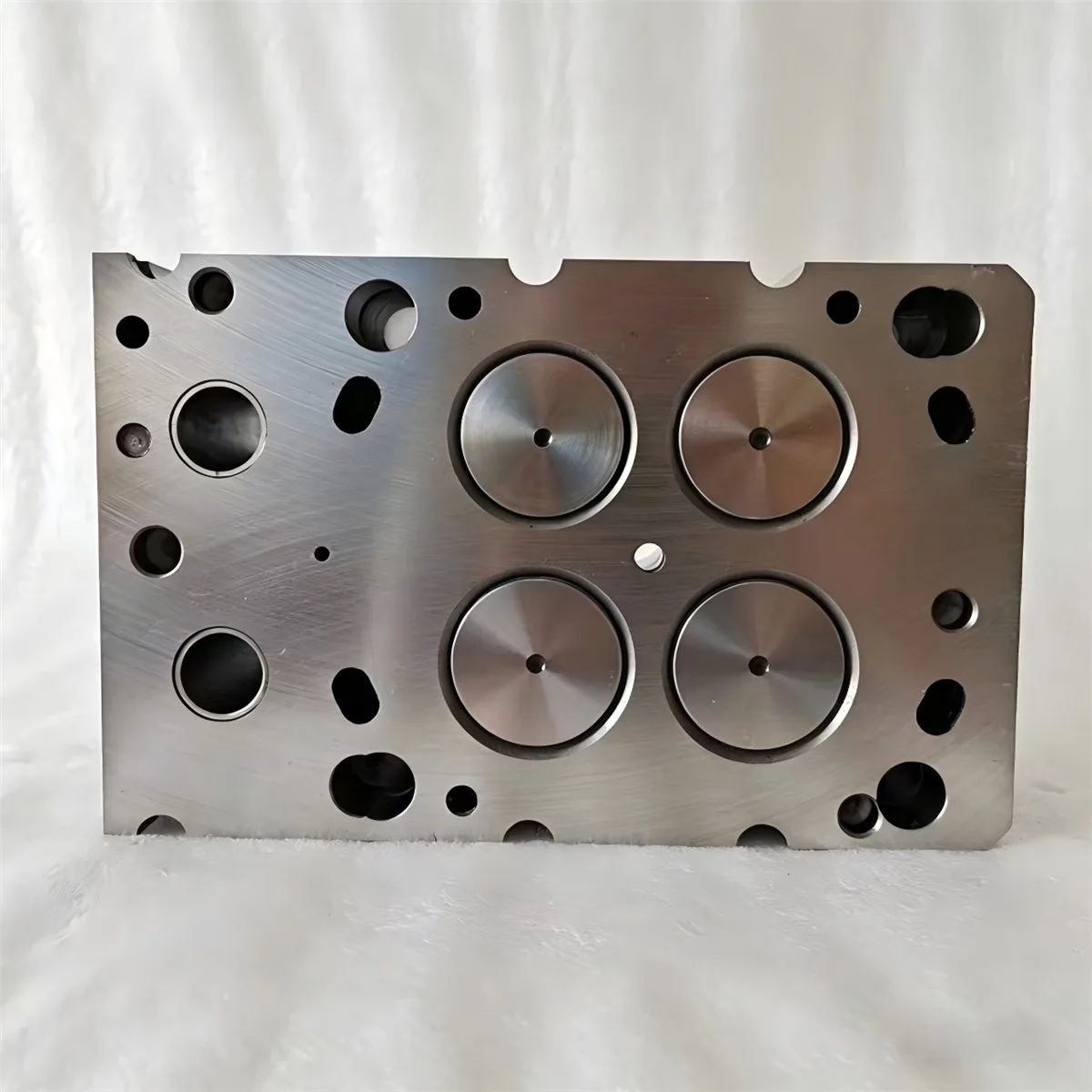
WP10 and WD615 heads look alike on the bench and are not necessarily interchangeable. Injector bore depth, port shape and coolant outlet position changed between revisions, and those differences are invisible once the head is installed. A mismatch shows up as white smoke, a hard cold start, or a coolant leak at the rear of the head.
Before ordering, record the casting number from the old head and compare the old head gasket with the new one: fire ring position, coolant hole pattern and thickness. If any of the three differ, the head is from a different generation.
Head bolts are torque-to-yield and single use. Reusing them reduces clamping load and the gasket then leaks under load, which is almost always misdiagnosed as a gasket quality problem.
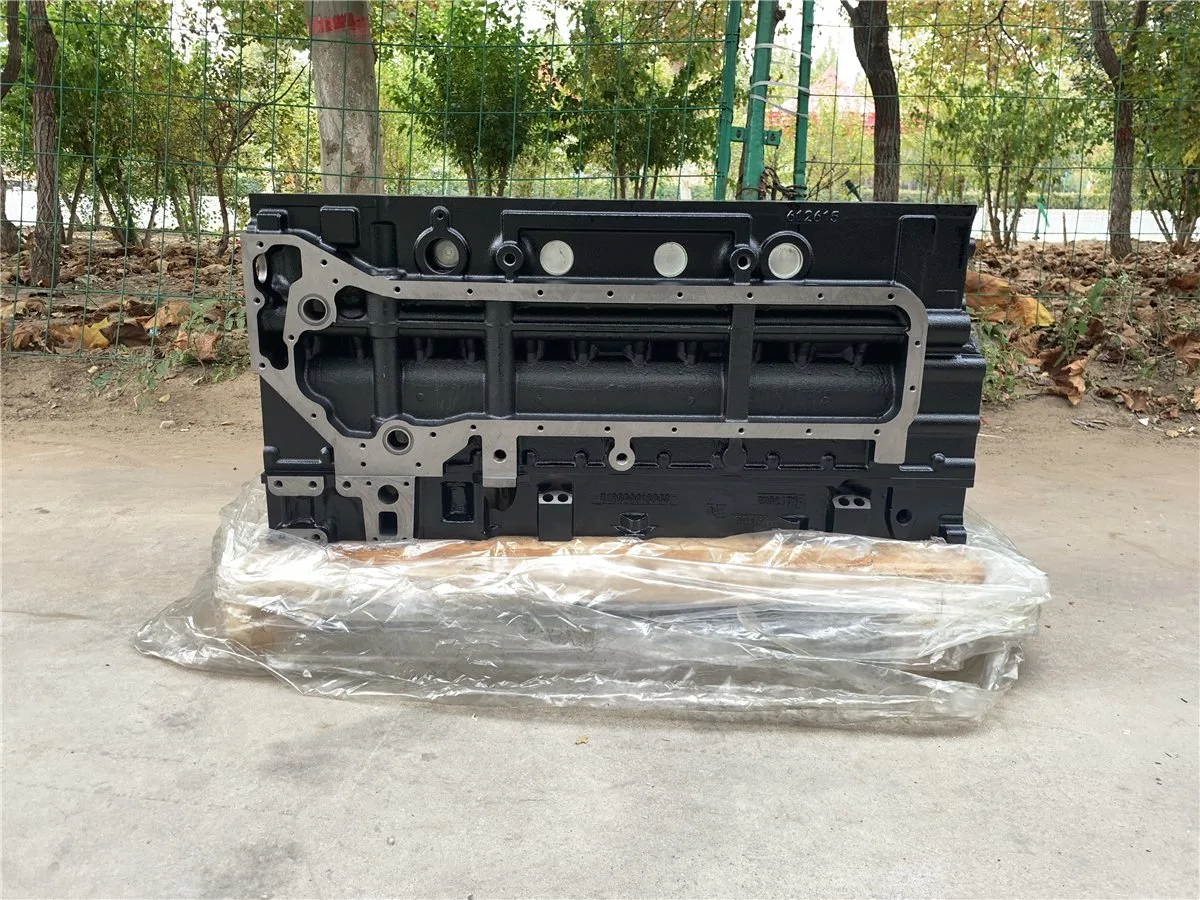
Wet liners on these engines rely on two things to seal: bore roundness and liner protrusion above the deck. Protrusion is what lets the fire ring crush onto the liner top. Measure it with a dial gauge on every cylinder; uneven protrusion clamps the gasket unevenly and produces a repeat failure that looks like a gasket fault.
Pistons must match the rating. The bowl profile controls combustion, so a piston from a neighbouring rating produces smoke and poor economy while fitting perfectly. Rings must match the piston groove, and the end gap must be measured in the bore the ring will actually run in — not in a spare liner.
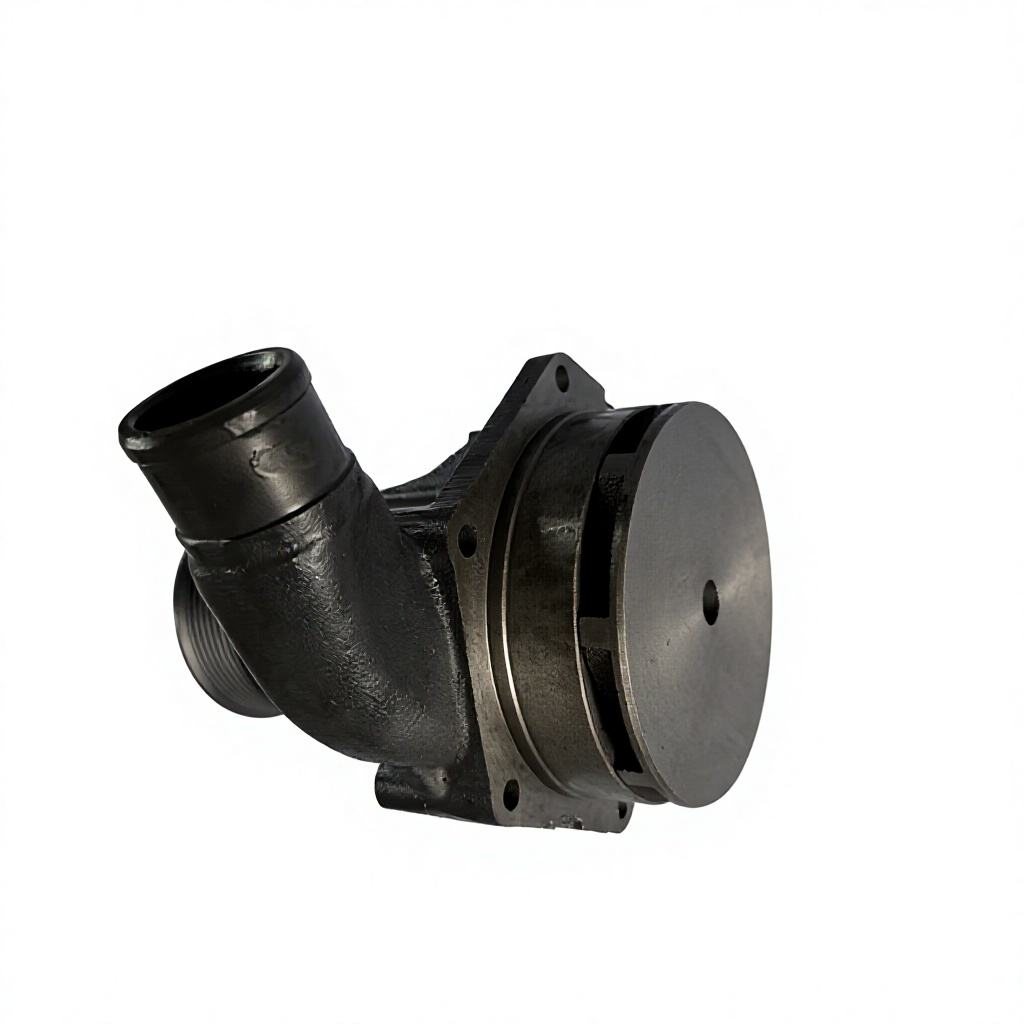
WP10 and WD615 coolant pumps share a similar pumping element but differ in pulley diameter, pulley offset and inlet angle. Those three dimensions decide whether the belt runs true and whether the hose reaches without strain. A correct body with the wrong pulley destroys belt alignment within hours and then fails the bearing, which is usually blamed on the pump.
Measure the pulley diameter and the distance from the mounting face to the pulley centreline, and photograph the old pump beside a ruler. That combination identifies the variant faster than any catalogue lookup.
Oil pumps in this family appear under a long list of numbers — 61500070021, 612600070365, 612601080216 and others. Adjacent numbers frequently share a housing casting and differ only in the drive gear, the pick-up tube or the relief valve setting.
A pump with the wrong drive will bolt up and fail to feed correctly, and the resulting bearing damage happens within seconds of the first start. Confirm the engine plate and the old pump number, and if the front cover has been replaced during an earlier rebuild, check that the mounting face and drive gear still match.
WP10 crankshafts are nitrided, and journal ovality is what decides bearing life. A journal can measure the correct nominal diameter and still be oval by a few hundredths, in which case the oil film collapses twice per revolution and the shell fatigues. Measure ovality at several positions along each journal.
Check fillet radii as well: fatigue cracks begin at the transition from journal to web, and a shaft reground without restoring the radius will crack there. Replace the torsional damper with the shaft rather than reusing the old one.
| Part | Confirm by |
| Cylinder head | Casting number and old head gasket pattern |
| Head gasket | Fire ring position, hole pattern, thickness |
| Liner | Bore at three heights, flange thickness |
| Piston | Bowl profile and piston number from the rating |
| Ring set | Groove width and end gap in the actual bore |
| Coolant pump | Pulley diameter and offset |
| Oil pump | Drive gear, pick-up and relief setting |
| Crankshaft | Journal diameters and ovality, fillet radius |
No. Many parts are shared, but casting revisions and rating-specific components mean you should confirm by number or measurement every time.
Measure pulley diameter and the mounting-face-to-pulley-centreline distance, then photograph the drive end.
It is possible, but an engine that has worn one liner has usually worn the others similarly, and uneven compression causes vibration and a second rebuild within a year.
The three usual causes are liner protrusion out of specification, a warped deck, or reused head bolts. All three are measurable before assembly.
Our Weichai Power parts range is organised by component type, which makes it easier to compare variants than a model-based catalogue. For the parts discussed here, see the WD615 and WP10 cylinder head, the WD615 and WP10 water pump, and the WD615 and WP10 cylinder block pages, each of which lists the measurements that decide fitment.
If the old number is worn off, send photographs of the component from two angles with a ruler alongside and a clear photo of the engine plate. That is normally enough to confirm the variant before anything ships.

