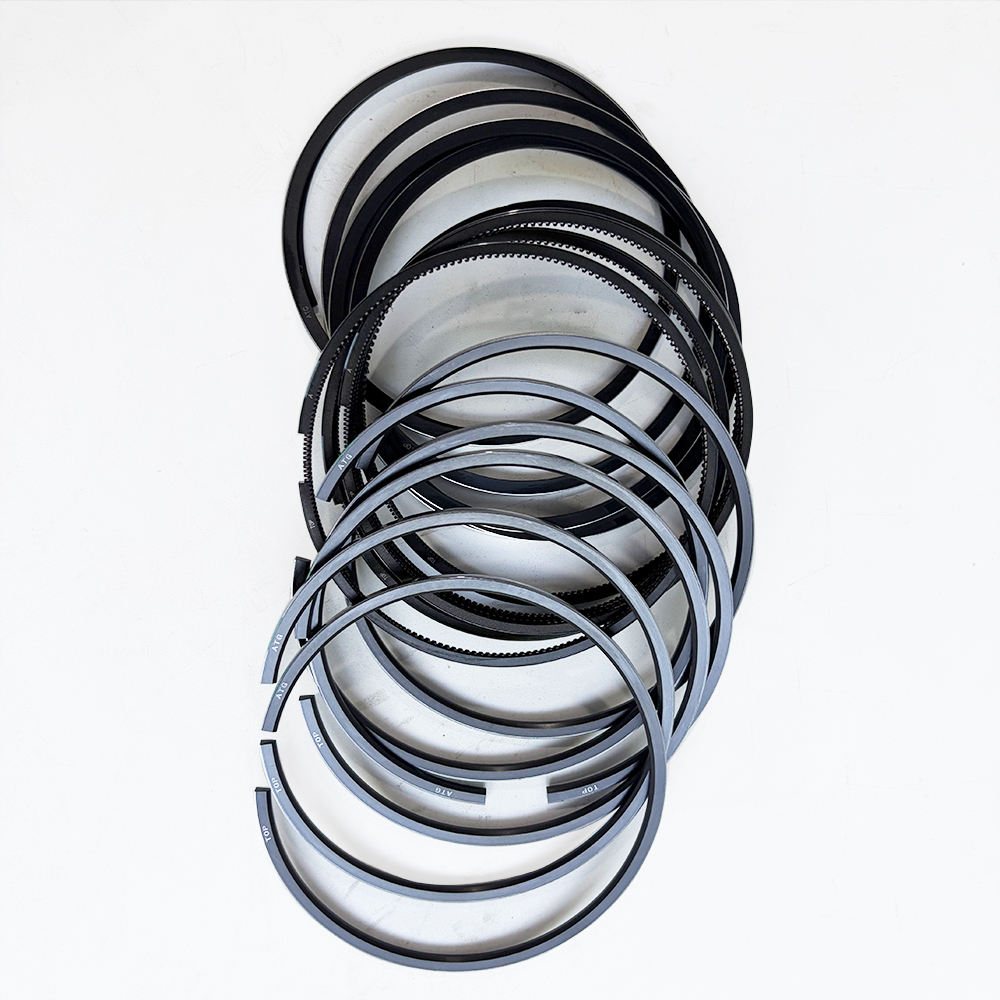
Model: WP7 / WP8
Part Number: 1001359279
Brands: Weichai Power
Engine Model: WP7, WP7H, WP8, WP8H
Engine Type: Diesel
Scope of application: medium and heavy trucks, buses, construction machinery, generator sets
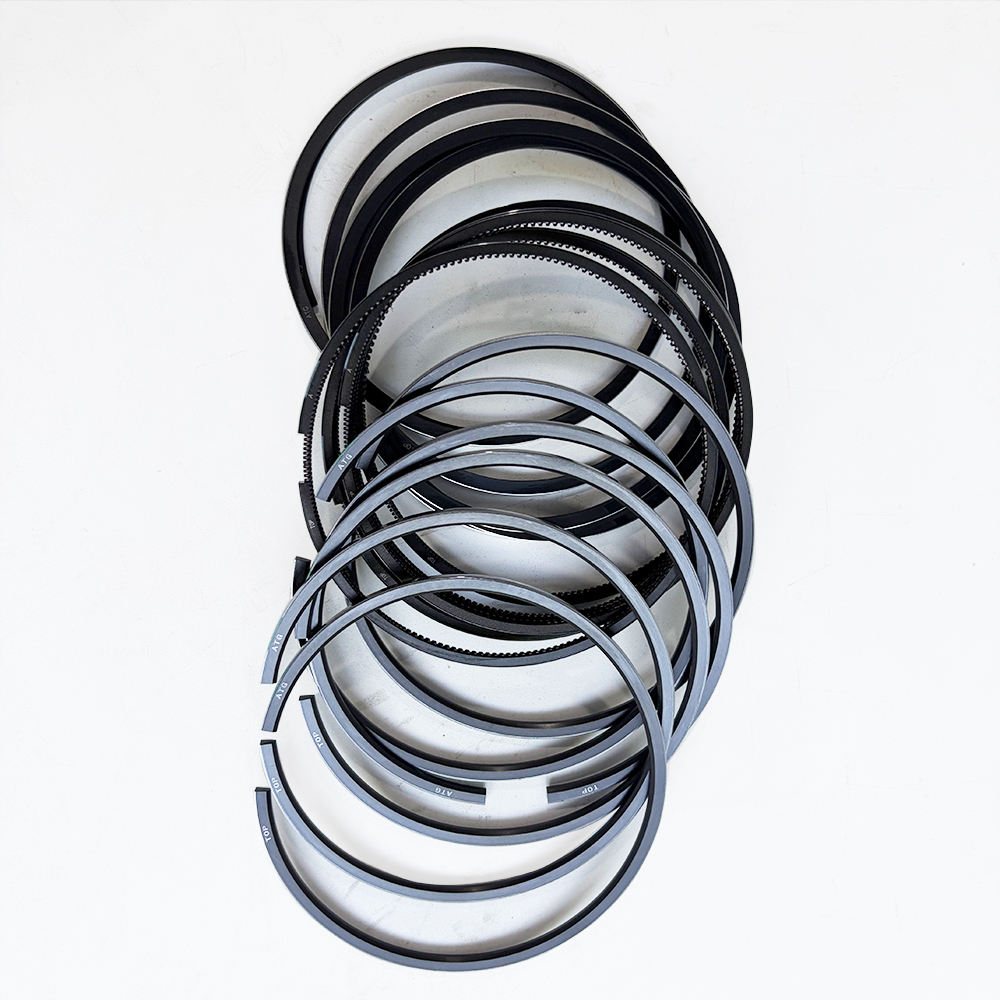
Rings seal combustion gas, conduct heat from the piston into the liner and scrape oil back to the sump. Set 1001359279 provides two compression rings and one oil control ring per piston, sized to the groove geometry of the WP7 and WP8 engines.
Worn rings do not stop the engine; they make it tired. Oil consumption rises, crankcase pressure builds and performance fades as combustion gas escapes past the piston. Owners frequently blame the turbo first, which is why a compression test and a blow-by check should come before any part is ordered.
The set fits WP7, WP7H, WP8 and WP8H engines in trucks, buses, loaders and generator sets. Confirm the piston part number and whether the engine is standard or oversize. Mixing sets between variants is a common cause of oil consumption after a rebuild.
The top ring is barrel faced and chrome plated for the highest temperature and pressure. The second ring is taper faced to scrape oil and support gas sealing. The oil ring uses two chrome rails with an expander spring, sized for correct radial tension.
Oil consumption is usually the first complaint, followed by smoke at start-up and increasing crankcase pressure. On engines working at high load, the symptoms appear earlier because gas leakage grows with cylinder pressure.
Clean the piston grooves to bare metal before anything else. Carbon packed into the groove corner prevents the ring from seating, and scraping the surface without removing the deposit at the bottom of the groove leaves the new ring proud.
Ring gaps must be measured in the liner the ring will actually run in, with the ring pushed square to a depth near the bottom of ring travel. Measuring in a different bore, or with the ring tilted, gives a reading that is wrong by enough to cause a failure.
New rings cannot fix a worn piston. Measure groove width with the old ring and a feeler gauge; an opened groove lets the ring flutter and break. Check the crown for cracks and the skirt for scuffing as well, because a piston that has been hot may look acceptable and still fail soon after.
New rings need cylinder pressure to seat. Run at varying load, increasing gradually over the first hours, and change oil early. A high-detergent oil can slow bedding-in, so follow the workshop recommendation for the break-in period rather than the normal service oil.
Clean air and correct oil keep rings alive. Replace the air filter at interval, keep intake hoses sealed, use the specified oil grade and change it at the severe-duty interval. Fix overheating promptly, because heat softens ring tension and accelerates top ring wear.
Track oil consumption per thousand kilometres rather than waiting for visible smoke. A slow rise over several services is the earliest reliable sign that rings are losing tension, and it is far easier to plan a rebuild from a record than to discover the problem at the roadside.
The oil control ring works hardest and its expander loses tension before the compression rings show visible wear. That is why oil consumption often rises while compression still tests within specification, and why replacing only the compression rings leaves the complaint unchanged.
Radial tension presses the ring against the bore before combustion pressure arrives. A ring with the right dimensions but the wrong tension either fails to seal at low speed or wears the bore quickly, which is why rings are specified per rating rather than by bore size alone.
One set covers one piston: two compression rings and one oil ring.
Only if the bore is within specification and shows a proper cross hatch.
Only if the measured gap requires adjustment.
Glazed bores, wrong gaps or rings fitted upside down.
Browse the Weichai piston and components category, and pair the rings with the WP7 and WP8 piston 610800030035 or the WP7 and WP8 piston ring 610800030083.
Weichai WP7 Piston Ring (1001359279). The ring set seals combustion, controls oil and conducts heat from the piston into the liner. Each of the three rings does a different job with a different face treatment.
Measure the old ring thickness and radial depth against the new set. A set that fits the groove loosely will flutter and break rather than seal.
Numbers beginning 1001 belong to the numeric series introduced as the older 61xx numbers were superseded. Both numbers may describe the same physical part. On this engine, confirm the WP7 application against the engine plate before ordering.
Stagger the end gaps around the piston and oil the rings before fitting. Forcing a ring over the piston without a compressor can crack it invisibly.
Ordering note. Mixed pallets are accepted, so a single order can carry the block, the gasket set and the small seals together instead of arriving in three shipments.
Related reading: Piston Ring Selection: Gap, Tension and Bore Condition
| We Are 30 Years Diesel Engine Parts Supplier | |
| Brand | EPID |
| Warranty | 12 Months |
| Condition | 100%New |
| More Models | Weichai: WP7, WP7H, WP8, WP8H, and other Weichai series. |
| Shipping | By sea / air / express (DHL, FEDEX, TNT, UPS, EMS) |
| Packing | Standard exporting packing or as required |
| Payment Term | L/C, T/T, Western Union, Trade Assurance |
| Delivery Time | 3-7 days (depend on order) |
| Selling Point | 1. On-time Delivery 2. Genuine Quality Assurance 3. Professional Supplier |
The top ring is barrel faced and chrome plated for the highest temperature and pressure. The second ring is taper faced to scrape oil and support gas sealing. The oil ring uses two chrome rails with an expander spring, sized for correct radial tension.
Oil consumption is usually the first complaint, followed by smoke at start-up and increasing crankcase pressure. On engines working at high load, the symptoms appear earlier because gas leakage grows with cylinder pressure.
Clean the piston grooves to bare metal before anything else. Carbon packed into the groove corner prevents the ring from seating, and scraping the surface without removing the deposit at the bottom of the groove leaves the new ring proud.
Ring gaps must be measured in the liner the ring will actually run in, with the ring pushed square to a depth near the bottom of ring travel. Measuring in a different bore, or with the ring tilted, gives a reading that is wrong by enough to cause a failure.
New rings cannot fix a worn piston. Measure groove width with the old ring and a feeler gauge; an opened groove lets the ring flutter and break. Check the crown for cracks and the skirt for scuffing as well, because a piston that has been hot may look acceptable and still fail soon after.
New rings need cylinder pressure to seat. Run at varying load, increasing gradually over the first hours, and change oil early. A high-detergent oil can slow bedding-in, so follow the workshop recommendation for the break-in period rather than the normal service oil.
Clean air and correct oil keep rings alive. Replace the air filter at interval, keep intake hoses sealed, use the specified oil grade and change it at the severe-duty interval. Fix overheating promptly, because heat softens ring tension and accelerates top ring wear.
Track oil consumption per thousand kilometres rather than waiting for visible smoke. A slow rise over several services is the earliest reliable sign that rings are losing tension, and it is far easier to plan a rebuild from a record than to discover the problem at the roadside.
The oil control ring works hardest and its expander loses tension before the compression rings show visible wear. That is why oil consumption often rises while compression still tests within specification, and why replacing only the compression rings leaves the complaint unchanged.
Radial tension presses the ring against the bore before combustion pressure arrives. A ring with the right dimensions but the wrong tension either fails to seal at low speed or wears the bore quickly, which is why rings are specified per rating rather than by bore size alone.
Browse the Weichai piston and components category, and pair the rings with the WP7 and WP8 piston 610800030035 or the WP7 and WP8 piston ring 610800030083.
One set covers one piston: two compression rings and one oil ring.
Only if the bore is within specification and shows a proper cross hatch.
Only if the measured gap requires adjustment.
Glazed bores, wrong gaps or rings fitted upside down.
EPID supplies diesel engine parts for Weichai, Baudouin, Yuchai, Caterpillar, Sinotruk, FAW Xichai and Cummins engines. Every order is checked against the original part number before packing, and our team can identify a part from a photo of the engine plate. Ask for a quotation with your model and quantity and we will reply within one working day.