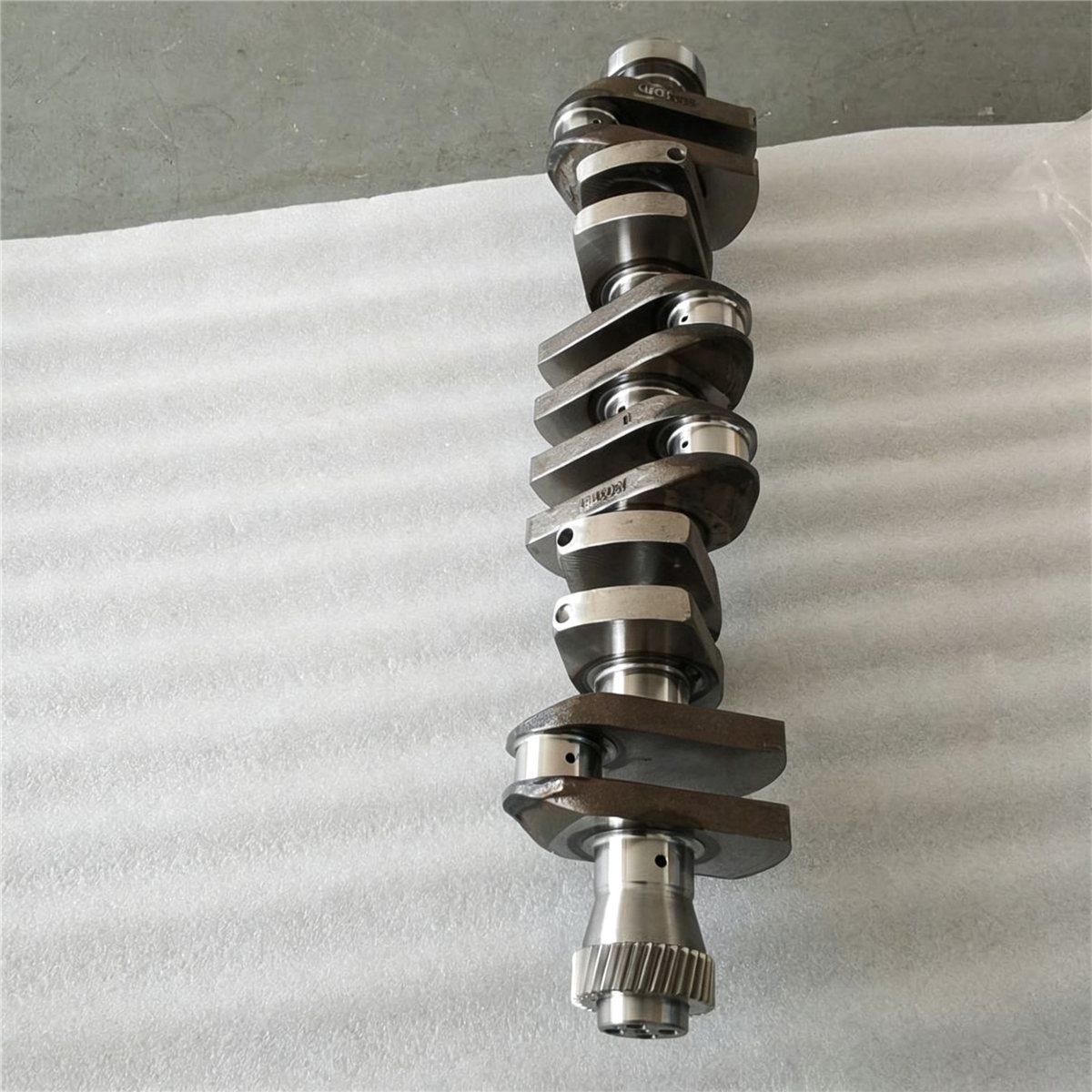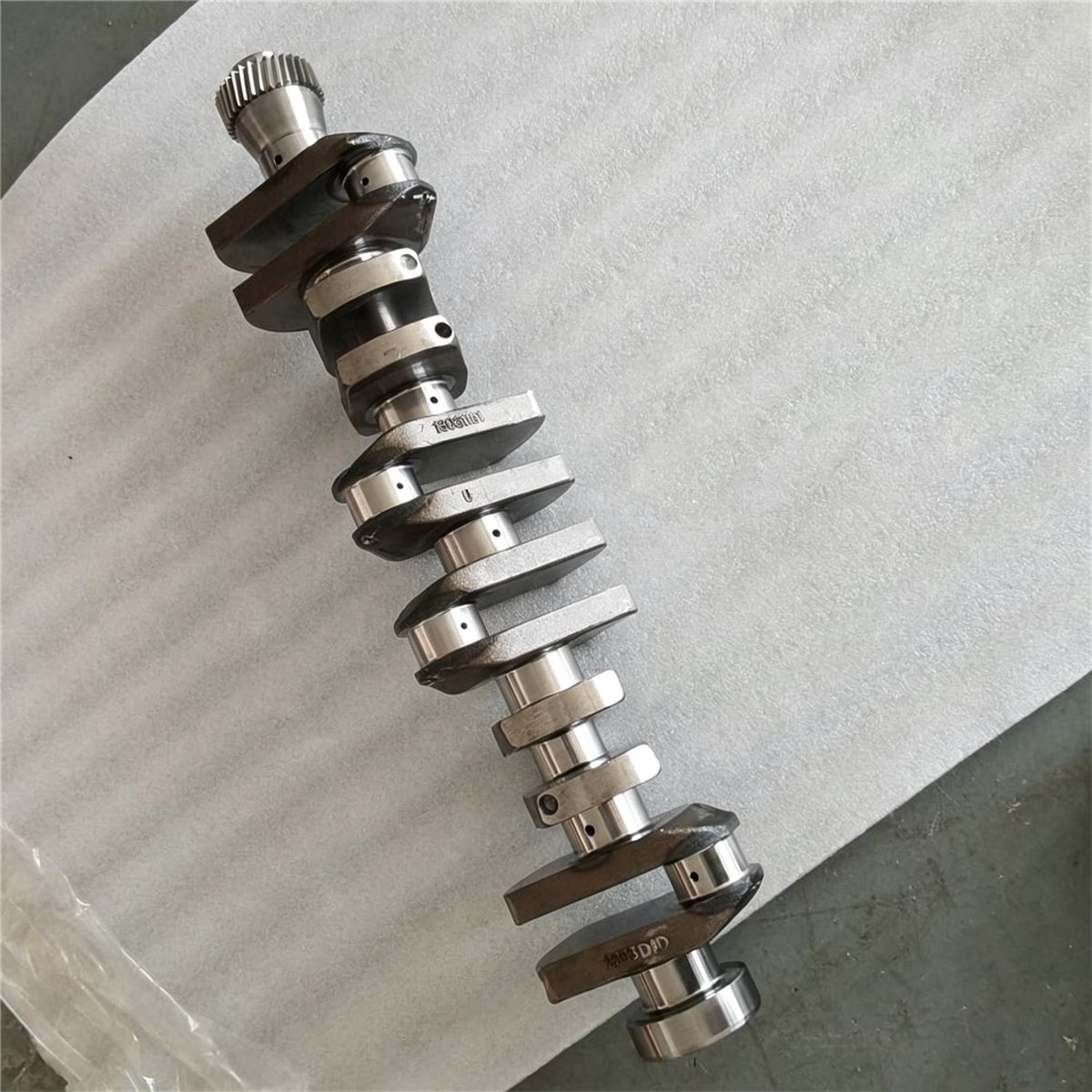
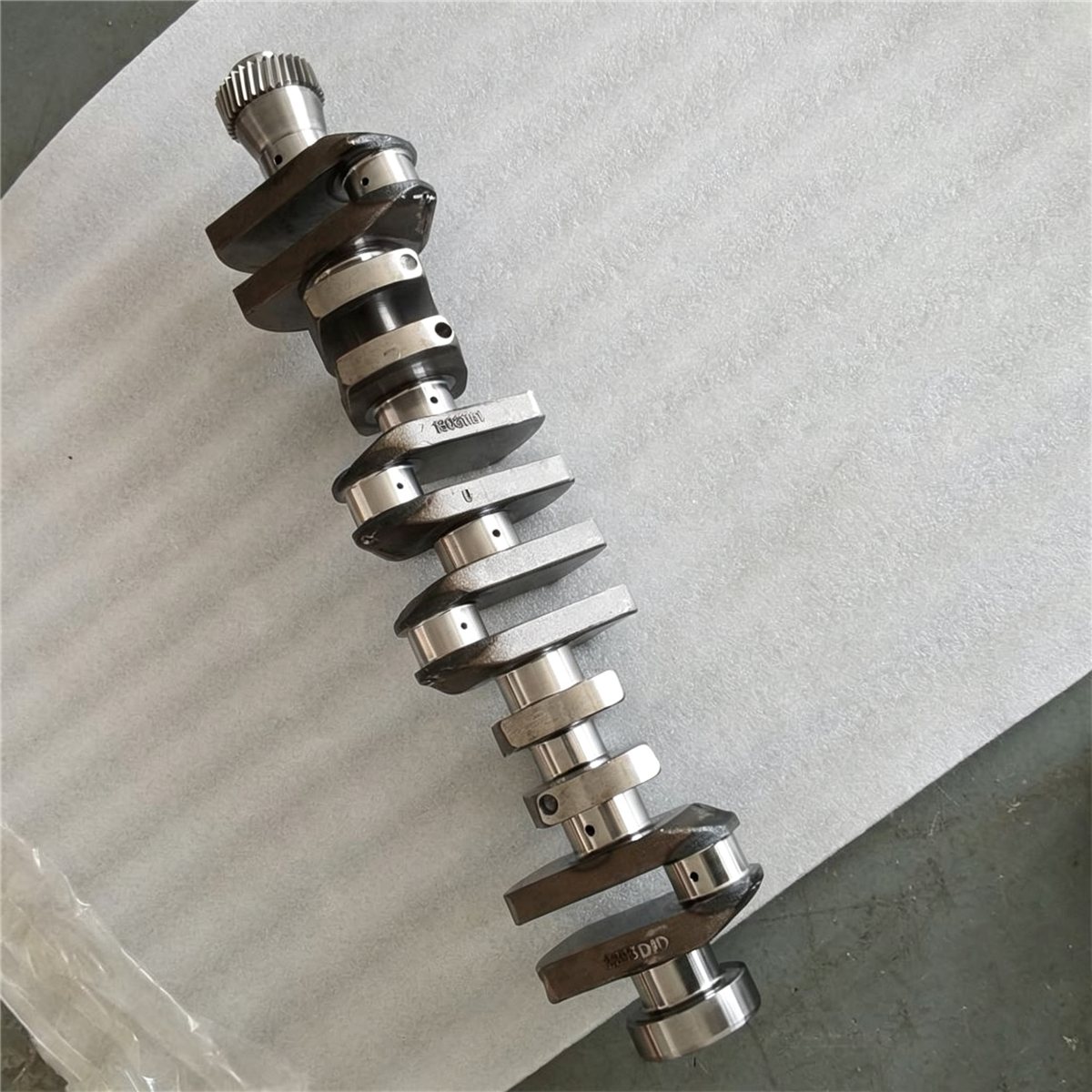
Model: WP7 / WP8
Part Number: 1000208972
Brands: Weichai Power
Engine Model: WP7, WP7H, WP8, WP8H
Engine Type: Diesel
Scope of application: medium and heavy trucks, buses, construction machinery, generator sets
The WP7 and WP8 engines carry several crankshaft numbers, and 1000208972 is one of them alongside 610800020218, 610800020228 and 1000186869. The differences are usually in the damper fixing or the flywheel flange, tied to a production revision rather than to the journal dimensions.
That matters because a shaft from the wrong variant fits the block but will not accept your existing damper or flywheel. Photographs of both shaft ends resolve the question faster than any catalogue lookup, and we ask for them before a shaft is shipped.
The WP7 and WP8 produce high torque from relatively low speed, so the crankshaft sees strong bending loads and torsional pulses from six firing cylinders. The shaft carries the main and rod bearings, drives the oil pump and camshaft through the gear train and delivers torque to the flywheel.
Once a journal loses roundness the bearing cannot maintain an oil film, pressure falls and failure follows quickly. That progression is why journal condition is measured on every shaft we supply.
Every shaft is measured after grinding. The checks cover the dimensions that decide whether it survives service, not only the ones that decide whether it fits.
Bearing noise and oil pressure are the two indicators that matter, and the knock appears later than the pressure change does. By the time the knock is audible the journal is usually already damaged.
Measure before assembly, record the figures and confirm main bore alignment. A distorted tunnel wears new bearings within hours, and the shaft is usually blamed for a block problem.
Match the part number, the journal size and the shells you intend to fit. Mixing a reground shaft with standard shells guarantees failure. Give us the bearing part numbers and we will confirm the journal size before shipping.
A six-cylinder crankshaft twists and untwists several times per revolution. The damper absorbs that oscillation; when its rubber perishes, the oscillation reaches the shaft and cracks begin at the fillets. Inspect the damper whenever the shaft is out, and replace it with a new shaft.
The rear main bearing receives oil through a gallery that crosses the block. If that gallery is left partially blocked after cleaning, the rear bearing runs dry first and the shaft shows heat marks exactly there. The rear seal also runs on the shaft flange, so a scored surface will leak even with a new seal.
Shafts are bolted into braced crates with journals sleeved and lifting points marked. Freight is charged on weight and volume, so tell us whether the shaft travels with a block so we can plan the load.
Lubrication and vibration control decide crankshaft life. Use the specified oil, change it at the severe-duty interval, keep the cooler clean and never run with a leaking injector that dilutes the oil.
Manufacturers revise crankshafts for reasons unrelated to the base design: a stronger damper, a different flywheel pattern, a supplier change. Two shafts can measure identically at the journals and still not be interchangeable, which is why comparing both ends matters as much as checking the part number.
Shells come in standard and undersize grades, and the grade must match the journal after any regrind. Check clearance with plastigauge at every journal and record the figures. One undersize journal among six is easy to miss, and running the engine in that state destroys the shaft within a few thousand kilometres.
The flywheel flange carries the full engine torque into the gearbox, so a worn or corroded flange face causes clutch or converter problems that look unrelated to the crankshaft. Inspect the flange face and the pilot bore when the shaft arrives, and protect them during installation.
Confirm main bore alignment with a line bore check and inspect the thrust faces for scoring. A distorted tunnel wears new bearings within hours, and the shaft is usually blamed for what is really a block problem.
Compare the damper fixing and flywheel flange, or send us photos of both ends.
Yes, journals and fillets are nitrided.
Only if enough hardened layer remains.
Strongly recommended with a new shaft.
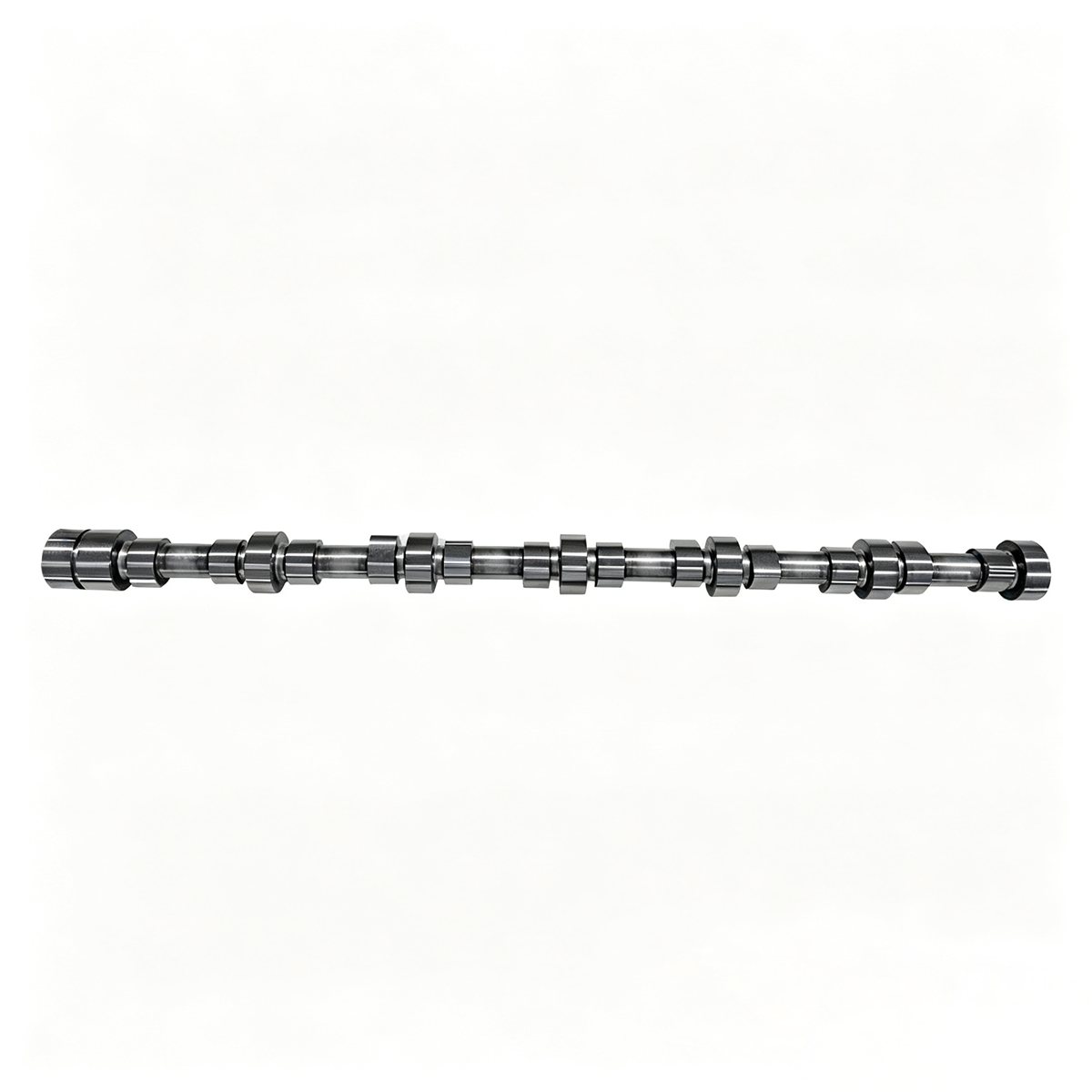
Explore the Weichai crankshaft category, and complete the bottom end with the WP7 and WP8 crankshaft 1000186869 or the WP7 and WP8 camshaft 610800050053.
Weichai WP7 Crankshaft (1000208972). The crankshaft converts combustion pressure into torque and carries the entire load of the rotating assembly. Its journals set the oil film that keeps the bearings alive.
Photograph both ends of the old shaft with a ruler alongside. Damper fixing, flywheel flange and pilot bore differ between production periods even when the journals are identical.
Numbers beginning 1000 come from the newer numeric series used for assemblies and later-production parts. This series replaced several earlier numbers, so a cross-reference check is worthwhile. On this engine, confirm the WP7 application against the engine plate before ordering.
Fit a new torsional damper with the shaft. A perished damper sends the same oscillation into the new crankshaft and cracks it at the fillets.
Ordering note. Every shipment leaves with a packing list matched to the invoice, which matters when a rebuild is waiting on one seal and the whole pallet has to be cleared through customs.
Related reading: Crankshaft Inspection: Journals, Fillets and Regrinding
| We Are 30 Years Diesel Engine Parts Supplier | |
| Brand | EPID |
| Warranty | 12 Months |
| Condition | 100%New |
| More Models | Weichai: WP7, WP7H, WP8, WP8H, and other Weichai series. |
| Shipping | By sea / air / express (DHL, FEDEX, TNT, UPS, EMS) |
| Packing | Standard exporting packing or as required |
| Payment Term | L/C, T/T, Western Union, Trade Assurance |
| Delivery Time | 3-7 days (depend on order) |
| Selling Point | 1. On-time Delivery 2. Genuine Quality Assurance 3. Professional Supplier |
Every shaft is measured after grinding. The checks cover the dimensions that decide whether it survives service, not only the ones that decide whether it fits.
Bearing noise and oil pressure are the two indicators that matter, and the knock appears later than the pressure change does. By the time the knock is audible the journal is usually already damaged.
Measure before assembly, record the figures and confirm main bore alignment. A distorted tunnel wears new bearings within hours, and the shaft is usually blamed for a block problem.
Match the part number, the journal size and the shells you intend to fit. Mixing a reground shaft with standard shells guarantees failure. Give us the bearing part numbers and we will confirm the journal size before shipping.
A six-cylinder crankshaft twists and untwists several times per revolution. The damper absorbs that oscillation; when its rubber perishes, the oscillation reaches the shaft and cracks begin at the fillets. Inspect the damper whenever the shaft is out, and replace it with a new shaft.
The rear main bearing receives oil through a gallery that crosses the block. If that gallery is left partially blocked after cleaning, the rear bearing runs dry first and the shaft shows heat marks exactly there. The rear seal also runs on the shaft flange, so a scored surface will leak even with a new seal.
Shafts are bolted into braced crates with journals sleeved and lifting points marked. Freight is charged on weight and volume, so tell us whether the shaft travels with a block so we can plan the load.
Lubrication and vibration control decide crankshaft life. Use the specified oil, change it at the severe-duty interval, keep the cooler clean and never run with a leaking injector that dilutes the oil.
Manufacturers revise crankshafts for reasons unrelated to the base design: a stronger damper, a different flywheel pattern, a supplier change. Two shafts can measure identically at the journals and still not be interchangeable, which is why comparing both ends matters as much as checking the part number.
Shells come in standard and undersize grades, and the grade must match the journal after any regrind. Check clearance with plastigauge at every journal and record the figures. One undersize journal among six is easy to miss, and running the engine in that state destroys the shaft within a few thousand kilometres.
The flywheel flange carries the full engine torque into the gearbox, so a worn or corroded flange face causes clutch or converter problems that look unrelated to the crankshaft. Inspect the flange face and the pilot bore when the shaft arrives, and protect them during installation.
Confirm main bore alignment with a line bore check and inspect the thrust faces for scoring. A distorted tunnel wears new bearings within hours, and the shaft is usually blamed for what is really a block problem.
Explore the Weichai crankshaft category, and complete the bottom end with the WP7 and WP8 crankshaft 1000186869 or the WP7 and WP8 camshaft 610800050053.
Compare the damper fixing and flywheel flange, or send us photos of both ends.
Yes, journals and fillets are nitrided.
Only if enough hardened layer remains.
Strongly recommended with a new shaft.
EPID supplies diesel engine parts for Weichai, Baudouin, Yuchai, Caterpillar, Sinotruk, FAW Xichai and Cummins engines. Every order is checked against the original part number before packing, and our team can identify a part from a photo of the engine plate. Ask for a quotation with your model and quantity and we will reply within one working day.