A crankshaft is the most expensive rotating part in a diesel engine, and it is also the part most often condemned on a single measurement. A journal can read the correct diameter and still be unusable, because diameter says nothing about ovality, taper or the fillet radius where every fatigue failure starts.
This guide covers what to measure, where to measure it, and the point at which regrinding stops being an option.
Three failure modes account for nearly all crankshaft scrap:
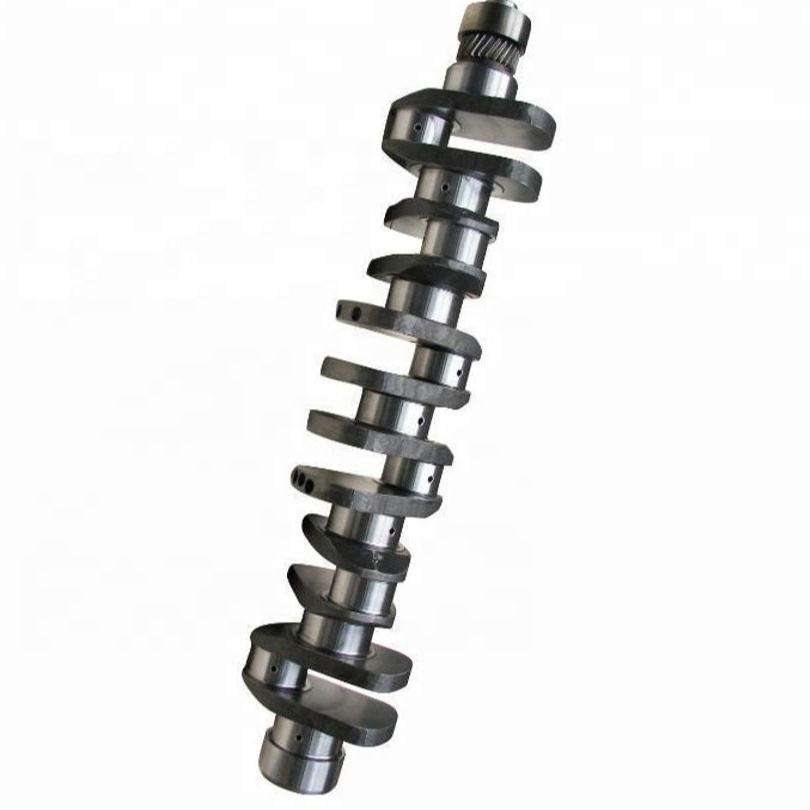
Only the second and third are crankshaft faults in the true sense. The first is an oil system fault that leaves a damaged shaft behind.
Diameter alone is not enough. For each journal, record four figures:
Ovality is the figure that decides bearing life. A journal that is oval by a few hundredths collapses the oil film twice per revolution, and the shell fatigues even though the nominal clearance looks correct.
Measure with the shaft supported properly. A shaft resting on a bench under its own weight deflects, and the reading changes.
The fillet is the curved transition from journal to web. It spreads stress over a larger area, and its radius is specified by the manufacturer for a reason.
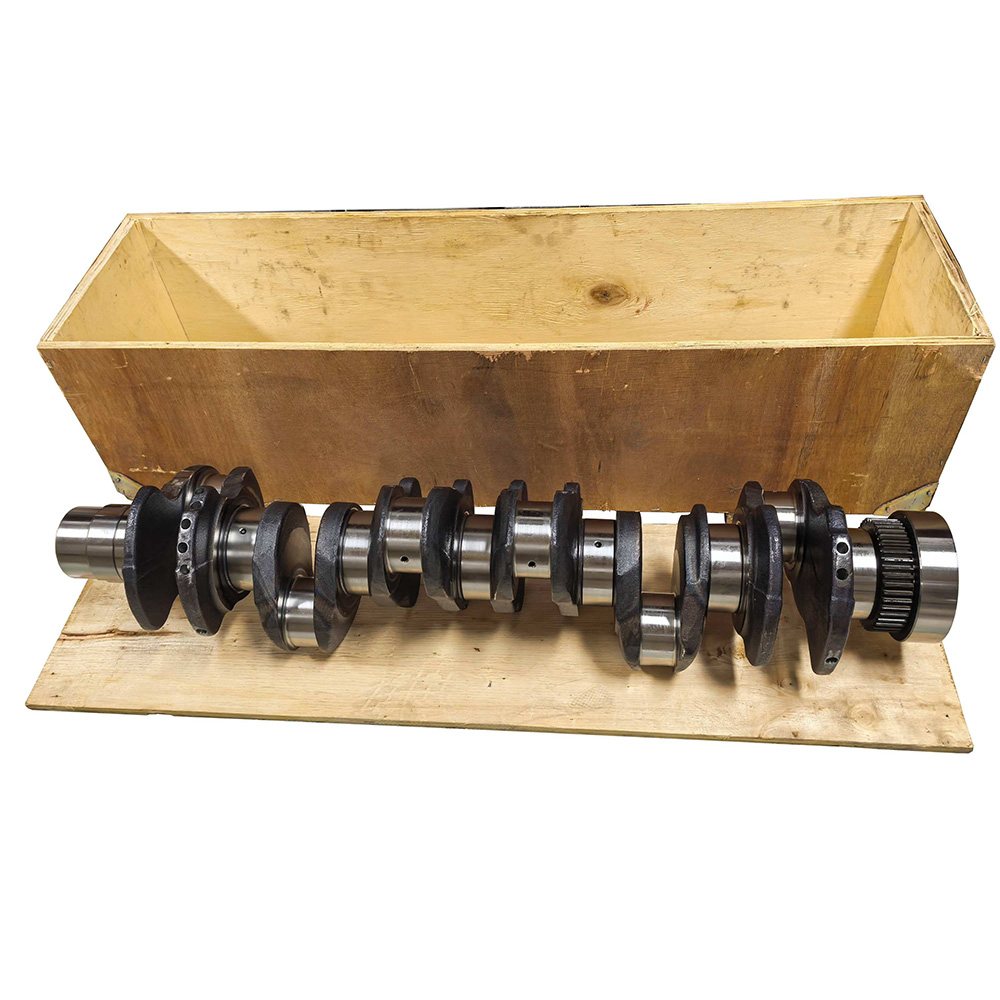
When a journal is reground, the grinding wheel removes material and, unless the radius is restored deliberately, leaves a sharper corner. Every stress concentration in the shaft is now focused on that corner, and a crack begins there 鈥?often within the first few thousand hours, and usually on a shaft that measured perfectly at every journal.
Ask the machine shop explicitly whether the fillet radius has been restored, and to what value. A shop that cannot answer that question should not be grinding the shaft.
Most diesel crankshafts are nitrided: a hard, shallow case that carries the bearing surface. Grinding removes that case, and the amount that can be removed is limited by the depth of the layer.
Undersize steps are set by the manufacturer for this reason. Going beyond the largest undersize removes the case and the journal wear rate rises sharply. When the shaft is already at the limit, or the case has been removed, replacement is the only correct route 鈥?a shaft ground further will not last.
| Condition | Action | Reason |
| Diameter within limits, ovality low, no scoring | Polish and reuse | No material needs removing |
| Diameter worn but within the first undersize | Regrind to undersize | Case still present |
| At the largest undersize step | Replace | No case left |
| Fillet crack on magnetic test | Replace | Crack cannot be ground out |
| Bent beyond runout limit | Replace | Straightening is not reliable on a nitrided shaft |
| Damper seat or flywheel flange damaged | Replace | Cannot be repaired economically |
Bearings must match the journal size after grinding, not the original size. Fitting standard shells to an undersize journal produces excessive clearance and low oil pressure 鈥?and low pressure is then blamed on the new oil pump.

Measure the journal after grinding, and confirm the shell size against the journal, not against the paperwork. Plasti-gauge the clearance at assembly and record it.
Fit a new torsional damper with a new or reground crankshaft. A perished damper sends the same oscillation into the new shaft and cracks it at the fillets 鈥?the exact failure the new shaft was meant to prevent.
Also replace the rear seal, the pilot bearing and the flywheel bolts. Reusing a stretched flywheel bolt is a much more expensive mistake than the bolt costs.
The first is measuring a single point per journal. Ovality is invisible unless you measure at 90 degrees apart, and a shaft condemned on one diameter reading may be perfectly serviceable.
The second is measuring a shaft that is not supported correctly. A crank resting on a bench deflects under its own weight, and the reading at the centre journals changes depending on where the supports sit.
The third is accepting a regrind without asking about the fillet radius. If the shop cannot state the radius it ground to, assume it was not restored.
The fourth is judging the shaft before the oil system. If the bearings failed from starvation, a replacement shaft will fail the same way unless the pump, pick-up and relief valve are checked as well.
Consult the service limit for your engine, but any measurable ovality justifies checking the bearing clearance carefully at assembly.
No. Welding a nitrided crankshaft destroys the heat treatment and the repair will fail.
Replace it with the shaft. Reusing an old damper is the most common reason a new crankshaft cracks.
Usually wrong shell size for the journal, incorrect clearance, or oil starvation on first start.
Our Weichai Power parts range is organised by component type. For the shafts discussed here, see the WP13 crankshaft 612700020003, the WP13 crankshaft 1003217585, the WD615 crankshaft 1000072536 and the WP7 and WP8 crankshaft 610800020228 pages.
If you are deciding whether to regrind, send photographs of both shaft ends and the measured journal figures. Oversize steps and end fittings differ between production periods even when the journals look identical.

