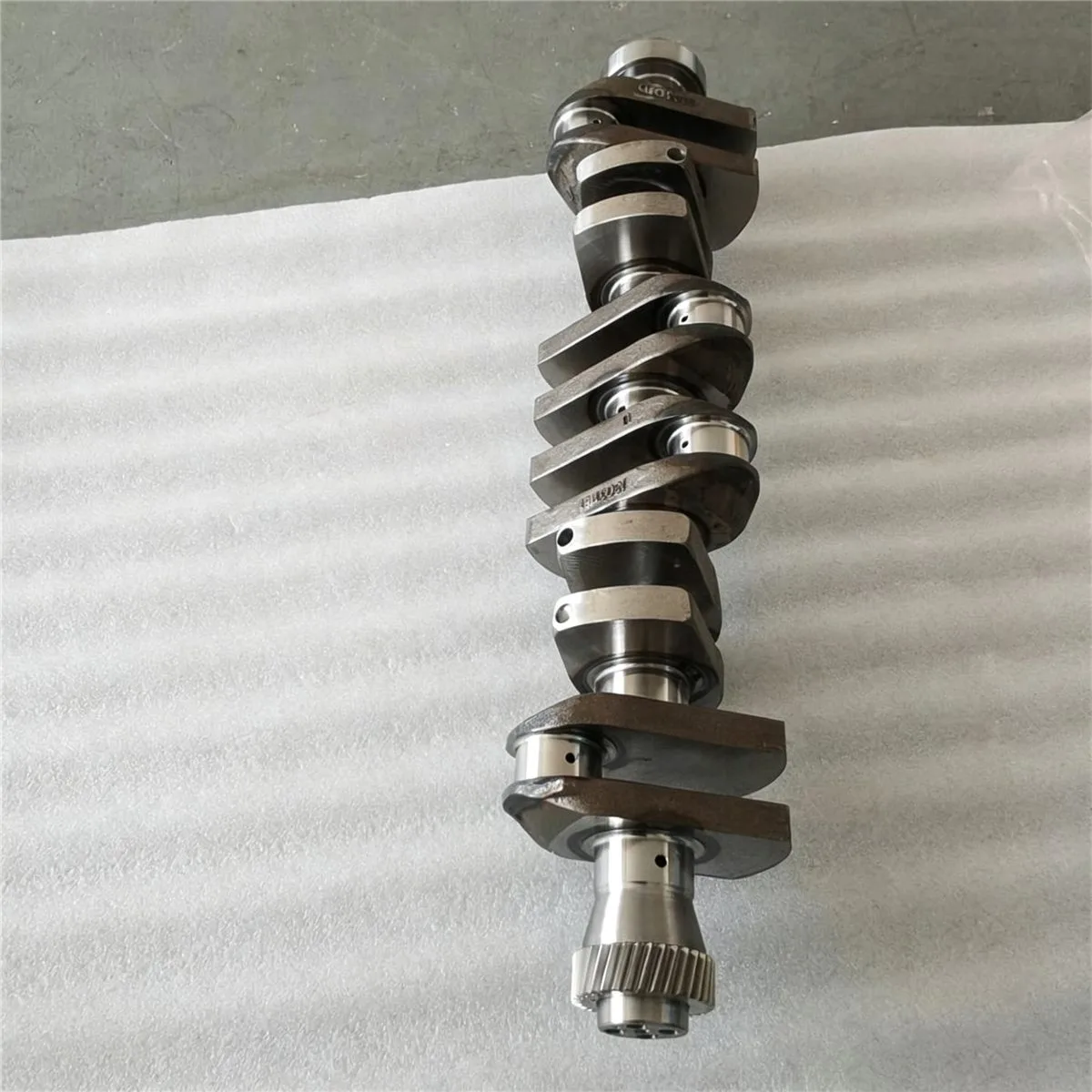
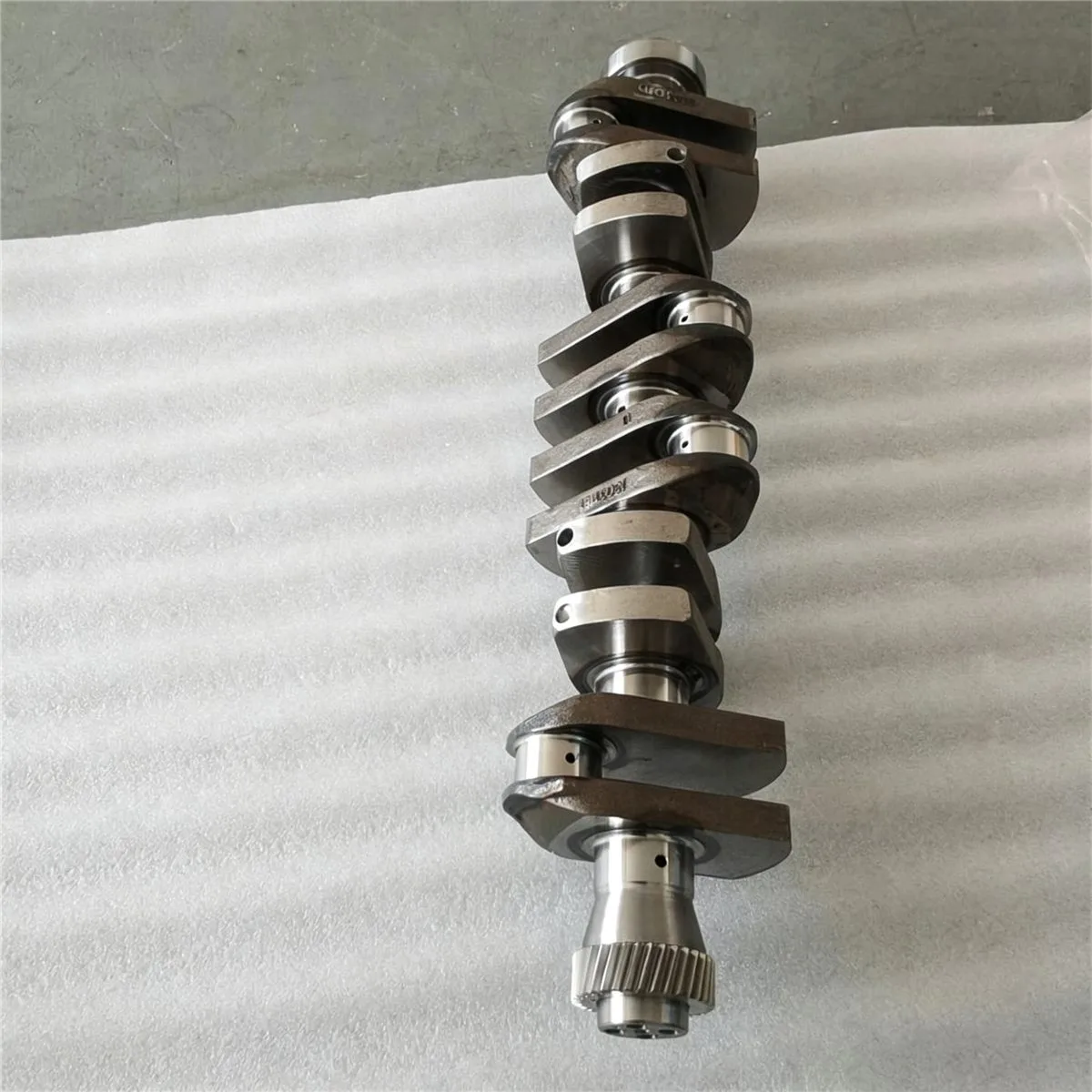
Model: WP7 / WP8
Part Number: 610800020218
Brands: Weichai Power
Engine Model: WP7, WP7H, WP8, WP8H
Engine Type: Diesel
Scope of application: medium and heavy trucks, buses, construction machinery, generator sets
The WP7 and WP8 engines have used more than one crankshaft number, and part 610800020218 is one of them alongside 610800020228. The differences are usually in the damper fixing or in the flywheel flange, tied to a production revision rather than to the basic dimensions.
That matters because a shaft from the wrong variant will fit the block but will not accept your existing damper or flywheel. Photos of both shaft ends resolve the question faster than any catalogue lookup, and we ask for them before shipping.
The WP7 and WP8 produce high torque from relatively low speed, so the crankshaft sees strong bending loads and torsional pulses from six firing cylinders. The shaft carries the main and rod bearings, drives the oil pump and camshaft through the gear train and delivers torque to the flywheel.
Once a journal loses roundness the bearing cannot maintain an oil film, pressure falls and failure follows quickly. That progression is why journal condition is measured rather than assumed on every shaft we supply.
Every shaft is measured after grinding. The checks cover the dimensions that decide whether it survives service, not only the ones that decide whether it fits.
Bearing noise and oil pressure are the two indicators that matter, and the knock appears later than the pressure change. By the time the knock is audible the journal is usually already damaged.
Measure before assembly, record the figures and confirm main bore alignment. A distorted tunnel wears new bearings within hours and the shaft is usually blamed for it.
Match the part number, the journal size and the shells you intend to fit. Mixing a reground shaft with standard shells guarantees failure. Give us the bearing part numbers and we will confirm the journal size before shipping.
A six-cylinder crankshaft twists and untwists several times per revolution. The damper absorbs that oscillation; when its rubber perishes, the oscillation reaches the shaft and cracks begin at the fillets. Inspect the damper whenever the shaft is out, and replace it with a new shaft as a matter of course.
The rear main bearing receives oil through a gallery that crosses the block. If that gallery is left partially blocked after cleaning, the rear bearing runs dry first and the shaft shows heat marks exactly there. The rear seal also runs on the shaft flange, so a scored surface will leak even with a new seal.
Shafts are bolted into braced crates with journals sleeved and lifting points marked. Freight is charged on weight and volume, so tell us whether the shaft travels with a block so we can plan the load.
Lubrication and vibration control decide crankshaft life. Use the specified oil, change it at the severe-duty interval, keep the cooler clean and never run with a leaking injector that dilutes the oil.
Manufacturers revise parts for reasons that have nothing to do with the base design: a supplier change, a stronger damper, a different flywheel bolt pattern. Two shafts can therefore measure identically at the journals and still not be interchangeable. That is why we compare both ends of the shaft rather than only the part number.
Store the shaft in its crate, oiled and sleeved, until the block is ready. A shaft left on a workshop floor collects grit that finds its way into the bearings during assembly, and a shaft standing on end can be bent by its own weight over time.
Compare the damper fixing and flywheel flange, or send us photos of both ends.
Yes, journals and fillets are nitrided.
Only if enough hardened layer remains. Most buyers prefer a new standard shaft.
Strongly recommended with a new shaft.
Explore the Weichai crankshaft category, and complete the bottom end with the WP7 and WP8 crankshaft 610800020228 or the WP8 cylinder block 1001854444.
Weichai WP7 Crankshaft (610800020218). This shaft carries every firing impulse in the engine through six throws, and the journals are what maintain the oil film under that load. Ovality matters more here than nominal diameter.
Measure ovality at several positions along each journal, not at one point. A journal can read the correct diameter and still be oval by a few hundredths, which collapses the oil film twice per revolution.
Numbers beginning 6108 belong to the WP7 and WP8 families. These engines share architecture but differ in detail, so a part that fits one will not necessarily suit the other without checking the casting. On this engine, confirm the WP7 application against the engine plate before ordering.
Ask the machine shop explicitly whether the fillet radius has been restored, and to what value. Fatigue cracks start at the journal-to-web transition, and a sharp corner from grinding is where they begin.
Ordering note. Lead time depends on whether the item is in stock or has to be produced; the position is confirmed before the order is accepted rather than after payment.
Related reading: Crankshaft Inspection: Journals, Fillets and Regrinding
| We Are 30 Years Diesel Engine Parts Supplier | |
| Brand | EPID |
| Warranty | 12 Months |
| Condition | 100%New |
| More Models | Weichai: WP7, WP7H, WP8, WP8H, and other Weichai series. |
| Shipping | By sea / air / express (DHL, FEDEX, TNT, UPS, EMS) |
| Packing | Standard exporting packing or as required |
| Payment Term | L/C, T/T, Western Union, Trade Assurance |
| Delivery Time | 3-7 days (depend on order) |
| Selling Point | 1. On-time Delivery 2. Genuine Quality Assurance 3. Professional Supplier |
Every shaft is measured after grinding. The checks cover the dimensions that decide whether it survives service, not only the ones that decide whether it fits.
Bearing noise and oil pressure are the two indicators that matter, and the knock appears later than the pressure change. By the time the knock is audible the journal is usually already damaged.
Measure before assembly, record the figures and confirm main bore alignment. A distorted tunnel wears new bearings within hours and the shaft is usually blamed for it.
Match the part number, the journal size and the shells you intend to fit. Mixing a reground shaft with standard shells guarantees failure. Give us the bearing part numbers and we will confirm the journal size before shipping.
A six-cylinder crankshaft twists and untwists several times per revolution. The damper absorbs that oscillation; when its rubber perishes, the oscillation reaches the shaft and cracks begin at the fillets. Inspect the damper whenever the shaft is out, and replace it with a new shaft as a matter of course.
The rear main bearing receives oil through a gallery that crosses the block. If that gallery is left partially blocked after cleaning, the rear bearing runs dry first and the shaft shows heat marks exactly there. The rear seal also runs on the shaft flange, so a scored surface will leak even with a new seal.
Shafts are bolted into braced crates with journals sleeved and lifting points marked. Freight is charged on weight and volume, so tell us whether the shaft travels with a block so we can plan the load.
Lubrication and vibration control decide crankshaft life. Use the specified oil, change it at the severe-duty interval, keep the cooler clean and never run with a leaking injector that dilutes the oil.
Manufacturers revise parts for reasons that have nothing to do with the base design: a supplier change, a stronger damper, a different flywheel bolt pattern. Two shafts can therefore measure identically at the journals and still not be interchangeable. That is why we compare both ends of the shaft rather than only the part number.
Store the shaft in its crate, oiled and sleeved, until the block is ready. A shaft left on a workshop floor collects grit that finds its way into the bearings during assembly, and a shaft standing on end can be bent by its own weight over time.
Explore the Weichai crankshaft category, and complete the bottom end with the WP7 and WP8 crankshaft 610800020228 or the WP8 cylinder block 1001854444.
Compare the damper fixing and flywheel flange, or send us photos of both ends.
Yes, journals and fillets are nitrided.
Only if enough hardened layer remains. Most buyers prefer a new standard shaft.
Strongly recommended with a new shaft.
EPID supplies diesel engine parts for Weichai, Baudouin, Yuchai, Caterpillar, Sinotruk, FAW Xichai and Cummins engines. Every order is checked against the original part number before packing, and our team can identify a part from a photo of the engine plate. Ask for a quotation with your model and quantity and we will reply within one working day.