
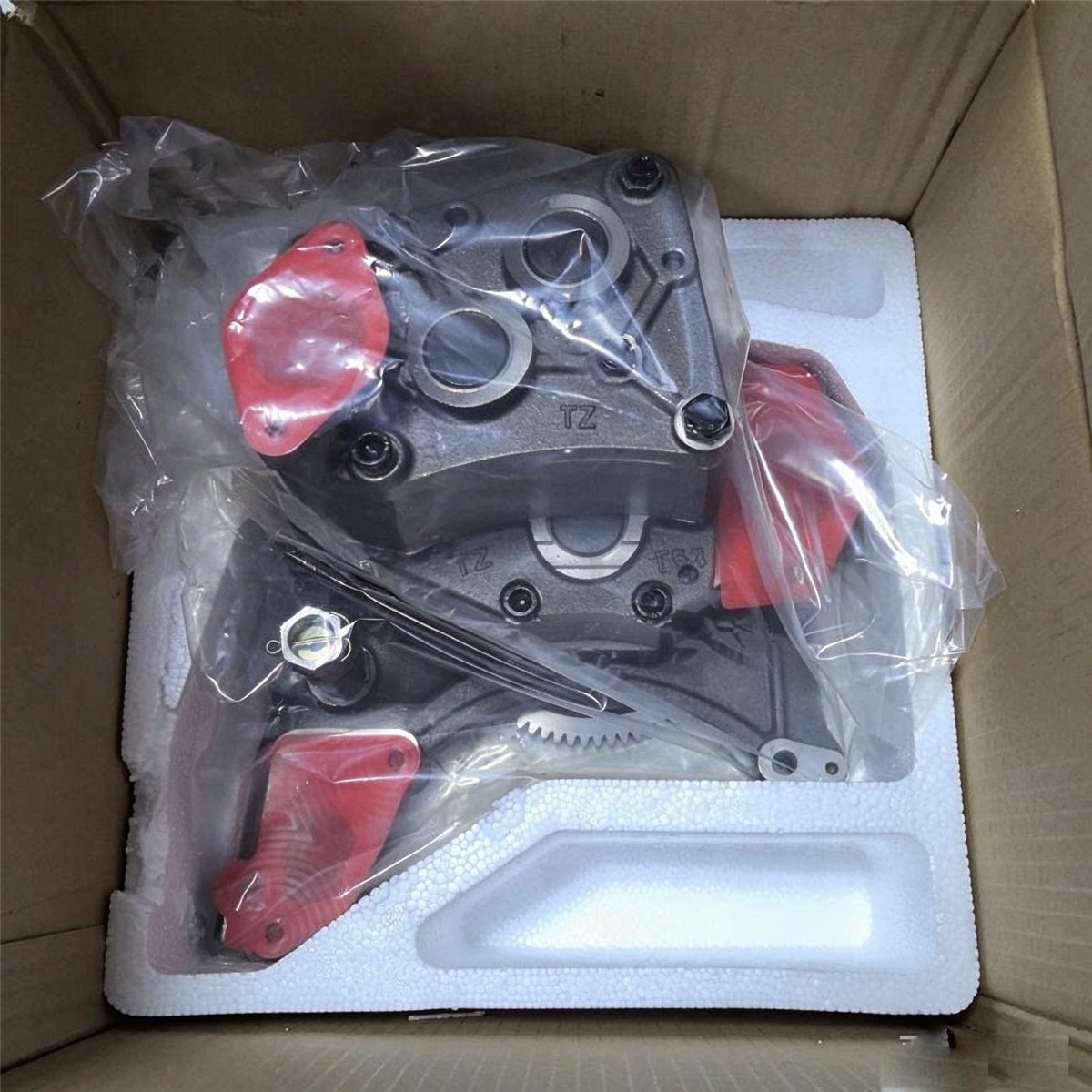
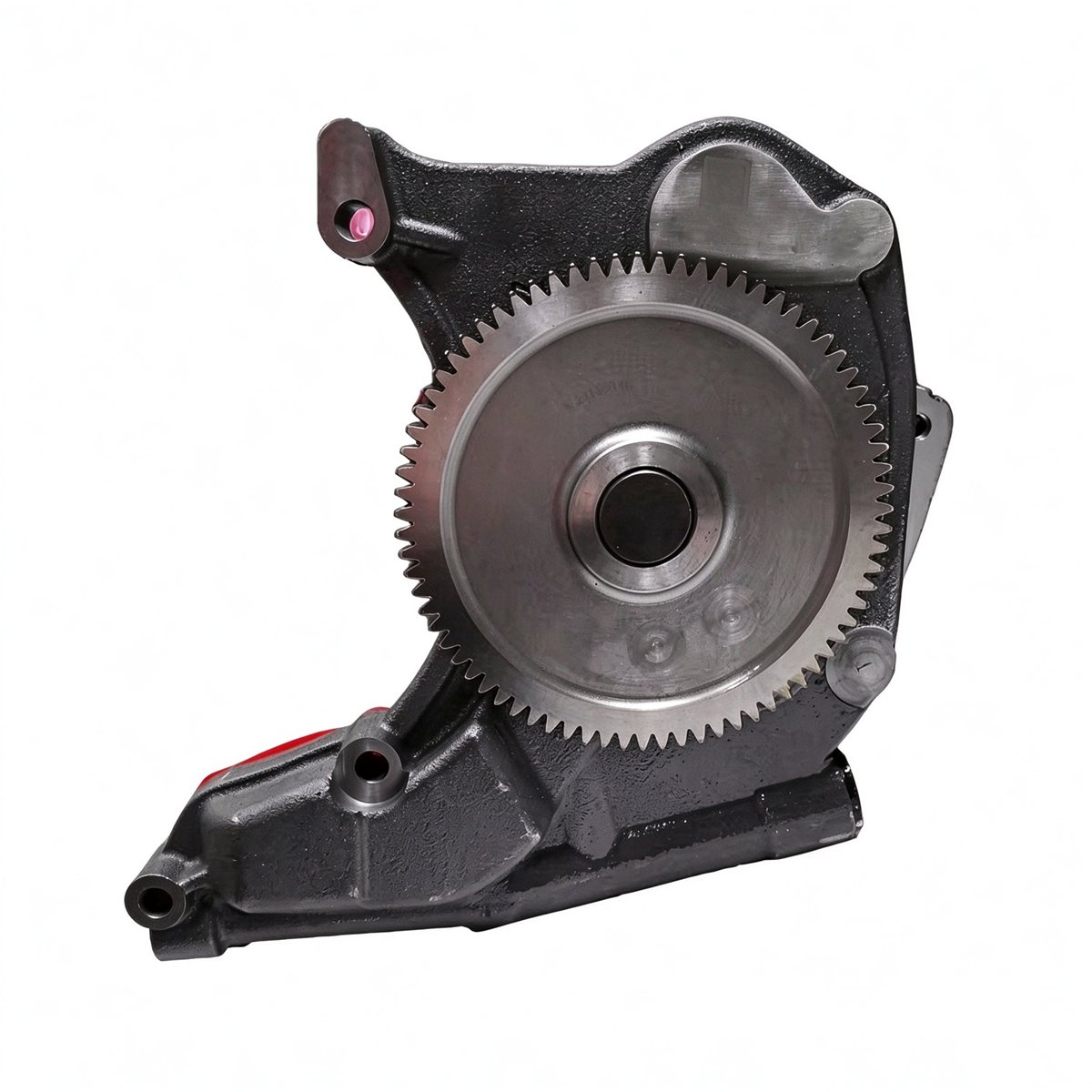
Model: WP13
Part Number: 612700010009
Brands: Weichai Power
Engine Model: WP13, WP13.480, WP13.500, WP13.550, WP13.580
Engine Type: Diesel
Scope of application: heavy haulage trucks, mining dump trucks, construction machinery, generator sets
The WP13 has been supplied with more than one oil pump number, and 612700010009 is one of them alongside 612700010007. The differences are usually in the drive gear or the pick-up arrangement, tied to the front cover design rather than to the pumping principle itself. That detail matters because a pump with the correct body but the wrong drive will not sit correctly on the engine. Confirm the engine plate and the old pump number before ordering, and check the front cover if it has been replaced.
A 13-litre diesel circulates oil through main and rod bearings, the turbocharger, the valve train and the piston cooling jets. The pump must deliver enough volume at hot idle to protect the bearings and hold pressure at rated speed without exceeding the relief valve setting. Wear reduces volume before it reduces peak pressure, which is why a tired pump often shows normal pressure at speed and a worrying drop at idle.
Every pump is run on a test bench rather than only inspected, because flow cannot be judged by eye. Flow is measured at rated speed against the original curve, and the relief valve is opened and its pressure recorded. Gear backlash and end clearance are measured because they decide volumetric efficiency, and the housing and pick-up joint are leak tested before packing.
Low oil pressure is the headline symptom, but the circumstances tell you what is actually wrong. Pressure that is low only when hot points as much to worn bearings as to a worn pump, while pressure that recovers instantly with engine speed points to the relief valve or pump clearances. The warning light usually appears at hot idle after a climb, which is exactly when the oil is thinnest and the clearances are widest.
Check oil level and condition, replace the filter, inspect the strainer, then measure pressure with a mechanical gauge at the main gallery. Only after those steps should the relief valve and the pump come under suspicion, because a blocked strainer and a faulty sender both produce identical readings at the dash. Recording cold idle, hot idle and rated speed gives a clear diagnosis and avoids buying parts that are not needed.
Priming is the step most often skipped and the one that decides whether the bearings survive the first minute after assembly. A dry pump takes time to draw oil, and the bearings run unprotected while it does. Prime the pump with clean oil, turn the engine by hand until oil reaches the head, and only then start the engine.
On these engines the pump also supplies the piston cooling jets, which is easy to forget when diagnosing pressure. A pump that holds pressure but has lost volume still allows crown temperatures to climb, and the damage appears as a scored or cracked piston rather than as low oil pressure. If pistons have failed without an obvious cause, measure flow before blaming the pistons themselves.
Match the part number, the engine rating and the drive type. If the engine has been rebuilt with a replacement front cover, check that the mounting face and drive gear match the pump you order. Send a photograph of the old pump beside a ruler and we will confirm the casting before shipping, which is cheaper than returning a pump that does not fit.
Most premature failures come from contaminated oil. Use the specified grade, change it at the severe-duty interval and never run with a leaking injector that thins the oil with diesel. Keep the cooling system healthy as well, because sustained overheating reduces oil film strength and accelerates wear on every bearing surface in the engine.
Fleets that run regular oil analysis catch bearing wear before pressure starts to fall. Rising iron and lead in the report indicate that the oil film is breaking down somewhere in the engine, and the pump is one of the first parts worth checking. Analysis costs little compared with a crankshaft, and it works even when nobody watches the gauge.
Yes, the mounting gasket and O-ring are supplied.
Yes. A blocked strainer, stuck relief valve, worn bearings or a faulty sender all mimic pump failure.
The pump comes with its drive gear fitted and timed as original.
At every major overhaul, or whenever the front cover is removed.
Browse the Weichai pump category, and pair the pump with the WP13 oil pump 612700010007 or the WP13 crankshaft 612700020003.
Weichai WP13 Oil Pump (612700010009). Lubrication starts here. The gear set, relief valve and drive must all match the housing, and a mismatch shows up as low pressure from the first start.
Confirm the drive gear and pick-up match your front cover and sump. Adjacent part numbers frequently share a housing casting while differing in drive detail.
Numbers beginning 6127 are shared with the WP13 generation. A part from an adjacent revision will bolt up and behave differently, which is why the old component should be photographed before an order is placed. On this engine, confirm the WP13 application against the engine plate before ordering.
Prime the pump before the first start and confirm oil pressure at the gauge before allowing the engine to run. Never crank a fresh rebuild hoping pressure will arrive.
Ordering note. Warranty is twelve months against manufacturing defects. Failures caused by incorrect clearance, overheating or debris are assessed on the returned part rather than refused outright.
Related reading: Oil Pump Diagnosis: Low Pressure, Wear and Replacement
| We Are 30 Years Diesel Engine Parts Supplier | |
| Brand | EPID |
| Warranty | 12 Months |
| Condition | 100%New |
| More Models | Weichai: WP13, WP13.480, WP13.500, WP13.550, WP13.580, and other Weichai series. |
| Shipping | By sea / air / express (DHL, FEDEX, TNT, UPS, EMS) |
| Packing | Standard exporting packing or as required |
| Payment Term | L/C, T/T, Western Union, Trade Assurance |
| Delivery Time | 3-7 days (depend on order) |
| Selling Point | 1. On-time Delivery 2. Genuine Quality Assurance 3. Professional Supplier |
Every pump is run on a test bench rather than only inspected, because flow cannot be judged by eye. Flow is measured at rated speed against the original curve, and the relief valve is opened and its pressure recorded. Gear backlash and end clearance are measured because they decide volumetric efficiency, and the housing and pick-up joint are leak tested before packing.
Low oil pressure is the headline symptom, but the circumstances tell you what is actually wrong. Pressure that is low only when hot points as much to worn bearings as to a worn pump, while pressure that recovers instantly with engine speed points to the relief valve or pump clearances. The warning light usually appears at hot idle after a climb, which is exactly when the oil is thinnest and the clearances are widest.
Check oil level and condition, replace the filter, inspect the strainer, then measure pressure with a mechanical gauge at the main gallery. Only after those steps should the relief valve and the pump come under suspicion, because a blocked strainer and a faulty sender both produce identical readings at the dash. Recording cold idle, hot idle and rated speed gives a clear diagnosis and avoids buying parts that are not needed.
Priming is the step most often skipped and the one that decides whether the bearings survive the first minute after assembly. A dry pump takes time to draw oil, and the bearings run unprotected while it does. Prime the pump with clean oil, turn the engine by hand until oil reaches the head, and only then start the engine.
On these engines the pump also supplies the piston cooling jets, which is easy to forget when diagnosing pressure. A pump that holds pressure but has lost volume still allows crown temperatures to climb, and the damage appears as a scored or cracked piston rather than as low oil pressure. If pistons have failed without an obvious cause, measure flow before blaming the pistons themselves.
Match the part number, the engine rating and the drive type. If the engine has been rebuilt with a replacement front cover, check that the mounting face and drive gear match the pump you order. Send a photograph of the old pump beside a ruler and we will confirm the casting before shipping, which is cheaper than returning a pump that does not fit.
Most premature failures come from contaminated oil. Use the specified grade, change it at the severe-duty interval and never run with a leaking injector that thins the oil with diesel. Keep the cooling system healthy as well, because sustained overheating reduces oil film strength and accelerates wear on every bearing surface in the engine.
Fleets that run regular oil analysis catch bearing wear before pressure starts to fall. Rising iron and lead in the report indicate that the oil film is breaking down somewhere in the engine, and the pump is one of the first parts worth checking. Analysis costs little compared with a crankshaft, and it works even when nobody watches the gauge.
Browse the Weichai pump category, and pair the pump with the WP13 oil pump 612700010007 or the WP13 crankshaft 612700020003.
Yes, the mounting gasket and O-ring are supplied.
Yes. A blocked strainer, stuck relief valve, worn bearings or a faulty sender all mimic pump failure.
The pump comes with its drive gear fitted and timed as original.
At every major overhaul, or whenever the front cover is removed.
EPID supplies diesel engine parts for Weichai, Baudouin, Yuchai, Caterpillar, Sinotruk, FAW Xichai and Cummins engines. Every order is checked against the original part number before packing, and our team can identify a part from a photo of the engine plate. Ask for a quotation with your model and quantity and we will reply within one working day.

