
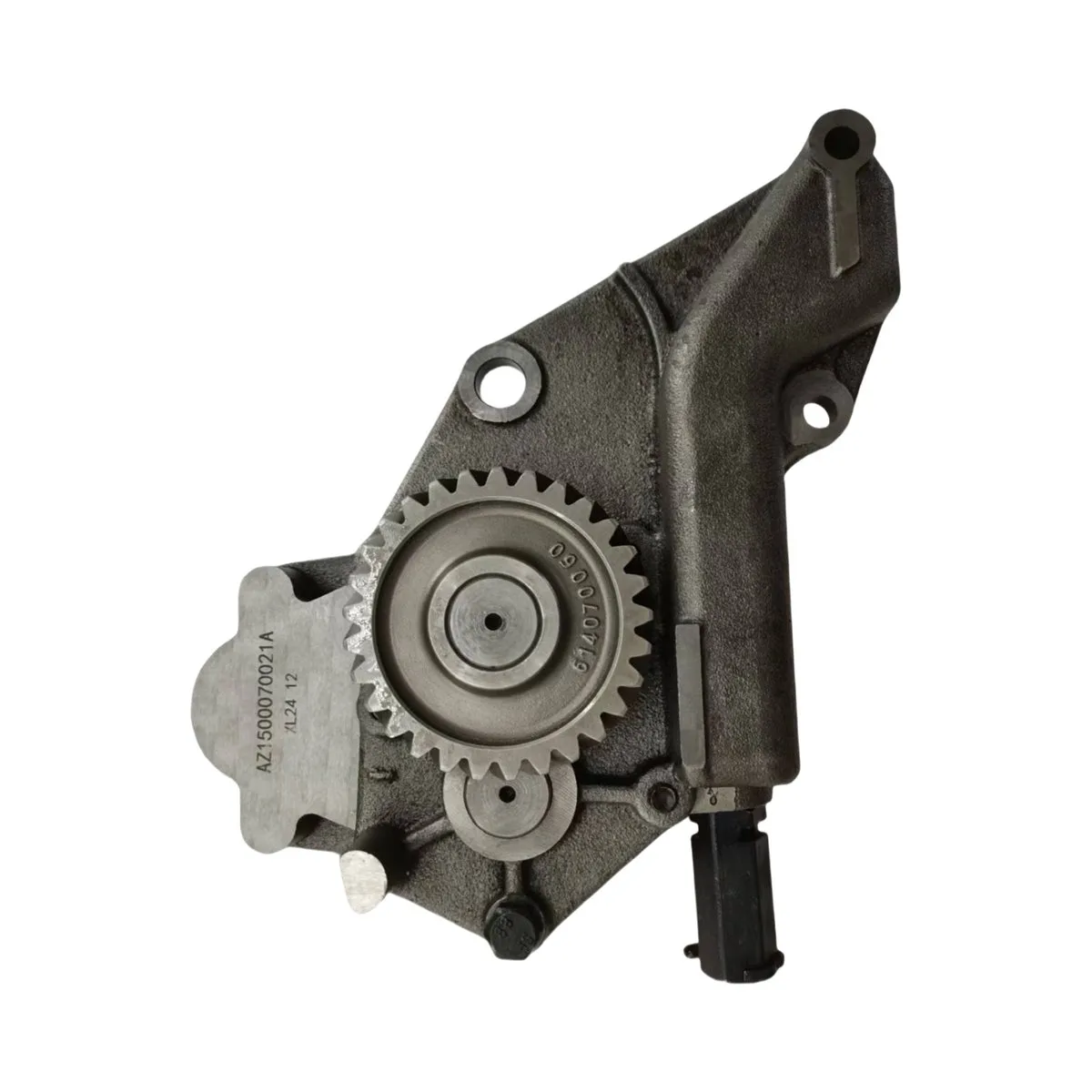
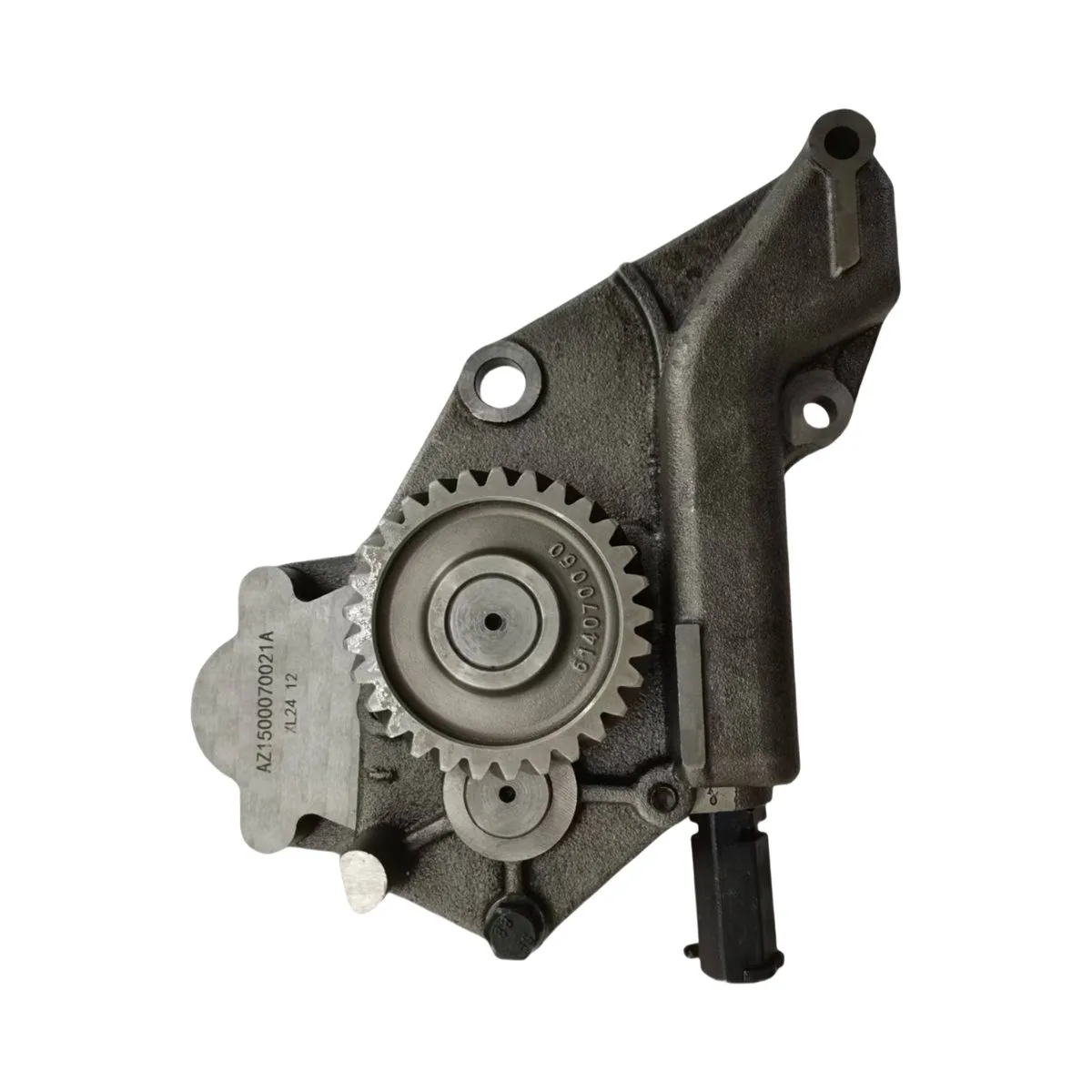
Model: WD615 / WP10
Part Number: 1000550425
Brands: Weichai Power
Engine Model: WD615, WD615E2, WD10, WP10, WP10G
Engine Type: Diesel
Scope of application: heavy trucks, buses, construction machinery, generator sets
The WD615 and WP10 engines use a long list of oil pump numbers, and 1000550425 belongs to the numeric series rather than the 6126 series. The pumps differ mainly in drive gear and pick-up arrangement, which means a pump with the correct body can still fail to feed correctly if the drive or pick-up does not match. Confirm the engine plate and the old pump number before ordering.
The pump feeds main and rod bearings, the camshaft, the valve train and the piston cooling jets. It must deliver enough volume at hot idle to protect the bearings and hold pressure at rated speed without exceeding the relief valve setting. Wear reduces volume before it reduces peak pressure, which is why a tired pump shows normal pressure at speed and a drop at idle.
Low pressure is the headline symptom, but the circumstances tell you what is wrong. Pressure that is low only when hot points as much to worn bearings as to the pump, while pressure that recovers instantly with engine speed points to the relief valve or clearances.
Check oil level and condition, replace the filter, inspect the strainer, then measure pressure with a mechanical gauge. Only after those steps should the relief valve and the pump come under suspicion, because a blocked strainer and a faulty sender both imitate a worn pump. Recording cold idle, hot idle and rated speed gives a clear diagnosis.
On these engines the pump also supplies the piston cooling jets. A pump that holds pressure but has lost volume still allows crown temperatures to climb, and the damage appears as a scored or cracked piston rather than as low oil pressure. If pistons have failed without an obvious cause, measure flow before blaming them.
Match the part number, the engine rating and the drive type. If the engine has been rebuilt with a replacement front cover, check that the mounting face and drive gear match. Send a photo of the old pump beside a ruler and we will confirm the casting before shipping.
Most premature failures come from contaminated oil. Use the specified grade, change it at the severe-duty interval and never run with a leaking injector that thins the oil with diesel. Keep the cooling system healthy, because sustained overheating reduces oil film strength at the bearings.
Regular oil analysis catches bearing wear before pressure starts to fall. Rising iron and lead indicate that the oil film is breaking down somewhere in the engine, and the pump is one of the first parts worth checking.
If pressure is low at hot idle on a high-hour engine, replacing the pump during the same overhaul is usually cheaper than diagnosing it separately. The pump costs little compared with the labour of opening the front cover twice.
Pressure at the gauge is the result of pump flow, bearing clearance and gallery restriction together. A pump that is healthy will still show low pressure on an engine with worn bearings, and replacing it does not fix the reading. Record the pressure before and after any repair so the effect can be measured rather than assumed.
A spare pump with gaskets and an O-ring costs little and can restore a truck in an afternoon. Heavy vehicles rarely fail at a convenient moment, and a week of downtime costs far more than the part.
Yes, the mounting gasket and O-ring are supplied.
Yes. A blocked strainer, stuck relief valve, worn bearings or a faulty sender all mimic pump failure.
The pump comes with its drive gear fitted and timed as original.
At every major overhaul, or whenever the front cover is removed.
Browse the Weichai pump category, and pair the pump with the WD615 oil pump 61500070021 or the WD615 crankshaft 1006466588.
Weichai WD615 Oil Pump (1000550425). Lubrication starts here. The gear set, relief valve and drive must all match the housing, and a mismatch shows up as low pressure from the first start.
Compare the old pump number and photograph the drive end. A pump with the wrong drive bolts up and fails to feed correctly.
Numbers beginning 1000 come from the newer numeric series used for assemblies and later-production parts. This series replaced several earlier numbers, so a cross-reference check is worthwhile. On this engine, confirm the WD615 application against the engine plate before ordering.
Replace the suction-side O-rings and gaskets with the pump. A hardened O-ring at the pick-up joint draws air and reproduces exactly the symptom the new pump was meant to cure.
Ordering note. Warranty is twelve months against manufacturing defects. Failures caused by incorrect clearance, overheating or debris are assessed on the returned part rather than refused outright.
Related reading: Oil Pump Diagnosis: Low Pressure, Wear and Replacement
| We Are 30 Years Diesel Engine Parts Supplier | |
| Brand | EPID |
| Warranty | 12 Months |
| Condition | 100%New |
| More Models | Weichai: WD615, WD615E2, WD10, WP10, WP10G, and other Weichai series. |
| Shipping | By sea / air / express (DHL, FEDEX, TNT, UPS, EMS) |
| Packing | Standard exporting packing or as required |
| Payment Term | L/C, T/T, Western Union, Trade Assurance |
| Delivery Time | 3-7 days (depend on order) |
| Selling Point | 1. On-time Delivery 2. Genuine Quality Assurance 3. Professional Supplier |
Low pressure is the headline symptom, but the circumstances tell you what is wrong. Pressure that is low only when hot points as much to worn bearings as to the pump, while pressure that recovers instantly with engine speed points to the relief valve or clearances.
Check oil level and condition, replace the filter, inspect the strainer, then measure pressure with a mechanical gauge. Only after those steps should the relief valve and the pump come under suspicion, because a blocked strainer and a faulty sender both imitate a worn pump. Recording cold idle, hot idle and rated speed gives a clear diagnosis.
On these engines the pump also supplies the piston cooling jets. A pump that holds pressure but has lost volume still allows crown temperatures to climb, and the damage appears as a scored or cracked piston rather than as low oil pressure. If pistons have failed without an obvious cause, measure flow before blaming them.
Match the part number, the engine rating and the drive type. If the engine has been rebuilt with a replacement front cover, check that the mounting face and drive gear match. Send a photo of the old pump beside a ruler and we will confirm the casting before shipping.
Most premature failures come from contaminated oil. Use the specified grade, change it at the severe-duty interval and never run with a leaking injector that thins the oil with diesel. Keep the cooling system healthy, because sustained overheating reduces oil film strength at the bearings.
Regular oil analysis catches bearing wear before pressure starts to fall. Rising iron and lead indicate that the oil film is breaking down somewhere in the engine, and the pump is one of the first parts worth checking.
If pressure is low at hot idle on a high-hour engine, replacing the pump during the same overhaul is usually cheaper than diagnosing it separately. The pump costs little compared with the labour of opening the front cover twice.
Pressure at the gauge is the result of pump flow, bearing clearance and gallery restriction together. A pump that is healthy will still show low pressure on an engine with worn bearings, and replacing it does not fix the reading. Record the pressure before and after any repair so the effect can be measured rather than assumed.
A spare pump with gaskets and an O-ring costs little and can restore a truck in an afternoon. Heavy vehicles rarely fail at a convenient moment, and a week of downtime costs far more than the part.
Browse the Weichai pump category, and pair the pump with the WD615 oil pump 61500070021 or the WD615 crankshaft 1006466588.
Yes, the mounting gasket and O-ring are supplied.
Yes. A blocked strainer, stuck relief valve, worn bearings or a faulty sender all mimic pump failure.
The pump comes with its drive gear fitted and timed as original.
At every major overhaul, or whenever the front cover is removed.
EPID supplies diesel engine parts for Weichai, Baudouin, Yuchai, Caterpillar, Sinotruk, FAW Xichai and Cummins engines. Every order is checked against the original part number before packing, and our team can identify a part from a photo of the engine plate. Ask for a quotation with your model and quantity and we will reply within one working day.

