Marine diesel engines fail differently from road engines. The load is constant, the cooling is indirect, and the environment attacks everything the coolant does not protect. A rebuild that would last on a truck can fail within a season on a boat, and the reason is rarely the parts themselves.
This guide covers the three failure routes that dominate marine service 鈥?corrosion, cooling and hours-driven wear 鈥?and what to check before ordering.
Three factors separate a marine engine from an industrial one:
| Route | What fails | First symptom |
| Corrosion | Heat exchanger, raw water pump, liner pits | Rising temperature, coolant loss, white smoke |
| Cooling | Pump seals, thermostats, exchanger tubes | Temperature climbs under load only |
| Hours wear | Rings, liners, valves, injectors | Oil consumption, hard starting, smoke |
The order matters. A temperature rise on a marine engine is a cooling investigation first, not a head gasket investigation 鈥?the exchanger is the usual culprit and it is far cheaper to rule out.
The raw water circuit carries salt, silt and biological growth. It is out of sight, it is not part of the coolant service, and it is the single most neglected system on a marine diesel.
What it does when neglected:
Service the raw water side on the same schedule as the coolant side, not only when temperature complains.
Wet liners in marine engines are exposed to the same cavitation mechanism as any diesel, and the consequences are worse because a liner failure at sea is not a roadside repair. The defence is coolant chemistry: the correct additive package, tested at intervals, and no topping up with raw water.
Pitting appears on the coolant side of the liner and is invisible from the bore. A boroscope through the drain, or a liner pulled during a rebuild, is the only reliable check.
When the engine is opened, measure liner protrusion on every cylinder and record it. Marine engines often wear evenly, which makes protrusion the measurement that decides whether the head gasket will seal.
Constant load means constant heat, and exhaust valves take the worst of it. Seat recession shows up first as hard starting and a slight compression loss, then as a misfire. With the head off, cut the seats rather than lapping them, replace guides and ream to size after fitting, and fit new stem seals 鈥?reusing seals produces blue smoke that gets blamed on the pistons.
Plan in running hours, not calendar time. A pleasure boat doing 200 hours a year reaches a rebuild at a very different calendar age from a workboat doing 4,000.
| Component | Planning band |
| Raw water impeller | Every 500-1,000 h or annually |
| Coolant chemistry test | Every 500 h |
| Injectors | 6,000-10,000 h |
| Rings and liners | 8,000-12,000 h |
| Valves and seats | 10,000-15,000 h |
Marine engines are often older than the hull paperwork suggests, and marinisation adds parts that the base engine catalogue does not list. Send:
A marine engine that sits for months fails in ways an engine in daily service does not. Two things happen: the raw water circuit drains unevenly and leaves wet pockets that corrode, and the coolant additives settle out of suspension without circulation.
Lay-up that actually works is short: run the engine to temperature with a flushing mix, drain the raw water side completely, change the oil while it is hot so the contaminants leave with it, and remove the impeller rather than leaving it compressed against the cam for months. An impeller left in place takes a permanent set and fails early in the next season.
At restart, replace the impeller and its gasket, check every hose clip on the raw water side, and run the engine on the hose before putting it under load. Most season-opening failures are a clip that was not tight and an exchanger that had been half blocked since the previous autumn.
Fuel lines, filters and the high-pressure side of the injection system are the most common ignition source on a boat, and the failure is usually a chafed line or a loose union rather than a failed component. Any rebuild should include a full inspection of the fuel lines rather than only the parts being replaced.
The same applies to the exhaust: a leaking manifold or riser joint leaks both water and exhaust gas into the engine bay, and the corrosion that causes it starts internally where it cannot be seen.
Only where the base engine number matches and the marinisation parts are not involved. Pistons, rings and gaskets follow the rating; pumps and manifolds are often marine-specific.
That is the signature of a restricted heat exchanger or a partially blocked raw water circuit, not a failed thermostat.
Annually or every 500-1,000 hours, whichever comes first. Carry a spare and the gasket.
Cavitation from liner vibration combined with depleted coolant additives. It is prevented by coolant chemistry, not by hardware.
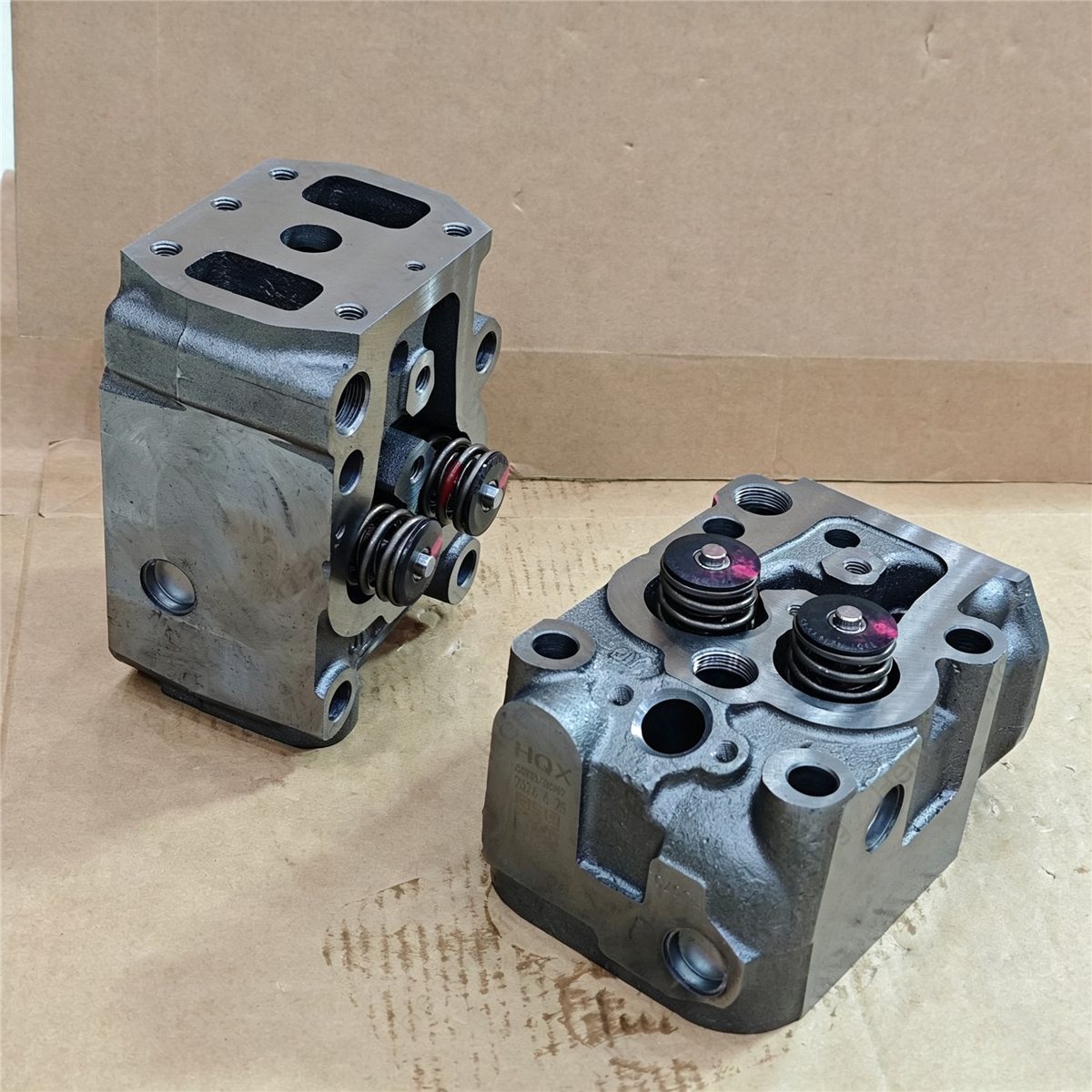
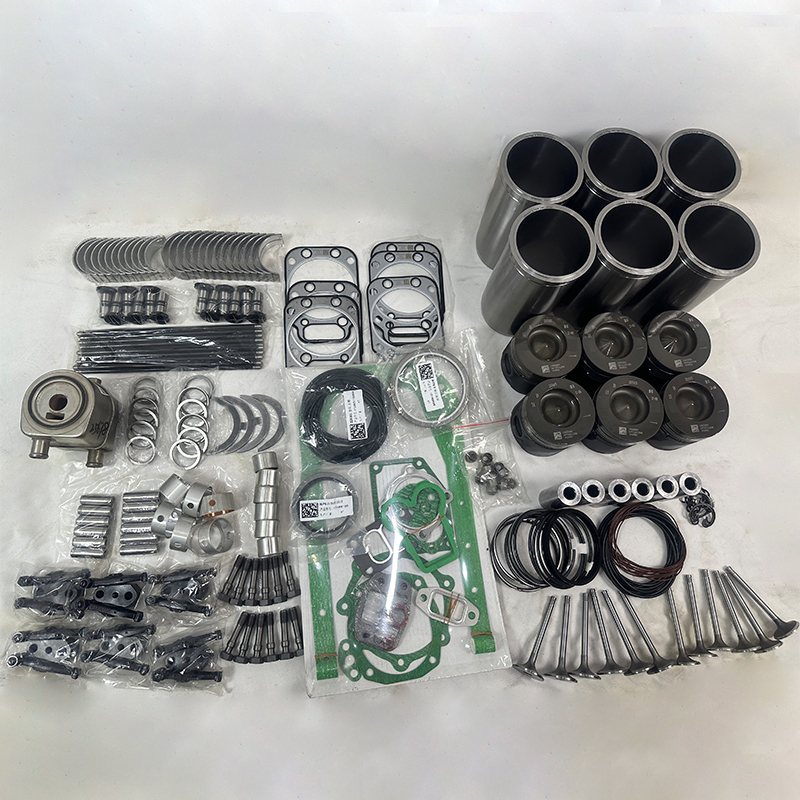
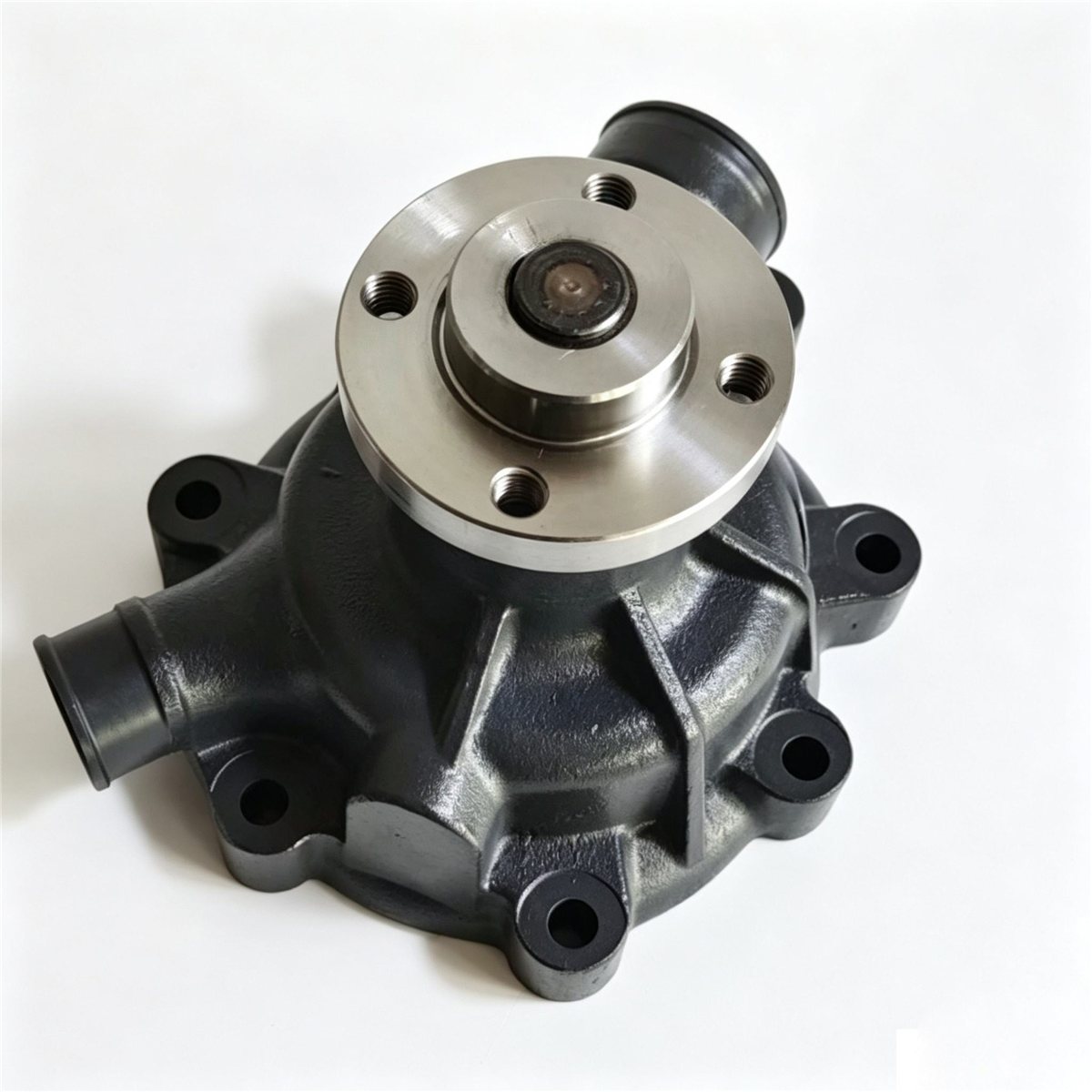
Our Baudouin range covers the M-series marine engines, and the Weichai range covers the industrial engines commonly marinised for workboats. For the assemblies discussed here, see the 4M10G cylinder head, the 6M cylinder liner kit and the 4M10G water pump.
If you are planning a marine rebuild, send the engine plate and the hours. That combination identifies which parts are due before anything is ordered.

