An overhaul kit is the most expensive single purchase in a diesel rebuild and the one most often bought on price. The problem is that “kit” means different things to different suppliers: some include a gasket set, some include bearings, some include pistons but not liners, and the number on the box rarely tells you which.
This guide covers what a kit should contain for a diesel engine, what is deliberately excluded and why, and how to check a kit against the engine before it is ordered.
A kit exists to group the parts that wear together and must be compatible: pistons, rings and liners are a matched set because the bore finish, ring tension and piston clearance are designed as a system. Buy them separately from different sources and the clearances may not add up.
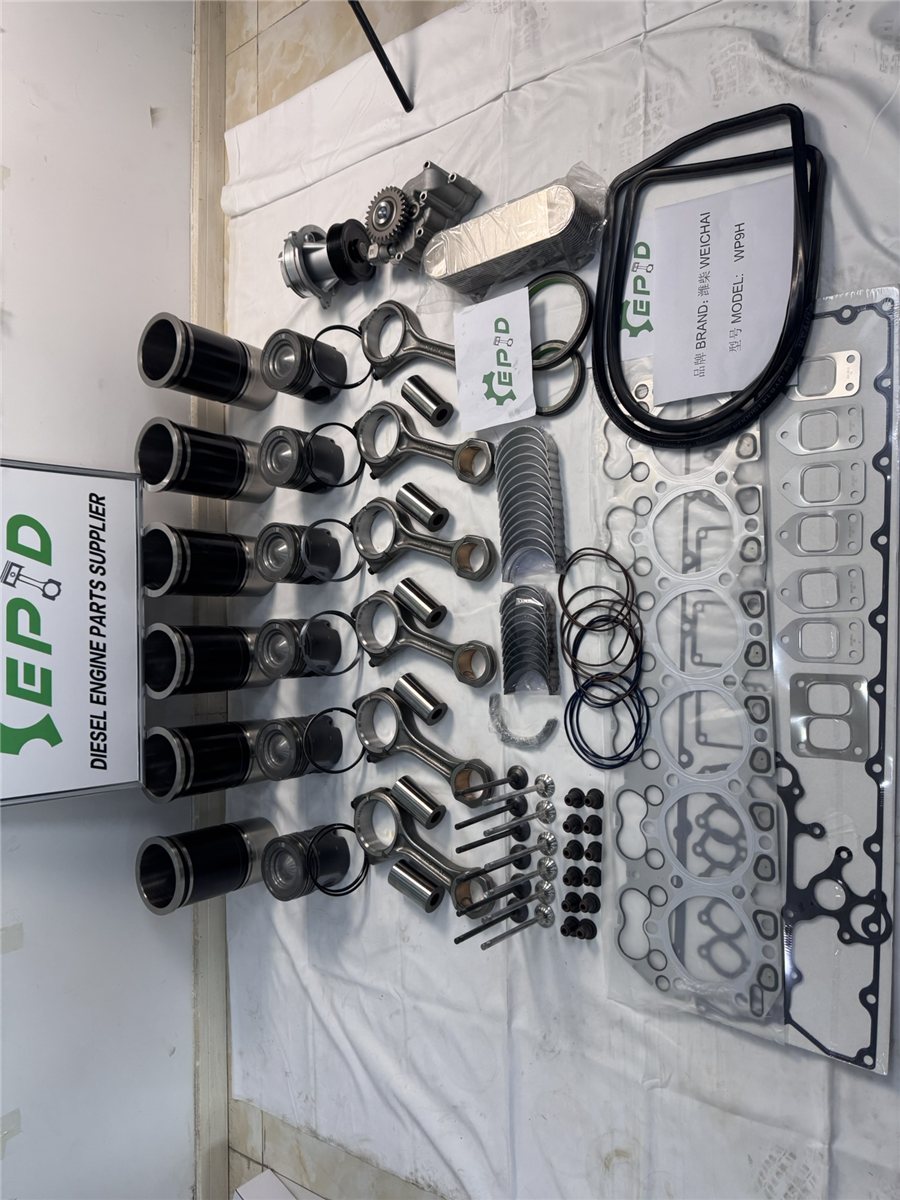
Everything else 鈥?bearings, bolts, gaskets 鈥?depends on the condition of the engine rather than on the kit, which is why they are usually separate.
| Component | Usually in the kit | Notes |
| Pistons | Yes | With pins and circlips; bowl profile follows the rating |
| Piston rings | Yes | One set per piston, matched to the groove |
| Cylinder liners | Usually | With O-rings; some kits are “piston and ring only” |
| Full gasket set | Usually | Head gasket matched to the head casting |
| Main and big end bearings | Often no | Depend on journal size after grinding |
| Head bolts, rod bolts | No | Torque-to-yield, single use, ordered separately |
| Oil pump, water pump | No | Condition-based |
| Valve train | No | Head work is quoted separately |
Two kits with the same description can differ on liner inclusion and on gasket set inclusion. That is the first thing to confirm in writing, before price.
Bearings are sized to the journal after grinding, not to the engine model. A kit cannot know whether the crankshaft will stay standard or go to the first or second undersize, so bearings are ordered once the shaft has been measured.
Bolts are excluded for a different reason: they are single-use fasteners. Including them would raise the kit price for every buyer, including those whose bolts are already in stock.
The practical consequence: budget for bearings and bolts in the same order as the kit. Discovering the gap halfway through a rebuild costs days, and the engine sits open while it is resolved.
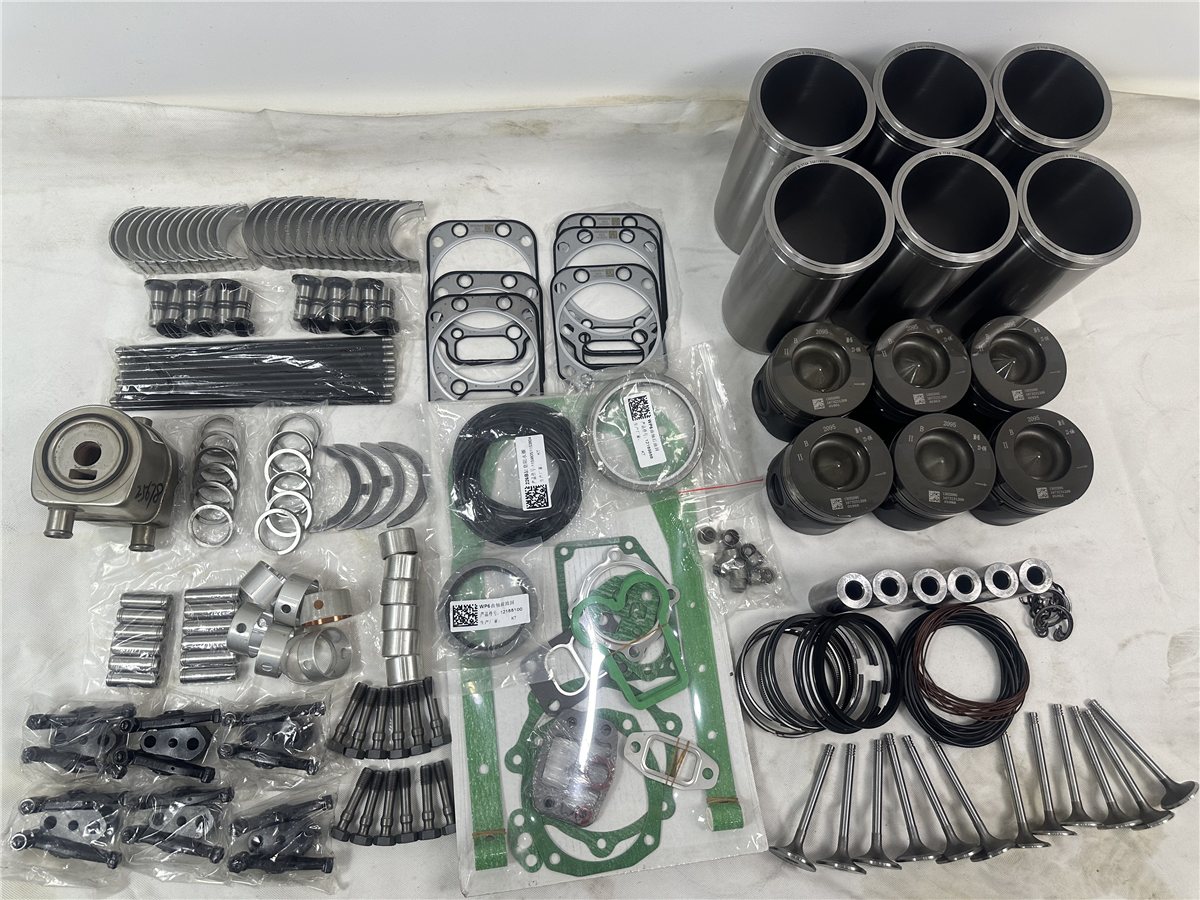
When several kit numbers exist for one engine, the difference is almost always the piston. Compression ratio, bowl shape and ring thickness follow the rating, so two kits that look identical on the pallet can produce different combustion.
To pick the right one, compare the old piston crown with the new one, and compare the old head gasket with the one in the kit. If the bowl shape or the fire ring position differs, the kit is from a different rating.
The engine plate and the old piston number together identify the rating. The model name alone does not.
A kit replaces wearing parts, not the condition of the block. If the deck is warped, the bores are out of round or the main bores are misaligned, the kit goes into an engine that will fail again 鈥?and the kit is blamed.
Measure before ordering: deck flatness, bore condition, main bore alignment. Those three figures decide whether a kit is the right purchase at all, or whether the block needs work first.
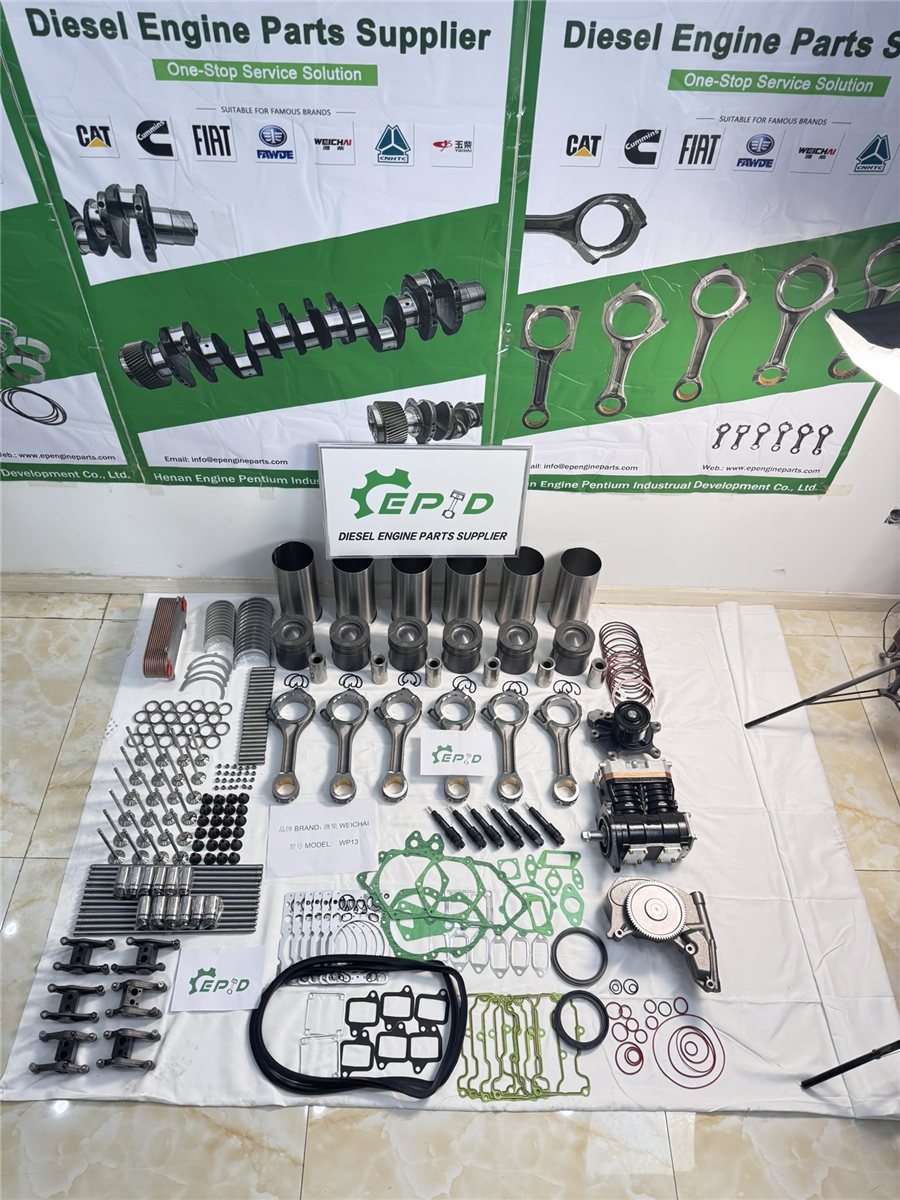
New rings against a new bore need cylinder pressure to bed in. Run at varying load, increasing gradually, and change the oil early. Holding full load immediately glazes the bore and the engine uses oil for the rest of its life 鈥?with a kit that measured correctly at every step.
Buyers are often surprised by the gap between the kit price and the final rebuild cost. The kit is typically half to two thirds of the parts spend. The rest is bearings, bolts, a head service and the consumables nobody quotes: coolant, oil, filters, sealant and the machining.
Plan the budget in four lines rather than one: the kit, the bearing and bolt set, head work, and labour. Quoting only the kit produces an optimistic figure that gets revised twice, and in fleets that is how a rebuild gets deferred until it becomes a failure.
It is also worth pricing the two common variations before committing: a kit with liners and one without. If the bores are within specification, the cheaper kit plus a hone may be the correct choice; if they are not, the liner kit is the only option and the cheaper one was never viable.
Usually, as part of the full gasket set. Confirm it, because some kits are piston-and-ring only.
Yes, but the rings and liner should then be matched to them rather than sourced independently.
Usually because liners or the gasket set are missing, or the rings are a lower grade. Compare contents, not prices.
Yes. A single new piston among worn ones gives uneven compression and vibration.
Our Weichai range lists overhaul kits by engine family with their contents stated. For examples, see the WP9 overhaul kit 611600030018, the WP6 overhaul kit 13032095, the YC4108 overhaul kit D30-9000200 and the Baudouin 4M10G88 overhaul kit.
Send the engine plate and the old piston number, and we will confirm which kit matches the rating before it ships.

