Camshaft wear is slow, quiet and easy to misdiagnose, because a worn lobe does not produce an obvious failure 鈥?it produces a gradual loss of power, a misfire that moves between cylinders, and a tick that comes and goes. By the time the lobe is visibly worn, the lifters are usually scrap as well, and the pair has to be replaced together.
This guide covers what wears, how to measure it, and the break-in procedure that decides whether a new camshaft survives its first hour.
On most diesel engines the camshaft runs directly in the block or in bearings, and the lifters are either flat tappets or rollers. Roller lifters tolerate far more load, flat tappets rely on oil film and a correct mating surface.
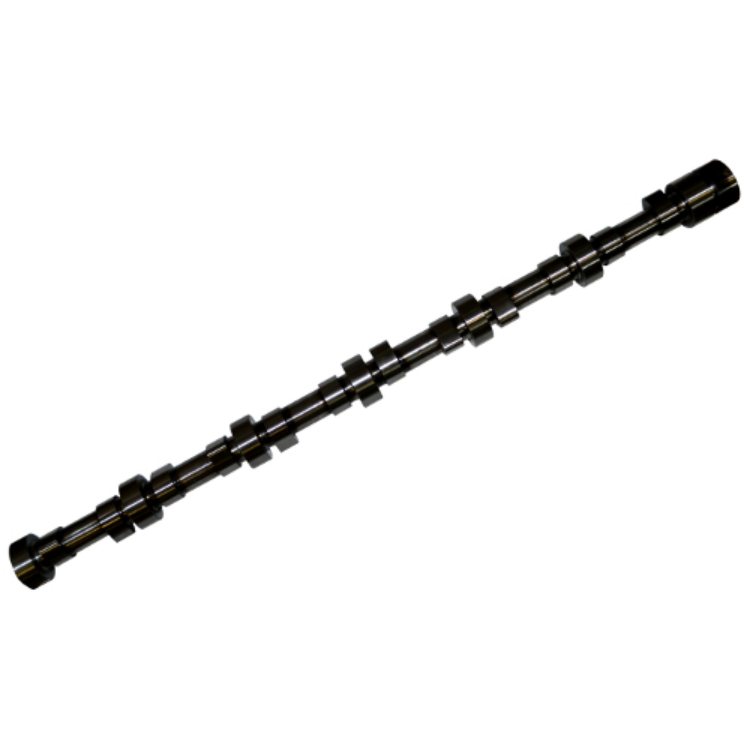
A used lifter has worn into the profile of the old lobe. It is no longer flat relative to the new lobe, so contact pressure concentrates on one edge, the oil film breaks, and the new lobe scuffs within minutes of running.
This is not a quality issue 鈥?it is a matched-pair issue. Every manufacturer specifying new lifters with a new flat-tappet camshaft is stating the same thing: the pair wears together and must be replaced together.
Visual inspection finds the late stage. Measurement finds it early:
Recording every lobe matters. A camshaft can lose 0.3 mm on one lobe and be in specification on the others, and that single cylinder produces a misfire that no injector test explains.
| Appearance | Meaning | Action |
| Polished, mirror finish | Normal contact pattern | Reuse if lift is within limits |
| Pitting or spalling on the nose | Metal fatigue from high load | Replace |
| Scuffing or smearing | Oil film failure | Replace shaft and lifters |
| Blue or purple discolouration | Overheating or oil starvation | Replace and inspect oil system |
| Worn edge on the lobe flank | Lifter not rotating, or wrong lifter | Replace both, check lifter bores |
| Groove worn in the thrust face | Excessive end float | Replace shaft, check block face |
Four causes account for most camshaft failures, and none of them is the camshaft itself:
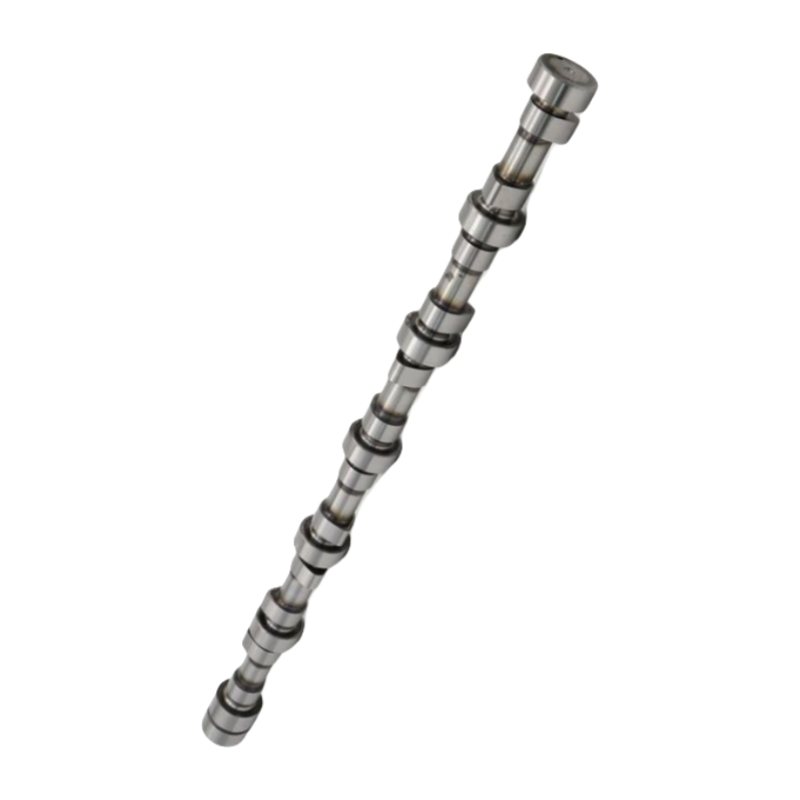
The lifter tells you more about the failure than the camshaft does, because the two surfaces wear against each other. A healthy flat tappet shows a smooth, slightly convex face with a narrow contact band running across the middle.
A lifter with a dished face has lost its crown and is concentrating load on the edges. One with a sharply worn band near the edge was not rotating, which usually means a damaged lifter bore rather than a worn lobe. A lifter with metal transfer or a torn surface means the oil film failed, and the shaft will show matching damage.
Check the lifter bores at the same time. A lifter that cannot rotate will destroy a new camshaft just as surely as a reused lifter, and the bore wear is measured with a telescopic gauge, not by eye.
Look at the oil as well. Fine metallic paste in the filter, without large flakes, is characteristic of cam and lifter wear. Large flakes mean a bearing has failed and the camshaft damage is a consequence, not the cause.
A new flat-tappet camshaft needs sustained oil flow and controlled load in its first minutes. The procedure that works:
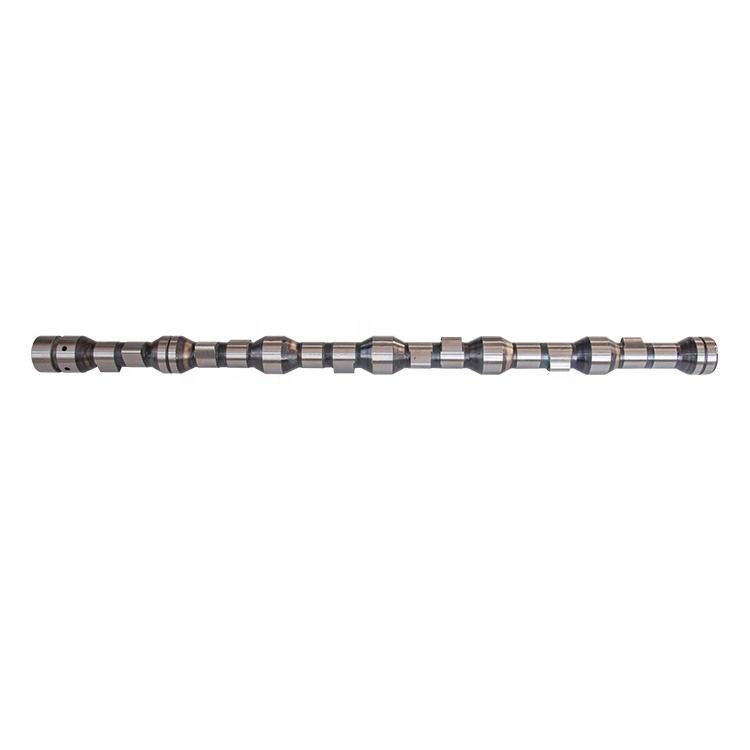
Roller camshafts are less sensitive, but still benefit from the same procedure.
Camshafts in the Weichai and Baudouin families appear under several numbers, and adjacent numbers frequently share journals while differing in lobe profile or in the injection pump drive gear. A shaft with the correct length and journals and the wrong gear cannot be identified by measurement alone.
Photograph both ends of the old shaft before ordering, count the gear teeth if accessible, and check the engine plate. Fitting a shaft with the wrong drive gear produces timing error that no amount of pump adjustment corrects.
Not on a flat tappet engine. Replace lifters, bearings and the thrust plate with the shaft.
Not economically or reliably. Hardfacing a lobe changes its metallurgy and rarely lasts.
Wear creates clearance that opens and closes with oil pressure and temperature. Intermittent noise is early wear, not a harmless quirk.
Less critical, but still prime the system and avoid extended idling on first start.
Our Weichai Power parts range is organised by component type. For the shafts discussed here, see the WD615 camshaft 612600050085, the WP13 camshaft 1000701438, the WP7 and WP8 camshaft 1002128299 and the Baudouin 4M10G camshaft 1004720472 pages.
If you are chasing a misfire that follows a cylinder, measure lobe lift on every lobe before replacing injectors. A camshaft losing lift on one lobe produces exactly the symptom of a failing injector.

